

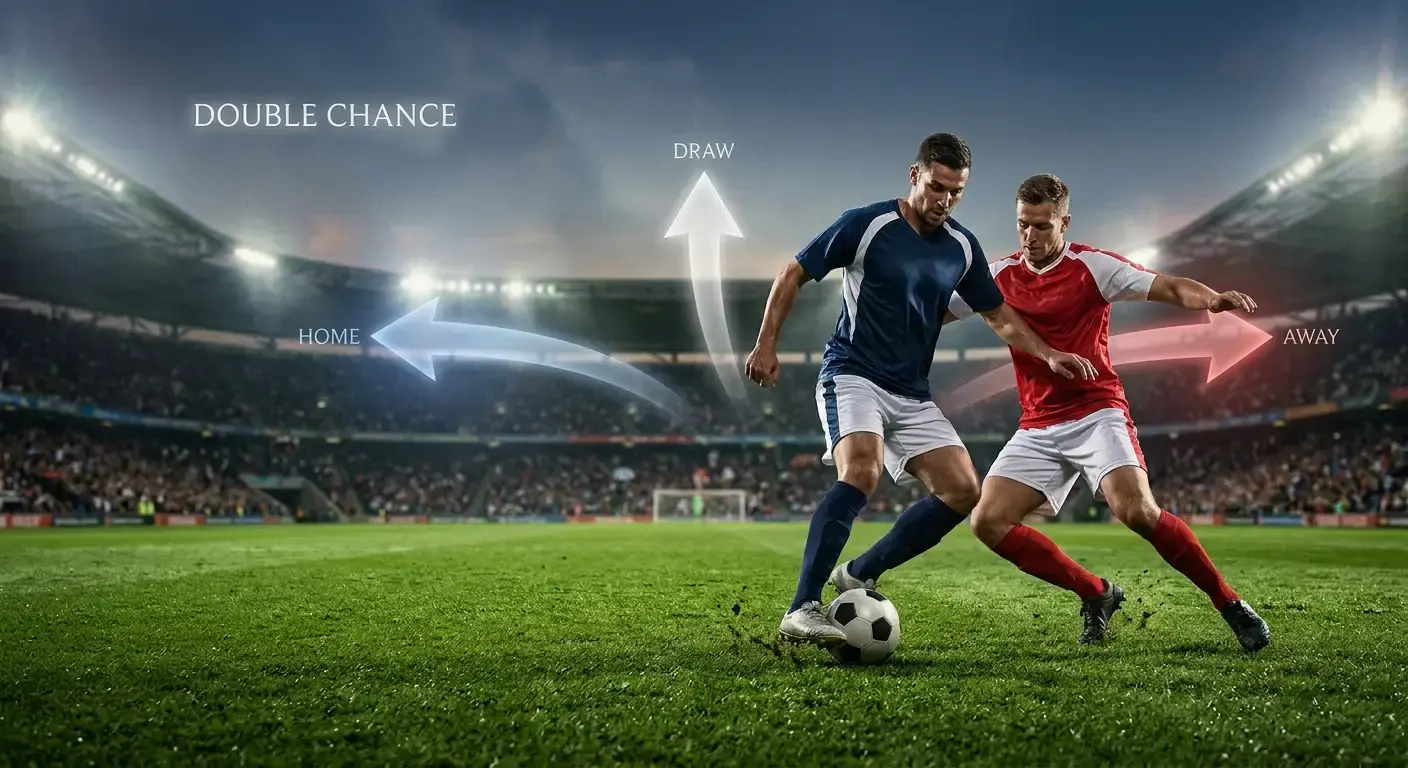
The bet that feels clever and often isn’t
I went through a phase, years ago, of backing double chance on almost everything. It felt smart. Why bet on one outcome when you can cover two? My strike rate soared and my bankroll quietly shrank, and it took me an uncomfortably long time to work out why. Double chance is the bet that wins constantly and profits rarely, and understanding that paradox is the most useful thing I can teach you about it.
The market is built for reassurance. With roughly 47% of UK adults gambling in some form, a huge slice of the football betting public is risk-averse and instinctively drawn to anything that feels like a wider net. Double chance answers that craving directly by letting you back two of the three possible match outcomes in a single bet. You win more often, you lose less often, and you feel in control. The question that matters is whether that comfort is worth what it costs, and the honest answer is usually no.
The three combinations and how they settle
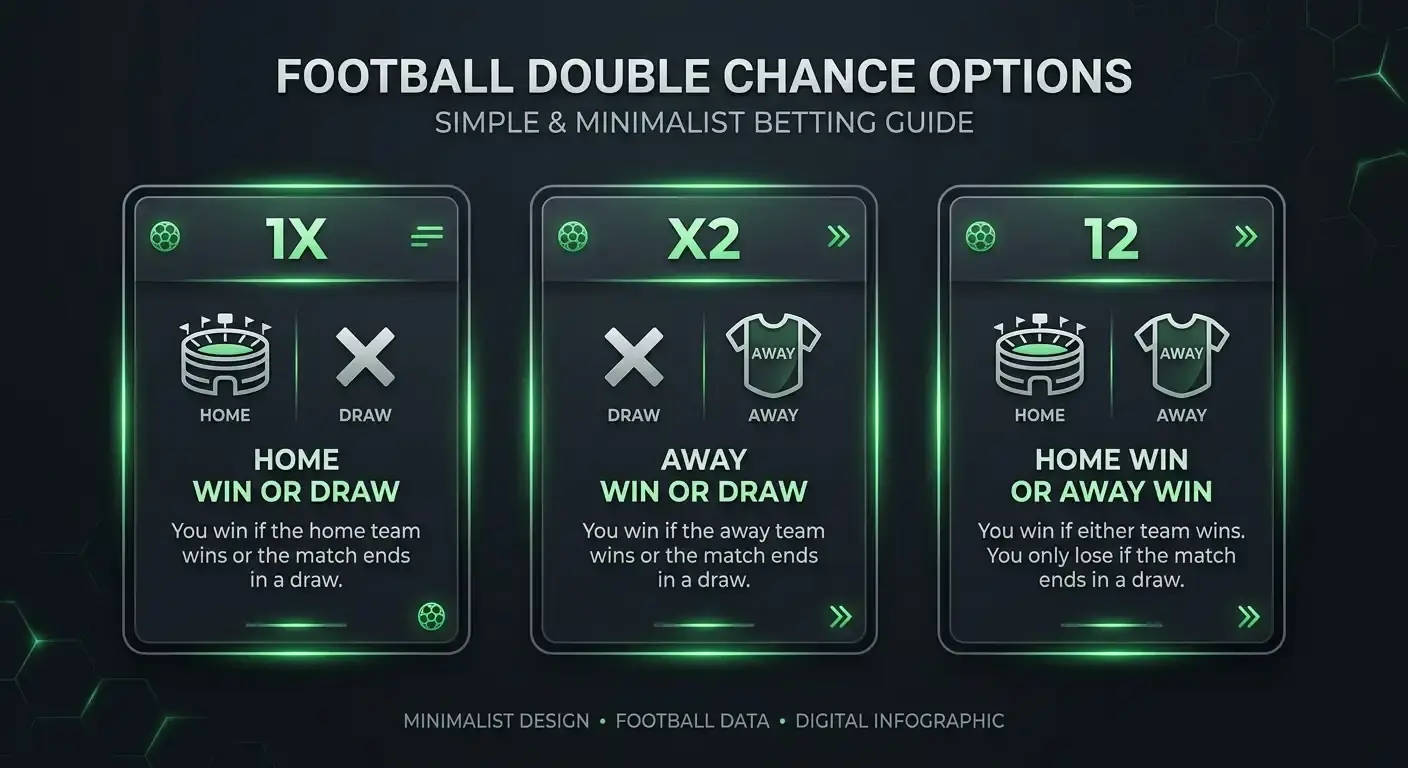
Double chance offers exactly three options, each covering two of the standard 1X2 outcomes. Home or draw, written as 1X, wins if the home side wins or the match is drawn, losing only on an away win. Away or draw, written as X2, wins if the away side wins or the game is level, losing only on a home win. Home or away, written as 12, wins if either side wins and loses only on a draw.
That 12 option is the one most people overlook, and it is the most interesting of the three. It is effectively a bet against the draw, useful in fixtures where two attacking sides meet and a stalemate looks unlikely. The 1X and X2 combinations are the workhorses, used to back a favourite or an underdog while building in protection against a level result.
Settlement is as clean as it gets. There is no refund, no void, no half-win complexity. One of your two covered outcomes happens and you collect, or the single uncovered outcome happens and you lose. The simplicity is part of the appeal, and part of the problem, because it disguises how much you are paying for that wide coverage.
The odds trade-off you cannot wish away
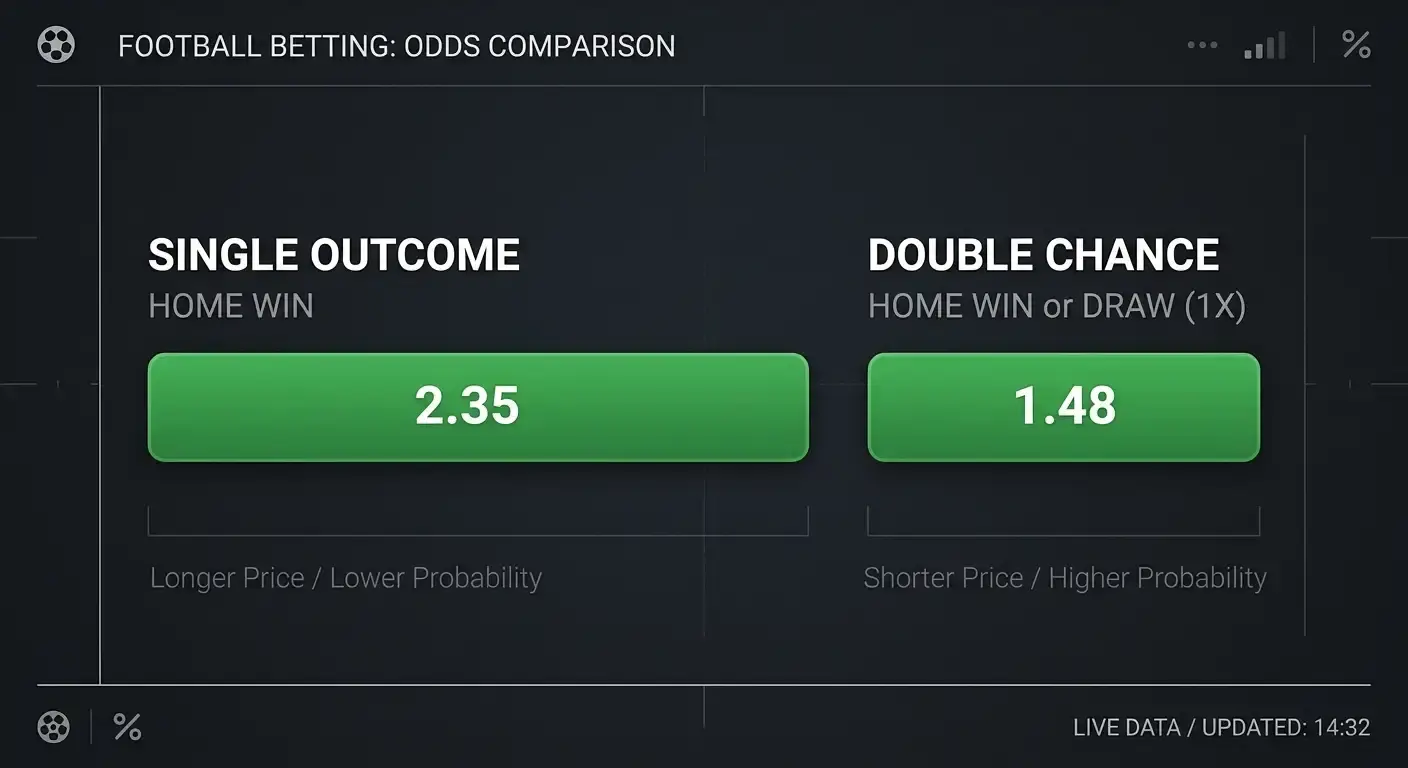
Here is the uncomfortable arithmetic. Covering two outcomes means the bookmaker has to offer odds short enough to account for both, so a double chance price is always meaningfully lower than backing either single outcome alone. Back a favourite to win at 2.00 and the 1X double chance on the same side might sit around 1.30, because you are now also being paid on the draw.
The trap is that those shortened odds carry the bookmaker’s full margin, and that margin has been climbing across the industry, with the average hold rate rising from 6.7% in 2018 to 10.15% in 2025. When you bet at very short prices, the edge eats a larger proportion of your potential return, because the gap between the true probability and the offered price represents a bigger slice of a small number. Win at 1.30 and a single loss undoes several wins; the margin is doing quiet, relentless damage on every short-priced slip.
I think of it this way: double chance does not change how good your prediction is, it only changes the shape of your results. You trade a higher win rate for a lower payout, and the bookmaker prices that trade to its own advantage every single time. The win rate feels like progress, but the bankroll tells the truth.
The fixtures where double chance actually earns its keep
Despite all that, I do still use double chance, just rarely and deliberately. The strongest case is a moderate underdog you genuinely fancy to avoid defeat at home. Backing them to win outright might be optimistic, but X-or-the-home-side covers both a win and the draw at a price that still offers real value when the outright win price would be a wild gamble.
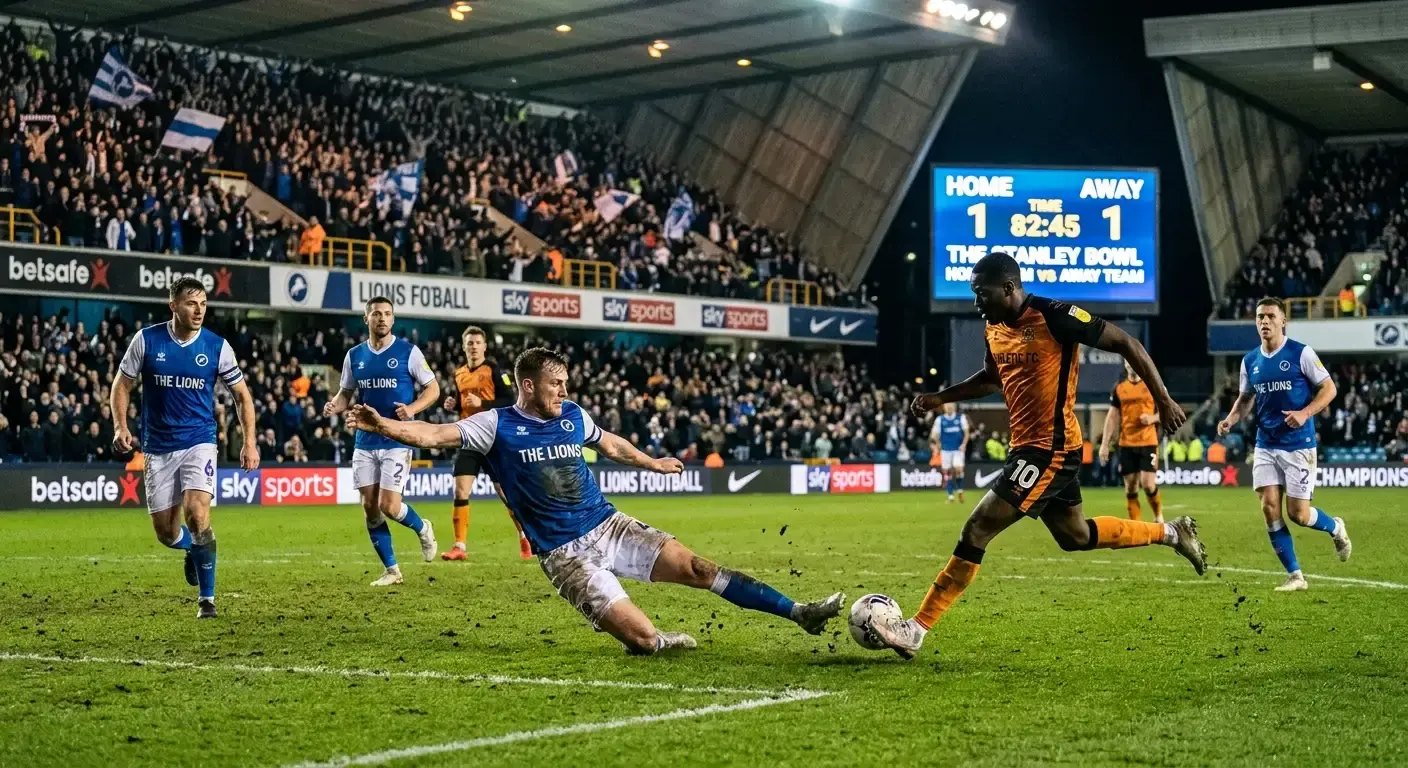
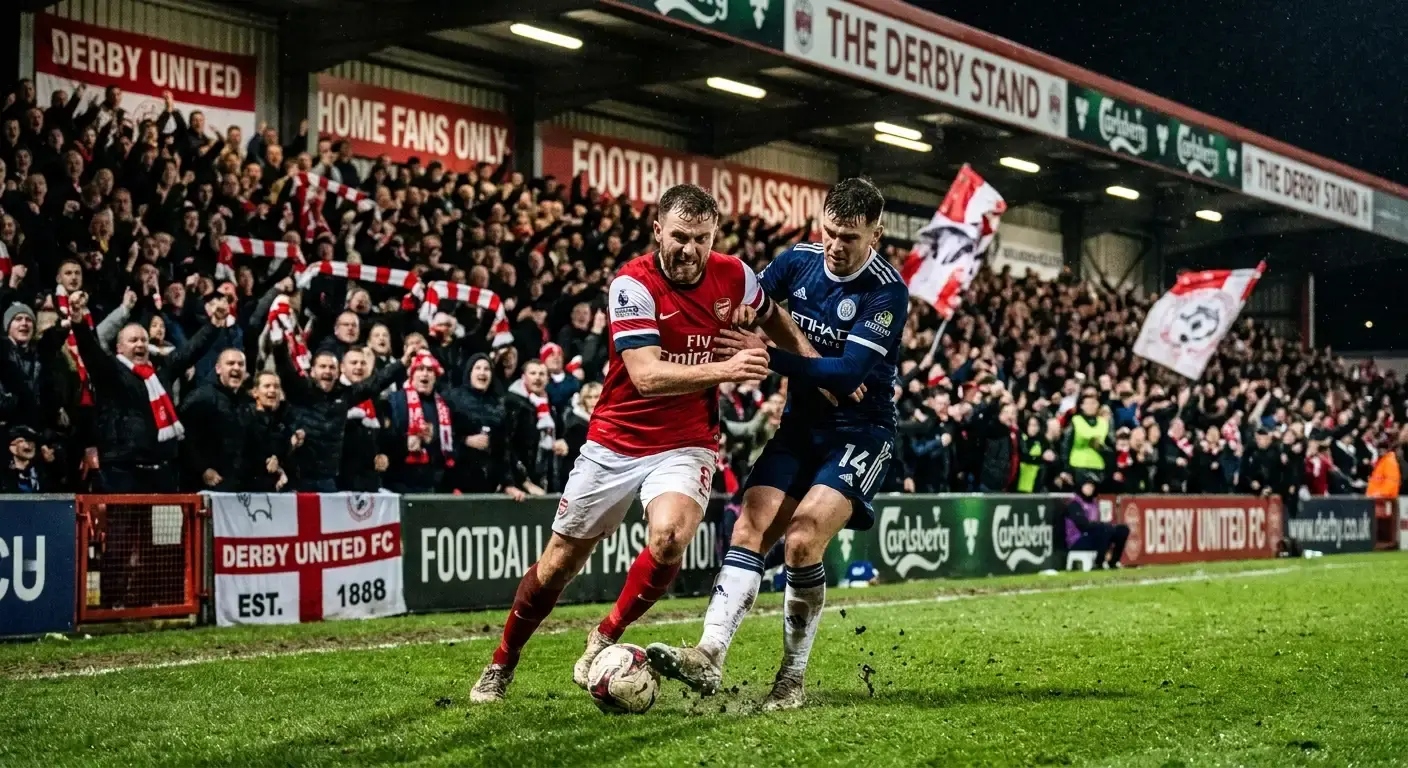
The 12 combination has a niche too, on derbies and high-stakes fixtures between two committed attacking teams where a draw is the least likely of the three results. Backing against the draw can offer a respectable price when both sides need a win and neither will settle for a point. And occasionally, on an accumulator where I want to reduce variance across several legs, swapping one volatile single for a double chance can keep a multiple alive without leaning entirely on coin-toss outcomes.
What unites every sensible use of double chance is that the shortened price still represents value against the true probability. The moment you are backing 1X on an overwhelming favourite at 1.15, you have stopped betting and started donating, and no win rate dresses that up.
How double chance quietly drains your discipline
The deepest danger with double chance is not mathematical, it is behavioural. A bet that wins most of the time trains you to feel successful regardless of whether you are actually ahead, and that feeling is precisely what the marketing of modern betting is engineered to exploit. Keith Whyte, who led the National Council on Problem Gambling for years, put the antidote plainly when he said the solution is “teaching this next generation of kids how to make more informed choices, how to think critically about the marketing of everything that’s gamified”. Double chance is a market that rewards exactly the uncritical, comfort-seeking instinct that critical thinking is supposed to override.
The practical mistakes follow from that. Punters back double chance on prohibitive favourites at odds so short they could never profit long term, mistaking a high strike rate for an edge. They stack multiple short double chance legs into accumulators and watch the compounding margin gut the value. And they reach for the safety of two outcomes precisely when they should be questioning whether they have any read on the fixture at all.
Used as a scalpel on genuine underdog value, double chance is a fine tool. Used as a security blanket on every short-priced favourite, it is one of the most reliable ways to lose money slowly while feeling like you are winning. If you want a market that rewards a sharper, more specific read on how a match unfolds across its two halves, my breakdown of the nine-way double result market is a better place to spend your analysis.