


The best news in British betting, and the catch behind it
Every so often a newcomer asks me, slightly nervously, how much tax they will owe on a big football win, and I get to deliver the rare piece of unambiguously good news in betting: none. In the United Kingdom, gambling winnings are entirely tax-free for the bettor, full stop. You keep every penny of a winning bet, whether it is a tenner on a Saturday acca or a five-figure outright that lands in May.
That does not mean the activity goes untaxed, of course. The tax burden simply falls on the operator rather than the punter, and the sums involved are enormous. Betting and gaming generated 714 million pounds in tax receipts for the UK in the 2024-25 financial year, and the first five months of 2025-26 alone brought in 1,786 million pounds, up 9 percent year on year. So the money flows to the Treasury all the same; it is just collected from the bookmaker’s profits rather than from your winning slips. Understanding how that works, and what is about to change, is genuinely useful for any serious bettor.

Why your winnings are tax-free
The principle that gambling winnings are not taxed in the UK is long-established and refreshingly clear. When you win a bet, that money is yours in full, with no income tax, no capital gains tax and no obligation to declare it to HM Revenue and Customs. This holds regardless of the size of the win or how often you bet, and it applies to football betting exactly as it applies to any other form of gambling.
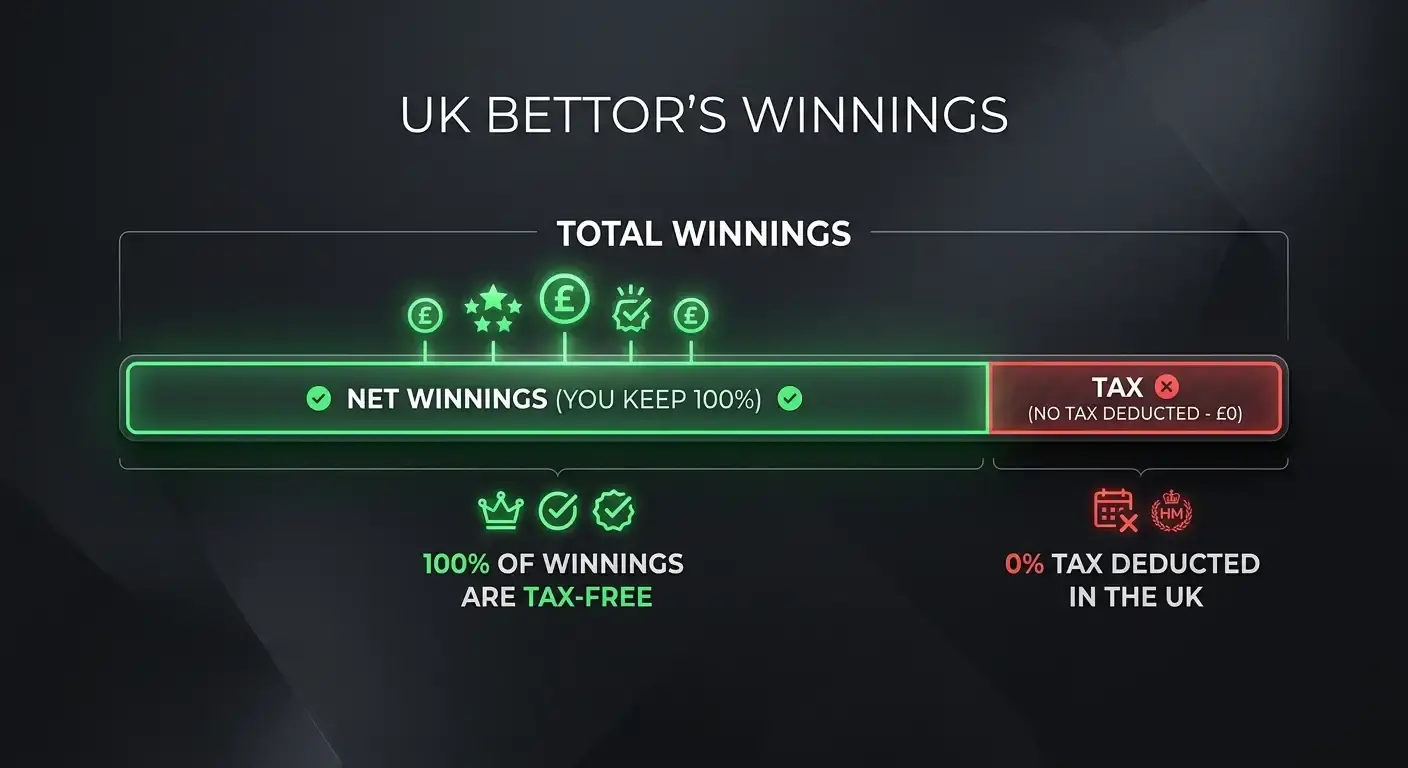
The logic behind this is worth understanding, because it explains why the rule is so robust. Gambling winnings are not treated as income because gambling is not treated as a trade or profession in the eyes of the tax system, even for those who bet frequently and successfully. The flip side, which follows from the same logic, is that gambling losses are not tax-deductible either. You cannot offset losing bets against any other income, because the activity sits outside the income-tax framework entirely, in both directions.
This even-handedness is what makes the system simple. Because neither winnings are taxed nor losses relieved, there is no need for bettors to track their gambling for tax purposes at all, no forms to file and no calculations to make at year end. The bettor’s relationship with the tax system on their gambling is, quite simply, that there isn’t one. That clarity is a genuine advantage of the UK system over jurisdictions where bettors must declare and pay tax on their winnings.
How the operators carry the tax burden
If the bettor pays nothing, the obvious question is where the tax comes from, and the answer is a system of duties levied on the operators. The UK taxes gambling at the point of consumption, meaning operators pay duty on the bets placed by UK customers regardless of where the operator itself is based. This closed a loophole that once let operators relocate offshore to avoid UK tax, and it ensures that betting on UK customers is taxed in the UK no matter where the company sits.
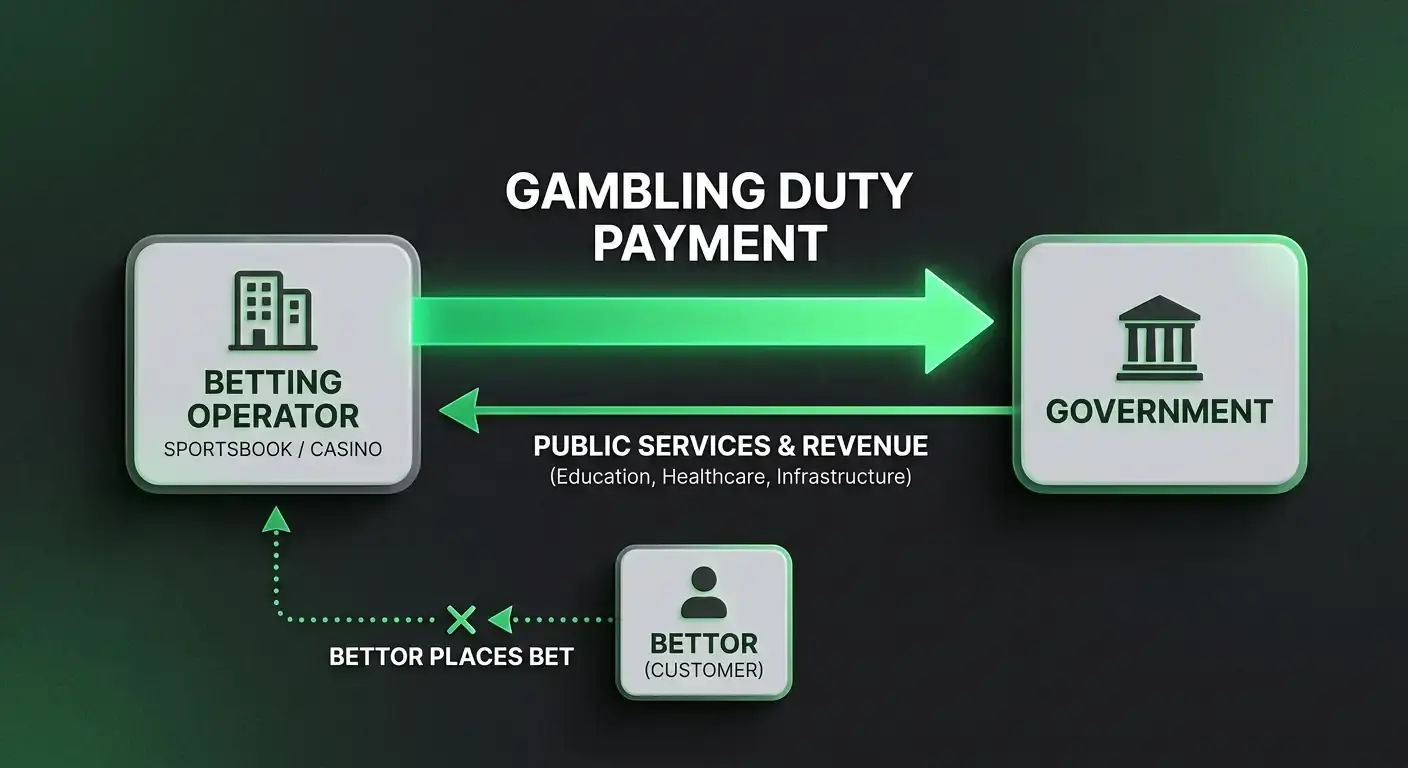
The duties take several forms depending on the product. Betting attracts a general betting duty on the operator’s profits, while remote gaming, the online casino and slots products, attracts Remote Gaming Duty. These are levied on the operator’s gross gambling yield, broadly the amount they keep after paying out winnings, which is why the Treasury’s receipts track the industry’s profitability so closely. The tighter restrictions introduced in recent years, including the online slots stake limits of five pounds per spin for those 25 and over and two pounds for those aged 18 to 24 since April 2025, also shape how much operators take and therefore how much duty they pay.
The practical consequence for you as a bettor is indirect but real. The operator’s tax bill is a cost of doing business, and like any business cost it influences pricing, promotions and the margins built into odds. You do not pay the duty directly, but you are not entirely insulated from it either, because the operators factor their tax burden into the value they offer. That connection becomes more relevant when the duties change.
What the 2026 changes actually mean
The most significant change on the horizon is a rise in Remote Gaming Duty to 40 percent from April 2026, a substantial increase that will reshape the economics of the online gambling industry. While this duty applies to remote gaming products such as online casino and slots rather than to sports betting directly, the effects ripple across the whole sector, because the major operators run both betting and gaming arms and manage their economics as a whole.
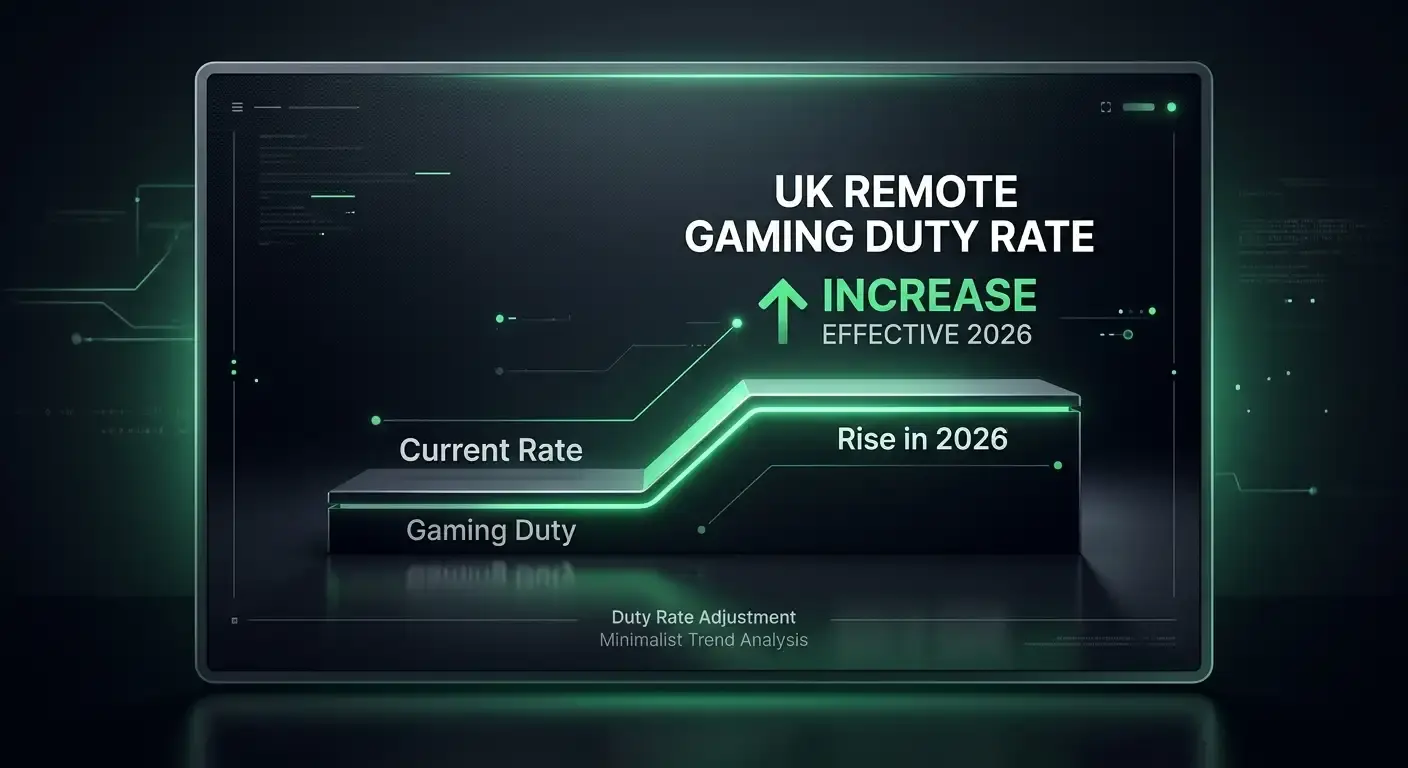
The honest question every bettor will ask is whether a higher operator duty ends up costing them, and the realistic answer is that it might, indirectly. When operators face a heavier tax burden on part of their business, the pressure to maintain profitability can show up in tighter odds, less generous promotions or reduced bonuses across their products, including sports betting. Operators do not absorb a major tax rise in silence; they adjust, and some of that adjustment can reach the value they offer customers. None of this changes the fundamental rule that your winnings remain tax-free, but the broader environment in which you bet is shifting.
It is worth keeping this in proportion. The duty rise is significant for the industry but does not alter the core position for bettors: you still pay no tax on what you win, and you still cannot deduct what you lose. What changes is the competitive and pricing landscape around you, the kind of shift a thoughtful bettor stays aware of when assessing whether the value on offer is as good as it used to be, rather than a direct cost landing on your own bets.
Keeping records even when the taxman doesn’t ask
Although the tax system requires you to keep no records of your betting whatsoever, I keep meticulous records anyway, and I recommend every serious bettor does the same for reasons that have nothing to do with HMRC. A complete log of your bets, the stakes, selections, odds, reasons and results, is the only honest measure of whether you are genuinely profitable or merely remembering your wins and forgetting your losses, which is a trap nearly every bettor falls into without a record to check against.

Good record-keeping reveals the truth about your betting that memory always distorts. It shows your real strike rate, your actual profit or loss over time, the markets where you genuinely have an edge and the ones where you are quietly bleeding money. None of this is required for tax purposes, because your winnings are tax-free and your losses irrelevant to the Treasury, but all of it is essential for the bettor who wants to improve rather than simply hope.
There is also a practical dimension around large transactions. While your winnings are not taxed, moving substantial sums in and out of bank accounts can occasionally prompt routine queries from financial institutions about the source of funds, and a clear record of your betting activity makes answering such questions straightforward. Choosing well-run, properly licensed operators makes this whole picture cleaner, because licensed sites maintain proper records and handle withdrawals transparently, and my guide to choosing a licensed bookmaker covers exactly what to look for in an operator you can trust with your money.
