


So this is a data-driven guide
Football is the single biggest slice of regulated remote betting in this country, and it isn't close. In the financial year running April 2024 to March 2025, online betting in the UK produced gross gambling yield of 2.6 billion pounds, and football alone accounted for 1.3 billion of that, comfortably ahead of horse racing on roughly 766.7 million. I've spent seven years pricing Premier League and European markets, and that one figure tells you why this guide exists: there is enormous money flowing through football betting, almost all of it from people who never learned how the maths underneath actually works.
That gap is the whole reason I write the way I do. Around one in ten adults in Britain places an online sports bet now, and a far larger share dabbles during a World Cup or a cup final, yet most "how to bet" guides online are either thinly veiled advertising for a sportsbook or a list of bet types copied from the operator's own help page. They tell you what a both-teams-to-score market is. They almost never tell you what it costs you, why the bookmaker offers it, or how to tell a fair price from a fleecing.
So this is a data-driven guide, written by someone who reads the regulator's quarterly numbers for fun and has lost enough money over the years to respect every penny of a stake. I'll cover how odds really work, the bet types worth your attention, how to build and size a bet, where accumulators quietly drain bankrolls, what changes when you bet live, and how to spot a properly licensed bookmaker.
If you take nothing else from this opening, take this: betting on football is not a way to make money. It is a leisure activity with a built-in cost, like a cinema ticket or a round of golf. The bettors who last understand that cost precisely, manage it deliberately, and treat any winning run as variance rather than skill.
What This Guide Gives You in Sixty Seconds
- Football is the UK's biggest remote betting market at 1.3 billion pounds in yearly gross gambling yield, and it's priced to win against you, so understanding the maths is your real edge.
- Odds are just probability with a margin attached. Convert every price to a percentage and bet only when you honestly think the outcome is more likely than that.
- Accumulators generate 60 to 75 percent of bookmaker revenue from a fraction of the stakes because the margin compounds on every leg. Treat them as entertainment, never strategy.
- Bet only on a UK Gambling Commission licensed site, set a bankroll you can lose, stake 1 to 3 percent per bet, and use deposit limits before you need them.
The Real Size of Britain's Football Betting Market
The first time I pulled the Gambling Commission's full industry breakdown, the number that stopped me wasn't the headline revenue. It was the volume. Britain places around 290 million online bets every single month. That's not 290 million pounds, that's 290 million individual decisions to back something, every thirty days, year-round.
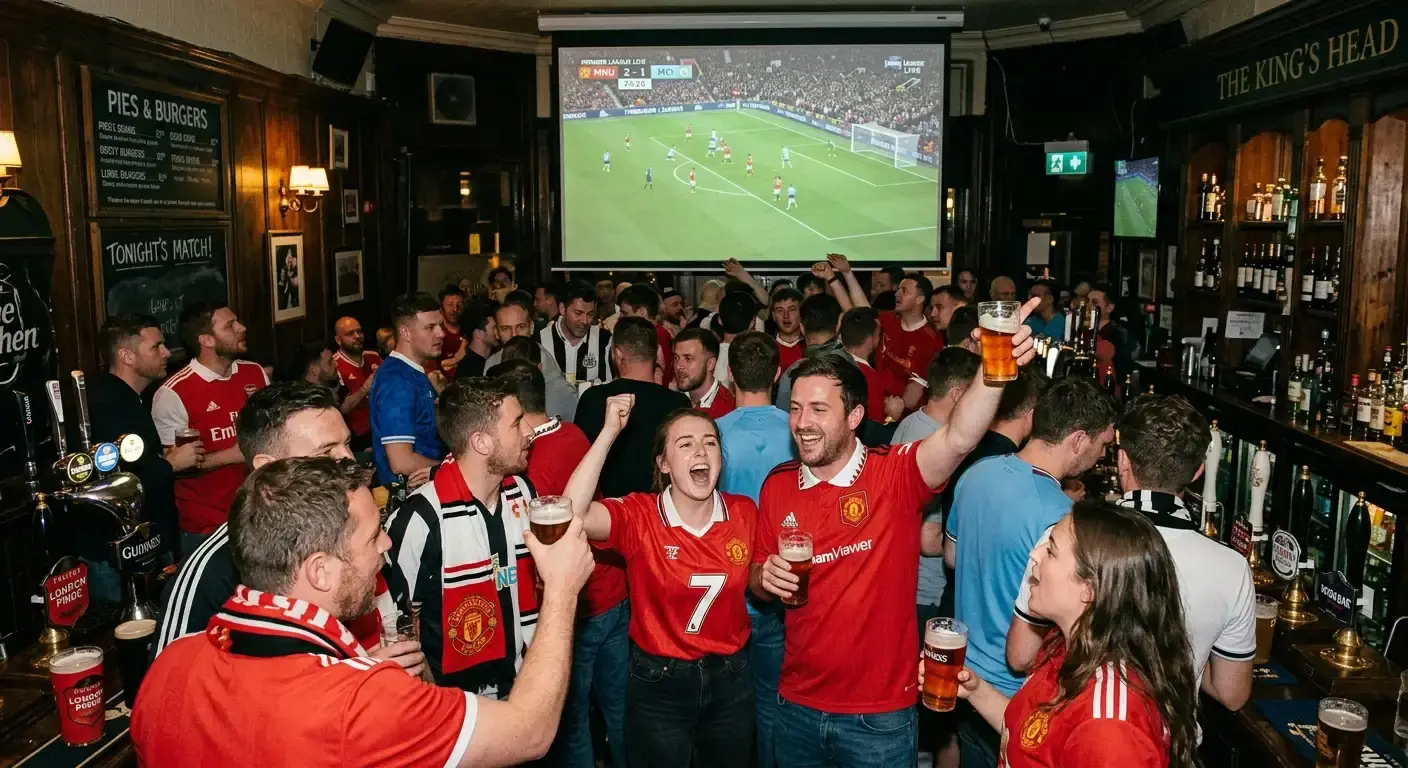
Understanding that scale matters because it tells you who you're actually competing against. When you place a bet, you're not playing the bookmaker as an individual, you're entering a market of millions of bets where the operator has set a price designed to win regardless of which side comes in. Remote casino, betting and bingo together produced 7.8 billion pounds of gross gambling yield across that 2024 to 2025 year, and while online casino dominates with around 5.0 billion, betting is where football lives, and football is the engine of the betting side.
1.3bn
Gross gambling yield from football betting alone, the largest single remote betting segment in the UK
24.4m
Active accounts held with remote casino, betting and bingo operators across Britain
290m
Online bets placed in the UK every month
1.0bn
Total customer funds sitting in UK gambling accounts at any given time
Those 24.4 million accounts aren't 24.4 million people, because plenty of us hold several, but they show how normalised this has become. The demographic picture is sharper than most people assume. Roughly 15 percent of men in Britain place sports bets, against about 4 percent of women, measured early in 2025. Live football is the most popular form of in-play betting in the country, with about 5 percent of all adults and 9 percent of men engaging with it. If you're a man between your twenties and your forties reading this, you are squarely in the most-targeted group in the entire market, which is exactly why a clear head about the maths is your single biggest edge.
Of British gamblers, 37 percent now play online compared with 27 percent who bet in person. The shop on the high street hasn't died, but the centre of gravity moved to the phone in your pocket years ago, and every betting app reflects that.
I labour these numbers because the competitors I read never use them. The point isn't that football is popular, it's that you're stepping into the most heavily engineered consumer market in British leisure, one where the product is priced to the decimal and optimised against your psychology. The good news is that the same regulator producing these figures forces a level of transparency and consumer protection you won't find in most of the world, and knowing the landscape is the first step to using it.
Reading Odds Without the Headache
I once watched a friend turn down a bet at 6/4 because he thought 2.50 next to it on the same screen was a "better" price on a different outcome. They were the same number. That confusion, dressed up in two formats, is the single most common thing that trips up new UK bettors, and the first thing I want to clear out of the way.
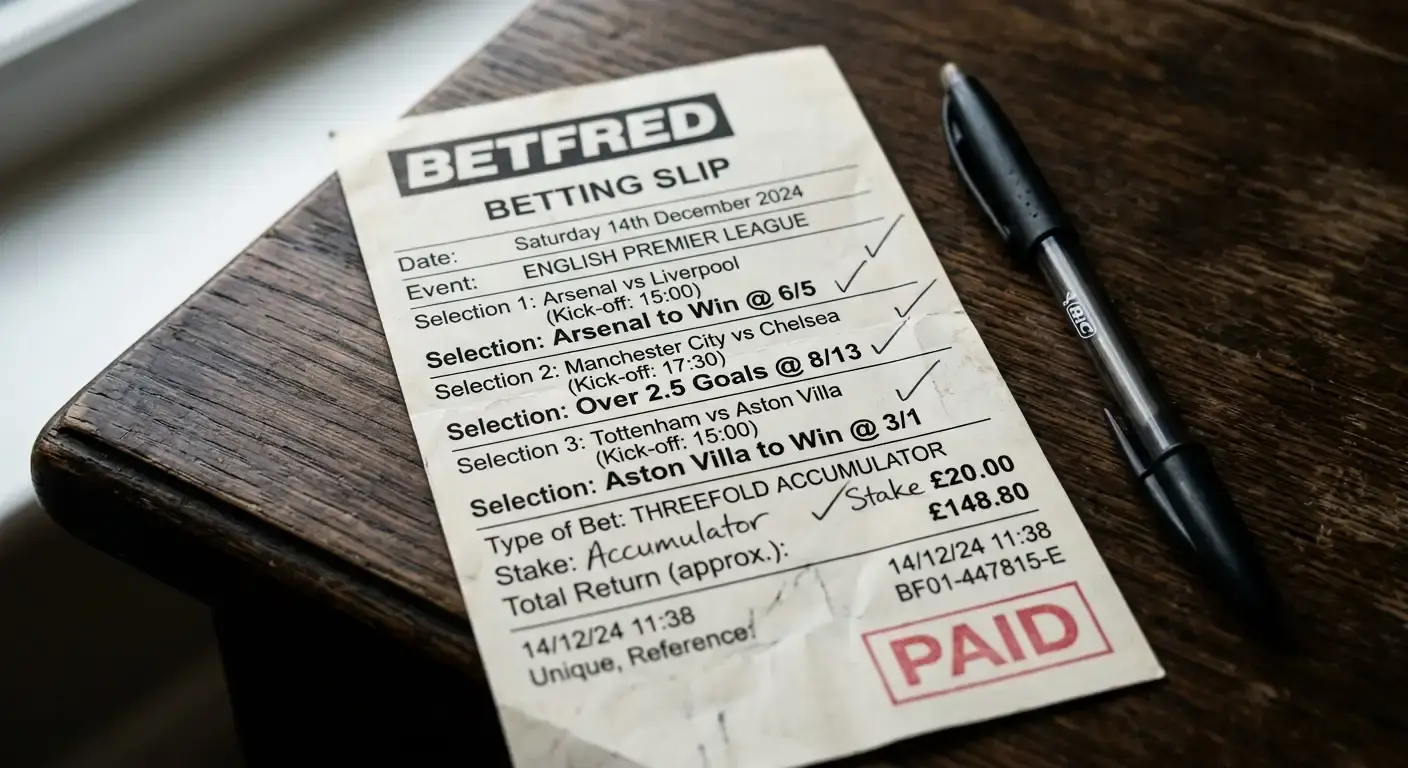
Odds do one job: they tell you how much you win and, hidden inside that, how likely the bookmaker thinks the outcome is. In Britain you'll see two formats constantly, sometimes side by side, and you need to be fluent in both because they describe the same thing.
Fractional odds — the traditional UK format, written like 6/4 or 2/1. The number on the left is your profit, the number on the right your stake. So 6/4 means a 4 pound stake returns 6 pounds profit plus your 4 back, 10 pounds total.
Decimal odds — the format favoured across Europe and on betting exchanges, written like 2.50. You multiply your total stake by the number to get your total return, profit and stake combined. A 4 pound stake at 2.50 returns 10 pounds. Decimal is simply fractional with your stake folded in, which is why I run all my own calculations in it.
Worked example: same price, two formats
Suppose a home team is offered to win at fractional odds of 6/4. A 10 pound stake wins 15 pounds profit, returning 25 pounds total.
The same outcome in decimal is 2.50. A 10 pound stake multiplied by 2.50 returns 25 pounds total, which is 15 pounds profit plus your 10 back.
To convert fractional to decimal: divide the left number by the right, then add 1. So 6 divided by 4 is 1.5, plus 1 equals 2.50.
The deeper skill is reading the probability buried inside the price, because that's what you're really betting against. Decimal odds convert to an implied probability by dividing 1 by the odds. A price of 2.50 implies a 40 percent chance. A price of 1.50 implies around 67 percent. The bookmaker is telling you, in the only language that matters, how often they expect this to land.
Here's the catch nobody puts on a marketing banner: if you add up the implied probabilities of every outcome in a match, they come to more than 100 percent. That extra slice is the bookmaker's margin, the built-in edge that pays their staff and their shirt sponsorships. It's the reason long-term betting is hard, and it's grown over time. In the United States, average sportsbook hold climbed from 6.7 percent in 2018 to 10.15 percent by 2025, a useful benchmark for how operators widen their cut as betting goes mainstream. The principle is identical here.
You don't need to master the full margin calculation to be a competent bettor, but you need to know it exists and roughly how big it is, because it varies enormously by market. For the full breakdown of how that overround is calculated and which markets carry the fattest cut, I've written a walkthrough of how football betting odds translate into implied probability and margin. For now, hold the core idea: the price isn't a payout, it's a probability with a tax stamped on it.
The Bet Types That Actually Matter
Walk into any conversation among bettors and you'll hear a dozen market names tossed around like everyone was born knowing them. Match result, BTTS, over/under, handicaps, correct score. New bettors nod along and quietly panic. So let me cut the list down to what earns its place, and be honest about which markets reward you and which reward the bookmaker.

The foundation of football betting is the three-way market, often shown as 1X2. You're backing one of three outcomes: the home win, the draw, or the away win. The "1" is the home side, the "X" is the draw, the "2" is the away side. It's the purest expression of who you think wins, and where almost everyone starts. The draw being a live third option is what makes football harder to price than a two-outcome sport, and why so many alternative markets exist to slice that uncertainty differently.
1X2 / three-way market — a single bet on the home win, the draw, or the away win. The most fundamental football market, and the one every other bet type is measured against.
Once you're comfortable with the match result, the next tier lets you bet on the character of the game rather than the winner. Over/under goals asks only how many goals the match produces, with 2.5 the industry-standard line, so "over 2.5" wins if there are three or more. Both teams to score, written BTTS or GG/NG for goal/no goal, is a simple yes-or-no on whether each side finds the net. Neither requires you to pick a winner, which is why they're so popular with people who find the draw maddening.
| Market | What you're predicting | Typical difficulty | Best suited to |
|---|---|---|---|
| Match result (1X2) | Home win, draw or away win | Moderate, the draw complicates everything | Beginners forming a basic view |
| Over/Under goals | Total goals above or below a line | Lower, only one variable | Bettors with a read on tempo and style |
| Both teams to score | Whether both sides find the net | Lower, binary outcome | Those avoiding the win-or-lose decision |
| Asian handicap | Result with a goal head start or deficit | Higher, removes or splits the draw | More experienced bettors backing a side strongly |
| Correct score | The exact final scoreline | Very high, low strike rate | Small-stake bettors chasing big prices |
Handicap markets are where things get more sophisticated, and where a lot of value lives if you know what you're doing. A handicap gives one team a virtual head start or deficit, so backing a strong favourite at minus one goal means they need to win by two or more for your bet to land. The Asian handicap variant removes the draw entirely or splits your stake across two lines, which tightens the price in ways that genuinely reward study before you commit to it.

At the far end sits correct score, the market that pays the longest prices and lands least often. Predicting an exact 2-1 is genuinely hard, which is why the odds look so tempting. The popularity of combination markets has surged here too: in a recent US betting census, 41 percent of bettors named same-game parlays or bet builders as their preferred bet type, and the same appetite for stacking selections within one match is everywhere in the British game now. Live markets reinforce it, with in-play betting now making up 53.4 percent of all online betting activity.
My honest advice is to resist the gravity of the exotic. The flashiest markets, correct score, scorecast, the seven-leg same-game special, exist because they're profitable for the operator, not because they're good value for you. Master the three-way market and the goals markets first. Understand handicaps before you touch them. Treat everything beyond that as entertainment you've consciously chosen to pay for, not a path to profit.
Building Your First Bet, Step by Step
The first bet I ever placed properly, as opposed to the random pound-on-a-coupon stuff of my teens, took me about forty minutes because I checked everything three times. That sounds excessive. It wasn't. The difference between a bettor who lasts and one who burns out in a month is almost entirely visible in those first few deliberate bets, where you build a process instead of an impulse.

A football bet has four moving parts you control: the selection, the market, the stake, and the timing. Get those four right, consistently, and you've separated yourself from most of the market. Here's what a deliberate first bet looks like, end to end, using a plain example with no real teams or operators attached.
Pricing a simple match-result bet
Suppose you've formed a view that a home side should beat a struggling visitor, and the bookmaker offers the home win at decimal odds of 1.80.
Step one: convert the price to implied probability. 1 divided by 1.80 equals roughly 0.556, so the market gives this a 55.6 percent chance.
Step two: form your own honest estimate. If you genuinely think the home win is more likely than 55.6 percent, the bet has potential value. If you think it's less, walk away, however much you fancy the team.
Step three: size the stake. With a 100 pound bankroll and a flat 2 percent unit, your stake is 2 pounds, returning 3.60 at 1.80, a 1.60 profit.
Step four: record it. Selection, price, stake, your estimated probability, and the result. This single habit teaches you more than any tipster ever will.
Timing is the part beginners ignore entirely. Odds move between when a market opens and kick-off, sometimes sharply, as team news lands and money flows in. Backing a price early can lock in better value before the crowd arrives, or leave you holding a worse number if news breaks your way afterwards. There's no universal right answer, but there is a wrong one, which is betting without any thought about whether the price in front of you is likely to get better or worse.
Run through this before every bet
- Do I have a real reason this outcome is more likely than the price implies, beyond fancying the team?
- Have I converted the odds to an implied probability and compared it to my own estimate?
- Is this stake within my pre-set unit size, not inflated because I feel confident?
- Have I checked the team news, lineups and any late market movement?
- Will I record this bet honestly afterwards, win or lose?
- Am I betting because I see value, or because I'm bored, chasing a loss, or caught up in a big match?
That last question is the one that saves bankrolls. The most expensive bets I've ever placed weren't the ones where my analysis was wrong, they were the ones I placed for emotional reasons dressed up as analysis. A checklist feels almost childishly simple, but it's a circuit breaker between the impulse and the stake, and that gap is where good decisions live.
Accumulators and the Trap of the Big Payout
Ask a casual bettor about their best ever week and they'll tell you about an accumulator. Ask them about their record across a season and the room goes quiet. That contrast is the single most important thing to understand about accas, and the industry's own numbers tell the story more bluntly than I ever could.
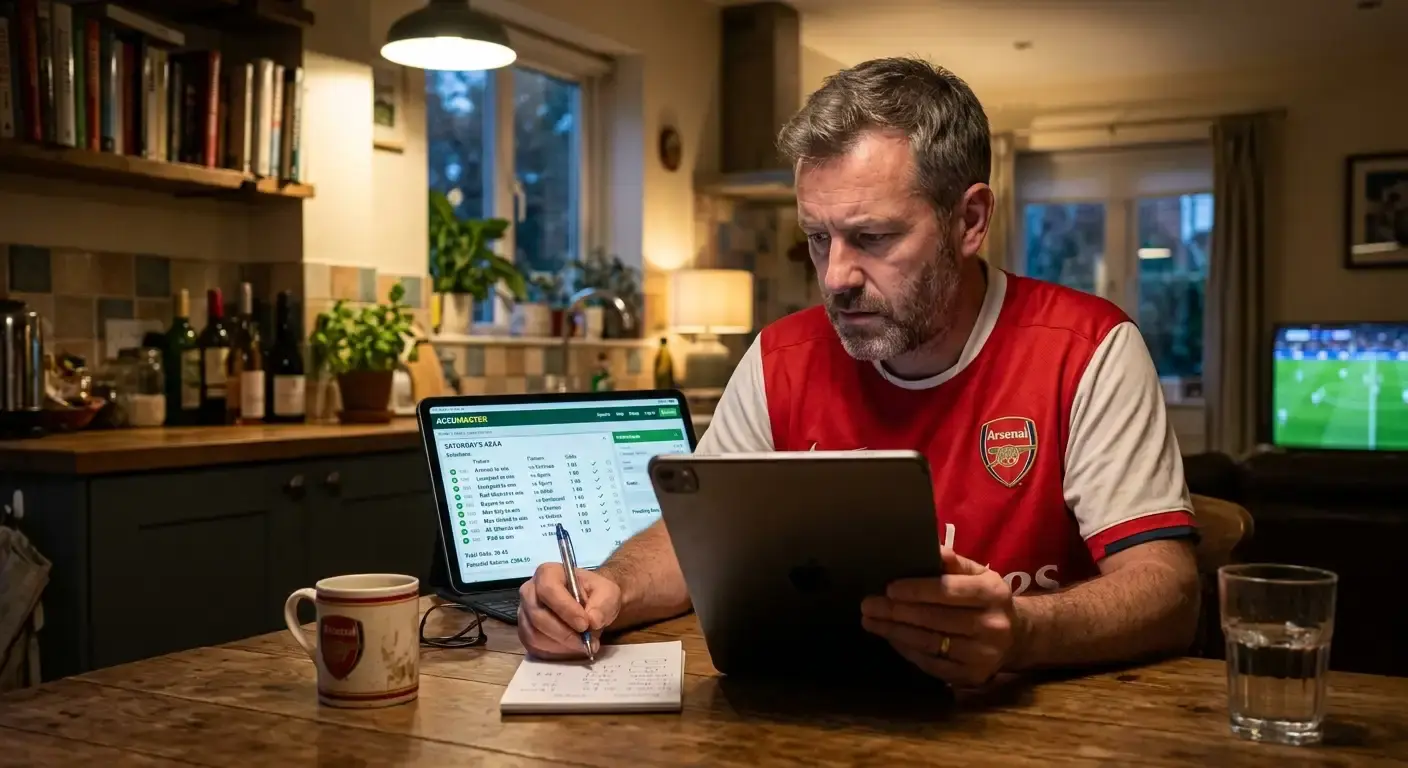
An accumulator, or acca, combines several selections into one bet where every leg must win for the whole thing to pay. The appeal is obvious: the odds multiply together, so four modest selections can turn a small stake into a life-affirming return. The mechanics are simple multiplication. Four legs at decimal odds of 1.50 each multiply to roughly 5.06, so a 10 pound stake returns about 50.60 if all four land.
The proportion of sports bettors placing accumulators or parlays nearly doubled in six years, climbing from 17 percent in 2018 to 30 percent in 2024. Operators noticed long before the public did, which is why every app now nudges you toward stacking selections.
Here's the part the marketing never mentions. The bookmaker's margin doesn't apply once to an acca, it compounds on every single leg. Each selection carries its own slice of overround, and multiplying the legs multiplies the margin too. That's why accumulators are so profitable for operators relative to how much money goes into them. Industry analysis puts it starkly: parlays and accas generate somewhere between 60 and 75 percent of bookmaker revenue while accounting for only 25 to 35 percent of the money staked. A minority of the handle produces the majority of the profit, and accas are why.
I'm not telling you to never place an accumulator. I place them myself, for fun, with money I've consciously written off as entertainment. I'm telling you to never confuse an acca with a serious attempt to win money. The compounding margin makes the long-term maths brutal, and the occasional big win you remember is precisely the hook that keeps the whole product profitable for the other side.
There are wrinkles worth knowing, like acca insurance that refunds your stake if one leg lets you down, and the difference between stacking selections across many matches versus building combinations within a single game. Those features change the maths in ways worth understanding before you lean on them, and I've gone deep on the compounding cost and the sensible way to approach them in a full guide to how football accumulators work and what they really cost. The headline fits in one sentence: the bigger the dream the acca sells you, the more certain it is that the price is stacked against you.
Interactive tool
Accumulator margin calculator
An acca's odds multiply — but so does the bookmaker's margin, on every single leg. Build your acca and see the dream payout next to the hidden cost that makes accas the most profitable product on the book.
Your legs · decimal odds
Margin baked in, by number of legs
- Return if every leg wins £50.63
- Combined odds 5.06
- Total margin baked in 21.6%
- Long-run value of your £10 £8.23
Betting While the Match Is Happening
The fastest I've ever seen a market move was a penalty awarded in the ninetieth minute of a tight game. In the time it took the referee to point to the spot, the price on the trailing team to draw level collapsed from generous to barely worth touching, and the market suspended before half the bettors watching could react. That's in-play betting in a sentence: the odds are alive, and they don't wait for you.

In-play, or live, betting means placing bets while the match is happening, on markets that reprice continuously as the game unfolds. It has quietly become the dominant form of football betting in Britain. Live football is the single most popular live betting format in the country, and across all sports, in-play now accounts for 53.4 percent of online betting activity, a figure projected to keep growing for years. If pre-match betting is a photograph, in-play is a live feed, and it rewards a completely different set of skills.
The core difference from pre-match betting is that the price is constantly being rewritten in response to what's happening on the pitch. A goal, a red card, a missed chance, even a sustained spell of pressure, all of it feeds into algorithms that adjust the odds in real time. You're no longer betting against a price someone set hours ago, you're betting against a price reacting to the same match you're watching, often faster than you can.
That speed cuts both ways. Markets sometimes overreact, swinging too far on a single moment before settling, and a disciplined bettor who has done the pre-match homework can occasionally catch a price the algorithm has temporarily mispriced. But in-play betting is also engineered to be relentless and emotional, with a new market every thirty seconds, a perfect machine for turning a calm evening into a string of impulsive bets you never planned.
There's also a structural reality you can't ignore: latency. There's a delay between the action on the pitch and the odds updating, and another between your tap and the bet being accepted, which is why markets suspend the instant something significant happens. You will never be faster than the operator's data feed, so any live strategy built on "I saw it first" is built on sand. The genuine in-play edges come from reading momentum and game state better than the crowd. I've laid out how live odds update, why markets suspend, and how to stay disciplined when the pace is frantic in a guide to betting on football in-play as the match moves.
Picking a Bookmaker You Can Trust
Everyone wants to talk about the welcome bonus. Forty quid in free bets, enhanced odds for new customers. I understand the appeal, but I'd put it dead last, behind one question that matters far more: is this bookmaker actually licensed to take your money in Britain, and will it still be paying out when you win?

The reason this isn't paranoia is the scale of the unlicensed market lurking alongside the legitimate one. Forecasts put the sum staked with illegal operators in Britain on track to more than double by the end of the decade, a black market with no consumer protection, no complaints process, and no obligation to pay you a penny. Against the 24.4 million accounts held with regulated operators, that shadow market is enormous, and growing.
So the foundation of choosing where to bet is the licence. A UK Gambling Commission licence means the operator is bound by rules on fund protection, fair settlement, advertising, and safer gambling tools, and that you have somewhere to turn if something goes wrong. It's the difference between a regulated market that contributed 714 million pounds in betting and gaming tax in 2024 to 2025, and an unlicensed fringe that owes you nothing.
| Criterion | What a trustworthy site shows | What should make you walk away |
|---|---|---|
| Licensing | A clear UK Gambling Commission licence number, verifiable on the public register | Vague claims, offshore-only licensing, no register entry |
| Safer gambling tools | Deposit limits, time-outs, self-exclusion and reality checks built in | Tools hidden, hard to find, or absent entirely |
| Payments | Transparent deposit and withdrawal terms, no credit cards (banned in the UK) | Pressure to deposit large sums, opaque withdrawal conditions |
| Identity checks | Proper age and identity verification before you can bet | No verification at all, a hallmark of illegal operators |
| Market quality | Competitive odds and a deep range of football markets | Prices noticeably worse than the wider market |
Notice that the comparison above is about criteria, not brands. I won't tell you which operator to use, partly because that's not my job and partly because the right choice depends on what you bet on and how. The absence of identity checks is the single clearest warning sign of an unlicensed site, because a regulated UK operator is legally required to verify who you are before taking a bet.
Before you deposit a single pound anywhere, confirm the operator holds a current UK Gambling Commission licence and that its safer gambling tools are visible and easy to use. A generous bonus on an unlicensed site is worth precisely nothing the moment you try to withdraw a win.
For the full process of verifying a licence, judging odds quality, understanding payment restrictions, and spotting the operators that shouldn't be trusted with your money, I've written a detailed guide to choosing a licensed football betting site in the UK. Treat the bonus as a tiebreaker between two genuinely trustworthy options, never the reason you picked one.
Managing the Money Behind the Bets
I keep my betting money in a completely separate account from everything else in my life, and have done for years. It isn't superstition, it's the most important single decision I've made as a bettor, more important than any selection I've ever got right. The money you bet with has to be money you've already separated from the money you live on, because the moment those two pools mix, every bad decision in betting becomes a bad decision about your life.

Bankroll management is the unglamorous discipline of deciding, in advance, how much you're willing to risk and how much of it goes on any single bet. The competitors I read all say "set a budget" and move on, which is like telling someone to "be healthy" and walking off. The actual skill is in the structure. Your bankroll is the total pot you'd be genuinely fine losing. Your unit is a fixed percentage of that pot, the size of a standard bet.
Setting a unit from a bankroll
Suppose your bankroll, money you can afford to lose entirely, is 200 pounds.
You choose a conservative unit of 2 percent. That makes one unit 4 pounds.
A standard bet is one unit, so 4 pounds. A bet you're more confident in might be two units, 8 pounds, but you cap your maximum at, say, three units to stop confidence becoming recklessness.
Crucially, if your bankroll shrinks to 150 pounds after a bad run, your 2 percent unit shrinks with it to 3 pounds. The percentage stays fixed, the absolute stake breathes with the bankroll.
That last point separates flat percentage staking from the disasters I see most often. Flat staking means your stakes naturally shrink during a losing run and recover as you win, which protects you from the variance that is absolutely guaranteed to come. The most popular betting demographic, men aged 18 to 34, also shows the highest rate of problem gambling at 13.4 percent, and a huge part of what tips someone over that edge is staking discipline collapsing under emotional pressure.
Do
- Keep betting funds physically separate from living money
- Set a fixed unit as a small percentage of your bankroll, around 1 to 3 percent
- Let your stakes shrink automatically when the bankroll drops
- Accept losing runs as variance, not as a problem to fix with bigger bets
Don't
- Chase losses by increasing stakes to "win it back"
- Use staking systems that double your bet after every loss
- Treat a winning streak as proof of skill and ramp up your unit
- Bet money earmarked for bills, rent, or anything you actually need
The instinct to double up after a loss feels mathematically clever and is financially lethal. A few losses in a row, which happen to everyone constantly, can wipe out a bankroll in a single evening under that kind of system. The deeper logic of unit sizing, drawdown, and how staking ties into the size of your edge belongs to a fuller treatment, and I've connected it all in a guide to building a disciplined long-term football betting strategy. Protect the bankroll first, chase profit second, and never let the order reverse.
The 2026 Calendar That Everyone Is Waiting For
There's a particular energy that takes hold of the betting market roughly every two years, and 2026 is shaping up to be the biggest version of it I've seen in my career. A poll of British bettors in February 2026 found that 68 percent plan to bet more across the year's sporting calendar, overwhelmingly pointing at one thing: the World Cup.

The numbers being projected around the 2026 FIFA World Cup are genuinely staggering. Global handle, the total amount staked, is forecast at around 36.9 billion dollars, with an expected 12.3 million new betting accounts opened worldwide for the tournament. The 2022 edition in Qatar drew roughly 35 billion dollars in global handle, itself a 60 percent jump on the tournament before it, so the trajectory is relentlessly upward.
The 2026 World Cup expands to 48 teams and 104 matches, the largest format in the tournament's history. More matches means more markets, more outright bets, more group permutations, and far more opportunities to either find value or get carried away, depending entirely on your discipline.
That expansion is a double-edged sword. More matches and more exotic markets mean more genuine opportunity for a prepared bettor, but also an industrial quantity of new ways to bet impulsively. A 48-team tournament with group permutations, golden boot markets and tournament outrights is a buffet, and buffets are exactly where discipline goes to die.
A tournament is not a different game with different rules. The same margins, the same compounding acca maths, and the same need for honest probability estimates all apply, only now they're wrapped in the emotion of a once-every-four-years event and a marketing blitz designed to make you feel like everyone's winning. They aren't. Set your total tournament budget before the opening match, divide it sensibly across the weeks, and treat the whole thing as entertainment.
The voices inside the industry frame this calendar as the lifeblood of the sport's funding. As the Betting and Gaming Council put it when defending the ecosystem, members fund and sponsor everything from football to darts to rugby league while carrying safer gambling messages to millions of fans, and with the World Cup, the Commonwealth Games and the Grand National all landing in the same year, they argued that weakening that ecosystem now would be an act of self-harm. Take that with whatever pinch of salt you like, but the underlying point stands: 2026 is a year when the entire machinery of betting will be turned up to maximum volume, and your only defence is a plan you made before the noise started.
Keeping It Fun When the Stakes Feel Real
I'll tell you the moment I knew I'd be writing sections like this one for the rest of my career. A reader once messaged me, not for a tip, but to ask whether the fact that he couldn't stop thinking about his open bets during work meant something was wrong. It did. And the most useful thing I could do wasn't to hand him a betting system, it was to point him towards the tools and support that already exist, built into every licensed site in the country.

Responsible gambling isn't a disclaimer tacked onto the end of an article, it's the framework that keeps betting a leisure activity rather than a problem. Britain has one of the most developed systems in the world for this, and a lot of it sits right inside your betting account. Deposit limits cap how much you can put in over a day, week or month. Time-outs let you lock yourself out for a set period. Reality checks interrupt long sessions. And self-exclusion, through the national GamStop scheme, blocks you across every licensed UK operator at once.
The single most useful tool for most people is the deposit limit, set deliberately when you're calm, not in the heat of a losing run. It caps the damage before emotion can take the wheel. GamStop is the heavier instrument: register once and you're excluded from every UK-licensed gambling site for your chosen period, which makes it an effective circuit breaker for anyone who feels their control slipping.
The regulatory environment has tightened deliberately to support this. Since April 2025, online slot stakes have been capped at 5 pounds per spin for those aged 25 and over and 2 pounds for 18 to 24 year-olds, and from April 2026 the Remote Gaming Duty rose to 40 percent. Andrew Rhodes, who led the Gambling Commission through this period, described the next five years as more consequential for gambling regulation than any he'd seen, even compared to his own time running the Commission, which tells you the direction of travel for consumer protection is only one way.
The figures on harm are sobering enough that I won't dress them up. Younger men, the very group most targeted by football betting marketing, show the highest rates of problem gambling. And the unregulated market that sits outside all these protections is forecast to balloon. As the Betting and Gaming Council's chief executive put it, separate analysis forecasts the amount staked with illegal operators in Britain almost doubling from 17 billion pounds to more than 33 billion by 2028, almost one in every five pounds staked online flowing through a black market beyond any safeguard. That's precisely why staying inside the licensed, regulated world matters so much.
If betting has stopped being fun, if you're chasing losses, hiding bets, or thinking about open wagers when you should be thinking about other things, that's the signal to act, not to place one more bet to feel better. Free, confidential support is available through organisations like GamCare and the National Gambling Helpline, and the self-exclusion tools above are there to be used without shame. Reaching for them is a sign of control, not failure.
Every licensed UK operator must offer these tools, and setting them up takes a couple of minutes from your account settings. None of the maths in this article means anything if the activity itself stops being something you genuinely enjoy and can comfortably afford. That comes first, last, and always.
Questions Bettors Ask Me Most
After years of doing this, the same handful of questions come up again and again, usually from people just getting started. Here are the ones I field most often, answered the way I'd answer a friend.
What is the easiest type of football bet for beginners?
The match result, or 1X2, is where almost everyone should start. You're simply backing the home win, the draw, or the away win, which maps directly onto how you already watch a game. Once that feels natural, both teams to score and over/under goals are gentle next steps because you only need a read on whether goals will flow rather than picking an exact winner. Avoid correct score and multi-leg accumulators early on, not because they're complicated but because they're poor value, and bad habits formed on flashy markets are hard to unlearn.
How do 1X2 match odds work in football?
The 1X2 market offers three prices, one for each result: 1 for the home team, X for the draw, 2 for the away team. Each price reflects how likely the bookmaker thinks that outcome is, with the margin baked in. Back the home win at decimal odds of 2.00 with a 10 pound stake and you get 20 pounds back if they win, nothing if they draw or lose. The reason football is harder to price than a two-outcome sport is that the draw is a real, frequent third result, which is exactly why so many alternative markets exist to sidestep it.
How do I read fractional and decimal odds?
Fractional odds like 6/4 tell you profit over stake: a 4 pound stake wins 6 pounds profit, plus your 4 back. Decimal odds like 2.50 tell you total return per unit staked: a 4 pound stake at 2.50 returns 10 pounds, profit and stake combined. They're two ways of writing the same price, 6/4 and 2.50 are identical. To convert fractional to decimal, divide the left number by the right and add 1. I do everything in decimal because it makes comparing prices and calculating returns far quicker, and most apps let you switch the display in settings.
How much should I set aside for a football betting bankroll?
Only ever money you could lose entirely without it affecting your life, kept separate from the funds you live on. There's no universal figure because it depends on your finances, but the structure matters more than the amount. Whatever your total pot, bet a fixed small percentage per wager, somewhere around 1 to 3 percent, so your stakes shrink automatically during a bad run and never balloon during a good one. If you find yourself topping the bankroll up from money meant for bills, that's a clear signal to stop and reassess rather than to deposit more.
Is in-play football betting better than pre-match?
Neither is better, they reward different things. Pre-match betting gives you time to analyse, compare prices and bet without pressure, which suits a methodical approach. In-play betting can occasionally offer value when the market overreacts to a single moment, but it's relentless and engineered to keep you tapping, which makes it far easier to bet impulsively. For most people learning the craft, pre-match is the calmer place to develop discipline first.
Are football accumulators worth it?
As a serious attempt to win money, no. The bookmaker's margin compounds on every leg, which is why accumulators generate 60 to 75 percent of bookmaker revenue from just 25 to 35 percent of the money staked. The maths is heavily against you, and the more legs you add, the worse it gets. As pure entertainment, with a small stake you've written off, they're fine, I place them myself. The mistake is confusing the occasional memorable win with a viable strategy.
Why does it matter if a football betting site is UK-licensed?
Because a UK Gambling Commission licence is the only thing standing between you and a market with no rules. A licensed operator must protect your funds, settle bets fairly, verify your identity, offer safer gambling tools, and answer to a regulator if it doesn't. An unlicensed site owes you none of that, and if you win, you have no recourse when it refuses to pay. With the illegal market in Britain growing fast, this isn't theoretical. The licence is the foundation everything else sits on, which is why I'd check it before I'd glance at a welcome offer.
Where a Smarter Bettor Goes From Here
If you've read this far, you already know more about how football betting works than the large majority of people placing bets this weekend, not because the material is complicated, but because almost nobody bothers to learn the part that matters: the price is a probability with a margin attached, the margin compounds when you stack selections, and the bettors who last manage their money before chasing a result.
The practical path from here is straightforward. Start with the match result market on a properly licensed site. Convert every price to a probability and bet only when you genuinely disagree with it. Set a bankroll you can lose, stake a small fixed percentage, and write down every bet. Treat accumulators and the exotic markets as the entertainment they are, not as a plan. And lean on the safer gambling tools early, while it's easy, rather than late, when it's hard.
Football betting in Britain is a 1.3 billion pound market engineered around your psychology, and your single biggest edge is refusing to play the way it wants you to. Understand the odds, respect the margin, protect your bankroll, and keep it fun. Do that consistently and you'll already be ahead of nearly everyone else holding a betting slip.
Everything beyond this guide is depth, and there's plenty of it: the mechanics of reading odds, the discipline of long-term strategy, the true cost of accas, the rhythm of live markets, and the business of choosing where to bet. Follow the threads that interest you. The foundation never changes, and you're standing on it.
