


The boring discipline that outlasts every hot streak
I have met punters with a genuinely sharp eye for a bet who went broke anyway, and the reason was never their picks. It was that they bet too much when they were confident and chased too hard when they were behind, until a normal losing run that any winning method survives wiped them out entirely. Bankroll management is the unglamorous machinery that keeps you in the game long enough for your edge to matter, and without it, being right is worthless.
The core idea is to treat your betting money as a ring-fenced fund, separate from your life, and to stake it in consistent proportions rather than on the swing of your mood. This matters more for football bettors than almost anyone, because football’s weekly rhythm tempts you into constant action, and constant action without a staking framework is how bankrolls quietly evaporate. Get this right and the rest of your betting has a foundation to stand on.
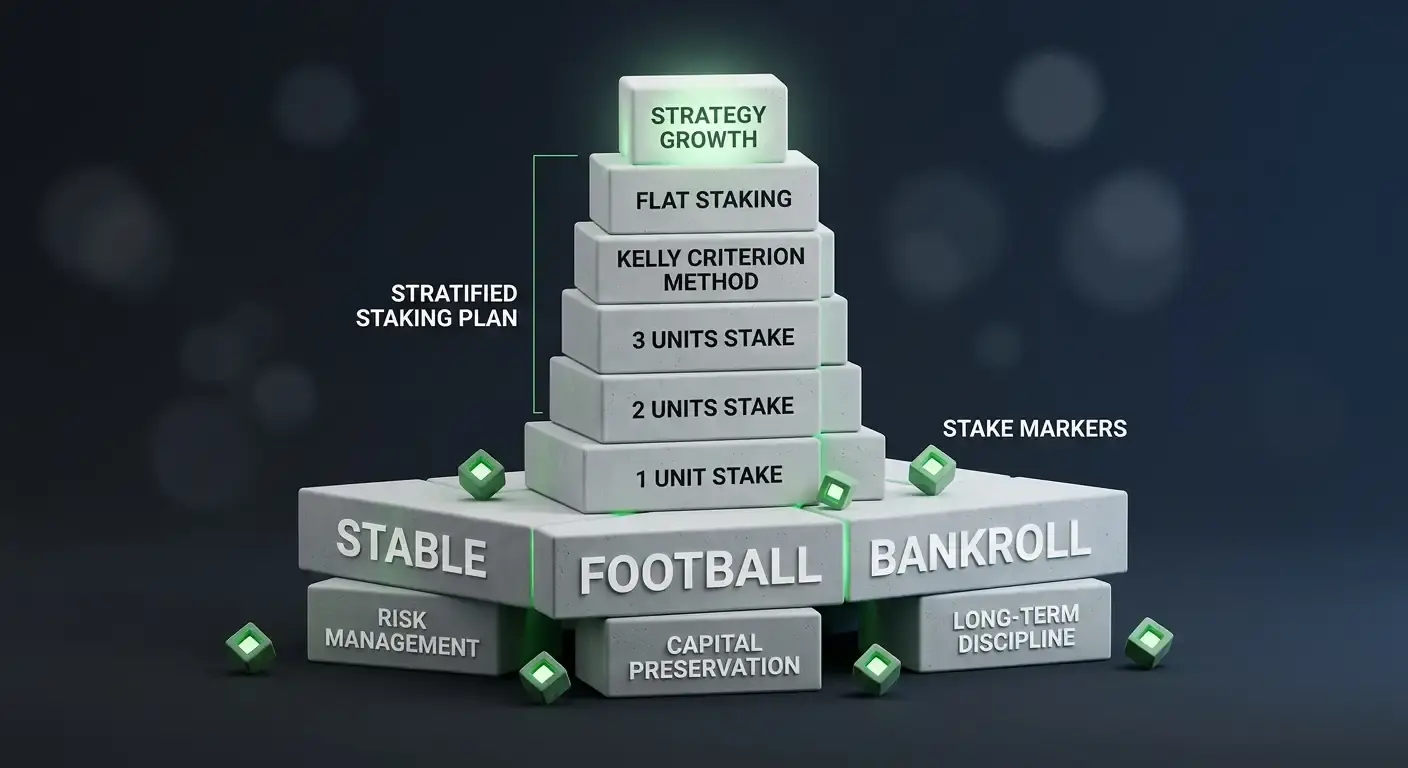
Setting a bankroll you can actually afford to lose
Before you size a single bet, you size your fund, and the rule here is absolute: your bankroll is money you can lose entirely without it touching your rent, your bills or your peace of mind. The moment betting money and living money mingle, every decision gets distorted by stakes that are too high for your real financial life, and that is where the trouble starts.

This is not just prudent, it is a genuine safeguard. Young men aged 18 to 34 show the highest rate of problem betting of any group, at 13.4 percent, and the common thread in those harms is betting money that was never disposable in the first place. A properly defined bankroll is the first and most important line of defence, because it caps the absolute most you can lose at a figure you decided on calmly, in advance, rather than in the heat of a bad afternoon.
I recommend depositing your full bankroll into a dedicated betting account and never topping it up on impulse. The fund is the fund. If it grows, your unit size can grow with it; if it shrinks, your units shrink too, but you do not reach back into your current account to refuel a losing streak. That single rule, the bankroll is a closed system, prevents the most destructive behaviour in all of betting.
Units and the case for flat staking
Once your bankroll is set, you stop thinking in pounds and start thinking in units. A unit is a fixed percentage of your bankroll, typically somewhere between one and three percent, and it becomes your standard bet size. On a thousand-pound bankroll, a one percent unit is ten pounds, and that ten pounds is what a normal bet looks like regardless of how strongly you fancy it on a given day.
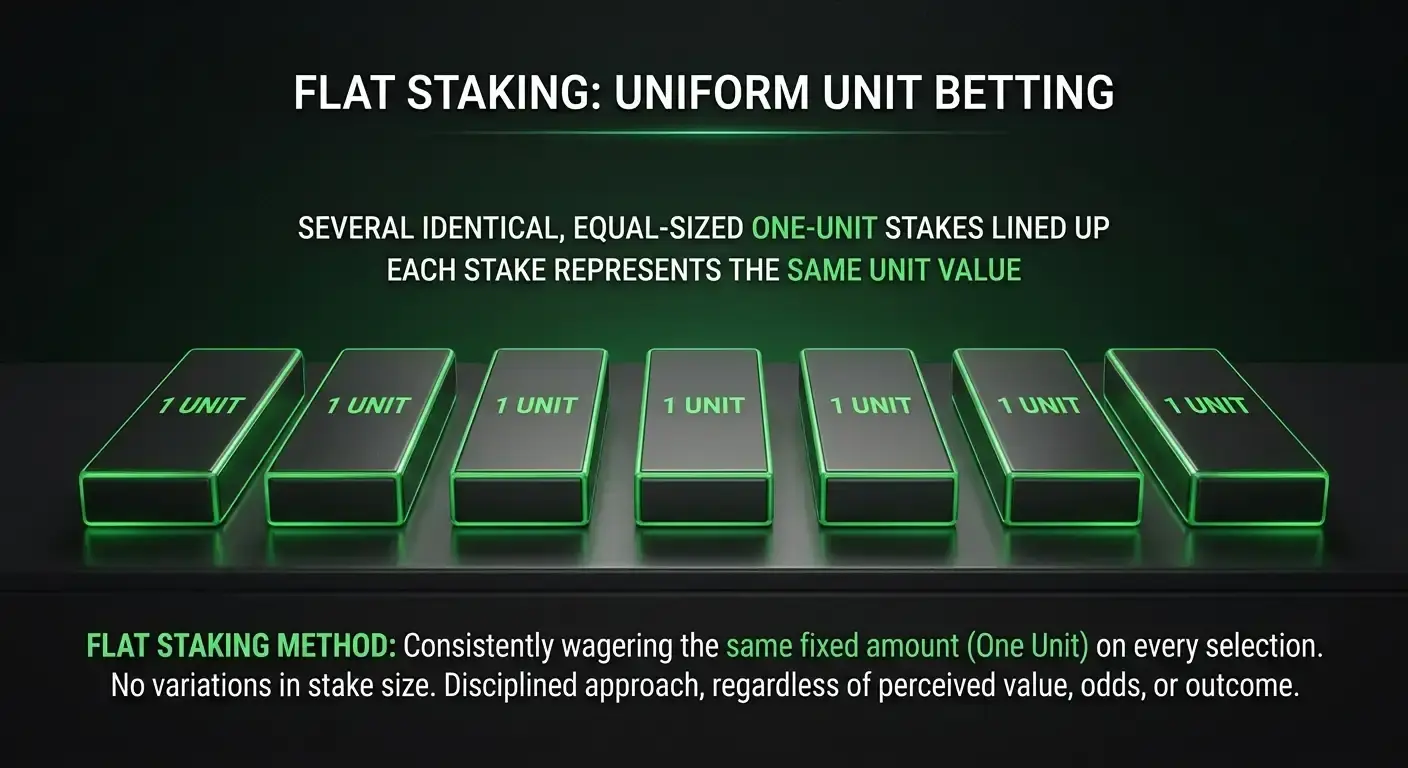
Flat staking means betting the same one unit on every selection, and it is the approach I steer almost everyone towards, especially anyone still establishing whether their method even works. Its great virtue is that it removes emotion and ego from sizing. You are not betting big because you are sure and small because you are nervous; you are betting one unit, every time, which means your results reflect the quality of your picks rather than the volatility of your confidence.
The mathematical beauty of flat staking is how it survives variance. Because every bet is the same fraction of your bankroll, a losing run erodes you gradually and predictably rather than catastrophically, and no single overconfident wager can blow a hole in your fund. Variable staking plans that bet more on stronger fancies can outperform when your confidence is well-calibrated, but they punish you savagely when it isn’t, and most bettors badly overestimate how calibrated they are. Flat staking is the humble option that keeps you solvent while you find out the truth.
Surviving the drawdown that will come
Every bettor who lasts experiences drawdown, the stretch where your bankroll falls from its peak and stays down, sometimes for weeks. I want to be clear about this because it breaks more people than bad picks ever do: a losing run is not evidence your method is broken. It is the normal, expected texture of betting, and the bettors who blow up are usually the ones who panic during a perfectly ordinary downswing.
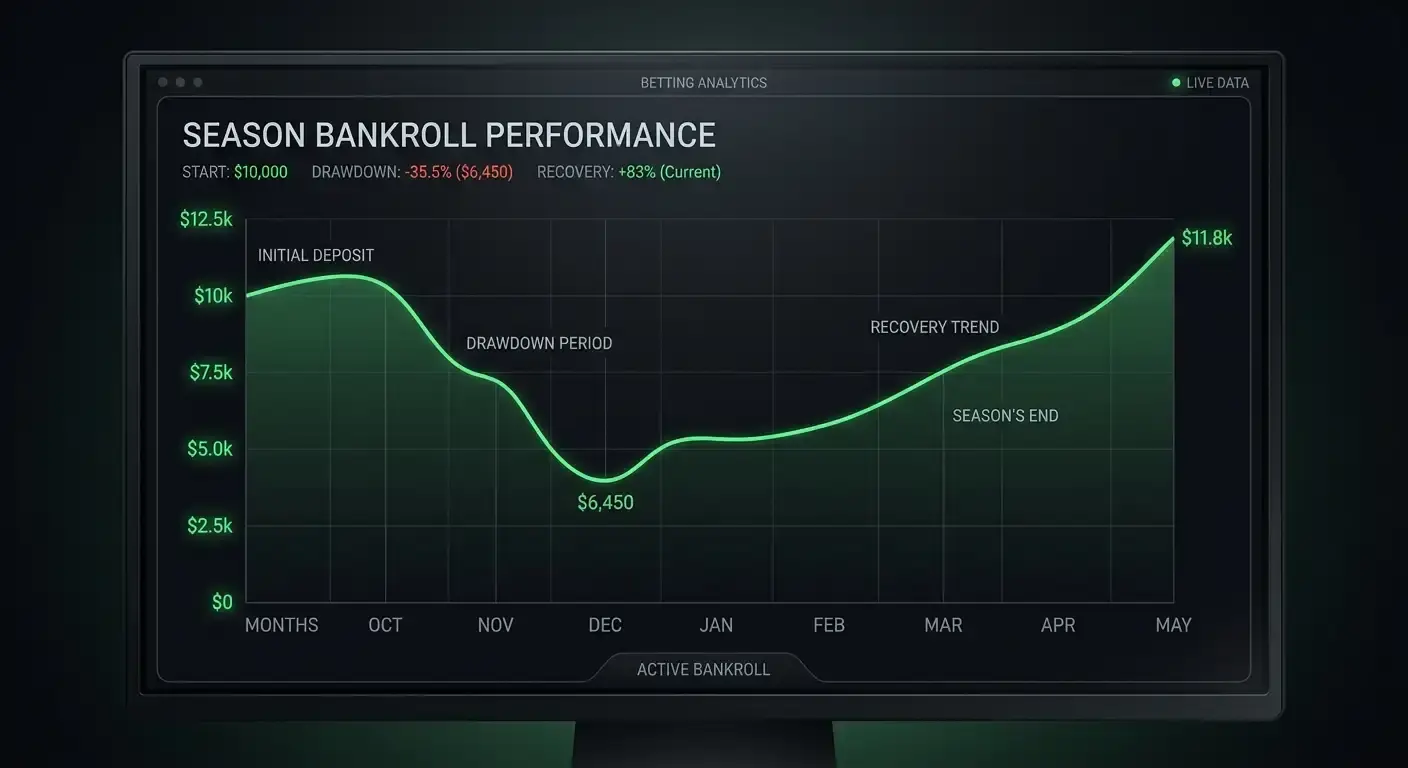
The arithmetic of drawdown is sobering and worth internalising. Even a genuinely profitable method built on bets that win, say, 55 percent of the time will routinely produce losing streaks of five, six, seven bets in a row simply through chance. A flat one-percent staking plan absorbs that comfortably, leaving your bankroll bruised but intact. The same losing run on a reckless ten-percent staking plan can halve your fund and shatter your discipline at the same moment.
The response to drawdown is the hardest discipline in betting: do nothing different. You keep staking your normal unit, you keep applying your method, and you wait for variance to revert, because the one thing guaranteed to turn a survivable drawdown into a fatal one is increasing your stakes to win it back faster. That impulse, the chase, is the single most destructive instinct a bettor has, and a fixed staking plan is the structural barrier that stops you acting on it.
Comparing the staking plans on the table
You will encounter a handful of named staking systems, and it helps to know where each one sits. Flat staking, betting one unit every time, is the baseline I have already argued for, prized for its stability and its honesty about variance. Percentage staking, where your unit is always a percentage of your current bankroll rather than your starting bankroll, compounds your gains in winning runs and automatically shrinks your stakes during losing ones, which is a sensible refinement many serious bettors adopt.
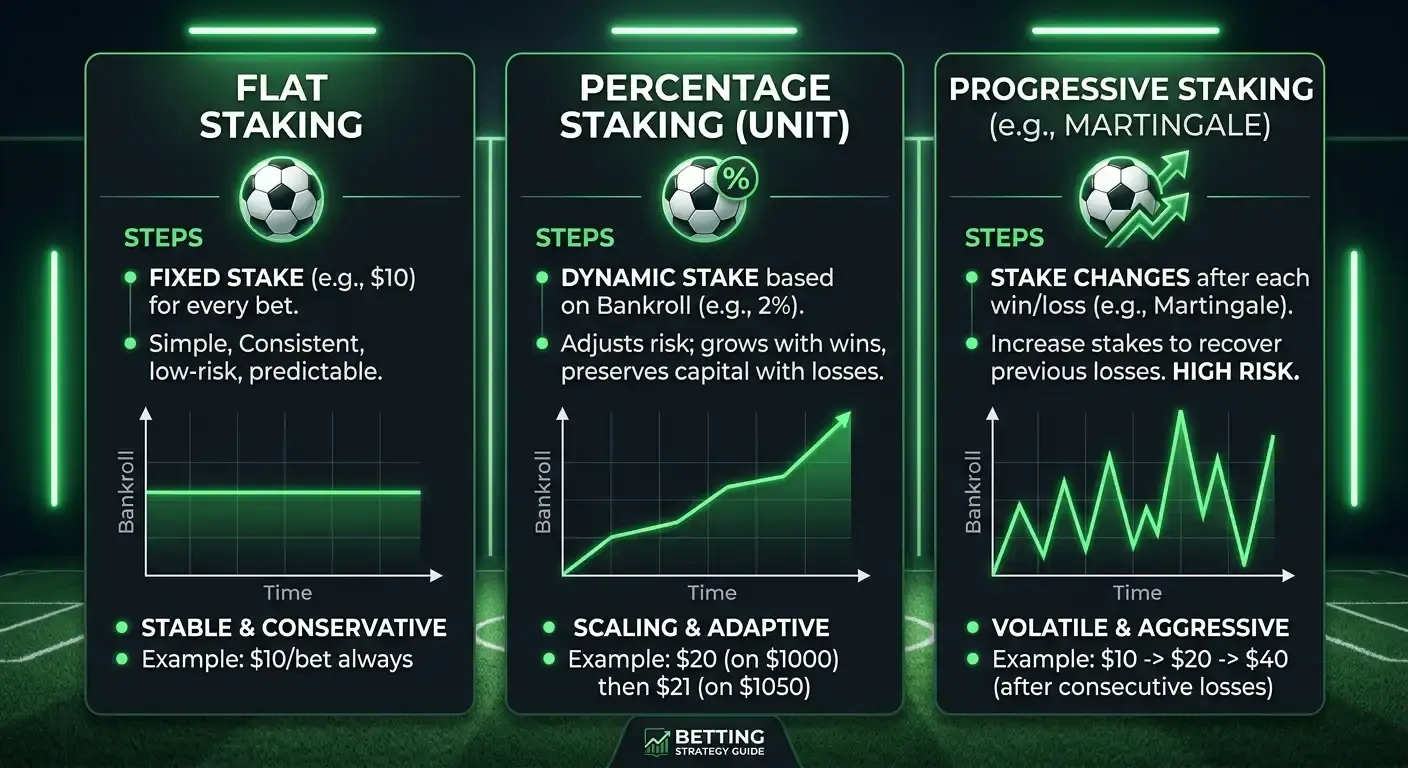
Then there are the progression systems, and here I get firm. Plans like the Martingale, which doubles your stake after every loss to recover it on the next win, are mathematically seductive and practically lethal. A run of losses that flat staking shrugs off escalates a Martingale stake into the stratosphere, and you hit either the table limit or the bottom of your bankroll long before the recovery you were promised arrives. I have watched it destroy more bankrolls than any other single mistake.
The proportional plans that actually deserve consideration are the ones that scale your stake to the size of your edge rather than to your recent results, and the most rigorous of those is the Kelly Criterion, which sizes each bet to the mathematical advantage you hold. It is more advanced than flat staking and demands accurate probability estimates to work safely, but it is the natural next step once your method is proven and your discipline is sound. My full breakdown of sizing stakes to your edge walks through exactly how it works and where it bites the careless. Whichever plan you choose, the principle underneath them all is the same: stake consistently, protect your fund through the bad runs, and let your edge do its slow work over a sample large enough to matter.
