


What nobody tells you before your first bet
When I placed my very first football bet, I assumed the hard part would be picking a winner. It wasn’t. The hard part was everything around the bet: opening an account, getting verified, working out what the odds actually meant, and resisting the urge to bet on everything at once. The betting itself takes seconds; the foundations underneath it are what determine whether you have a sustainable hobby or an expensive lesson.
You are not alone in starting out. Around 10 percent of UK adults bet on sport online, and 47 percent gamble in some form, so this is a mainstream activity with a well-trodden path for newcomers. My aim here is to walk you through that path in order, from opening an account to placing and settling your first bet, so that the mechanics never get in the way of the decisions. Get the setup right and the actual betting becomes the simple part it should be.

Opening and verifying an account
The first practical step is choosing a licensed bookmaker and opening an account, and the licence is non-negotiable. In the UK, any legitimate operator must hold a licence from the Gambling Commission, which guarantees your funds are protected, the games are fair, and you have recourse if something goes wrong. Before you enter a single detail, confirm the operator is properly licensed, because betting with an unlicensed site means none of those protections apply.

Account creation is straightforward, but the verification step catches beginners off guard. Under UK rules, bookmakers must verify your identity, age and address before you can bet or withdraw, a process known as know-your-customer checks. You will typically be asked to confirm your name, date of birth and address, and you may need to upload a document such as a passport or driving licence and proof of address. This is a legal requirement designed to prevent underage and fraudulent gambling, not a hurdle the operator invented, so have your documents ready and expect it.
Do the verification thoroughly at the outset, because an unverified account can leave you unable to withdraw your winnings later, which is a maddening situation entirely avoidable by completing the checks upfront. Once verified, you fund the account through a deposit, and here I urge you to set a deposit limit immediately, before you place a single bet. Every licensed UK operator offers this tool, and using it from day one builds the right habit while the stakes are low and the temptation is small.
Placing your first bet step by step
With a funded, verified account, placing a bet is genuinely simple, and walking through it once removes all the mystery. You navigate to a match, choose a market, and the most beginner-friendly is the match result, the three-way choice between home win, draw and away win. You select the outcome you fancy, and the bookmaker adds it to your bet slip, a digital basket where your selection waits before you confirm it.
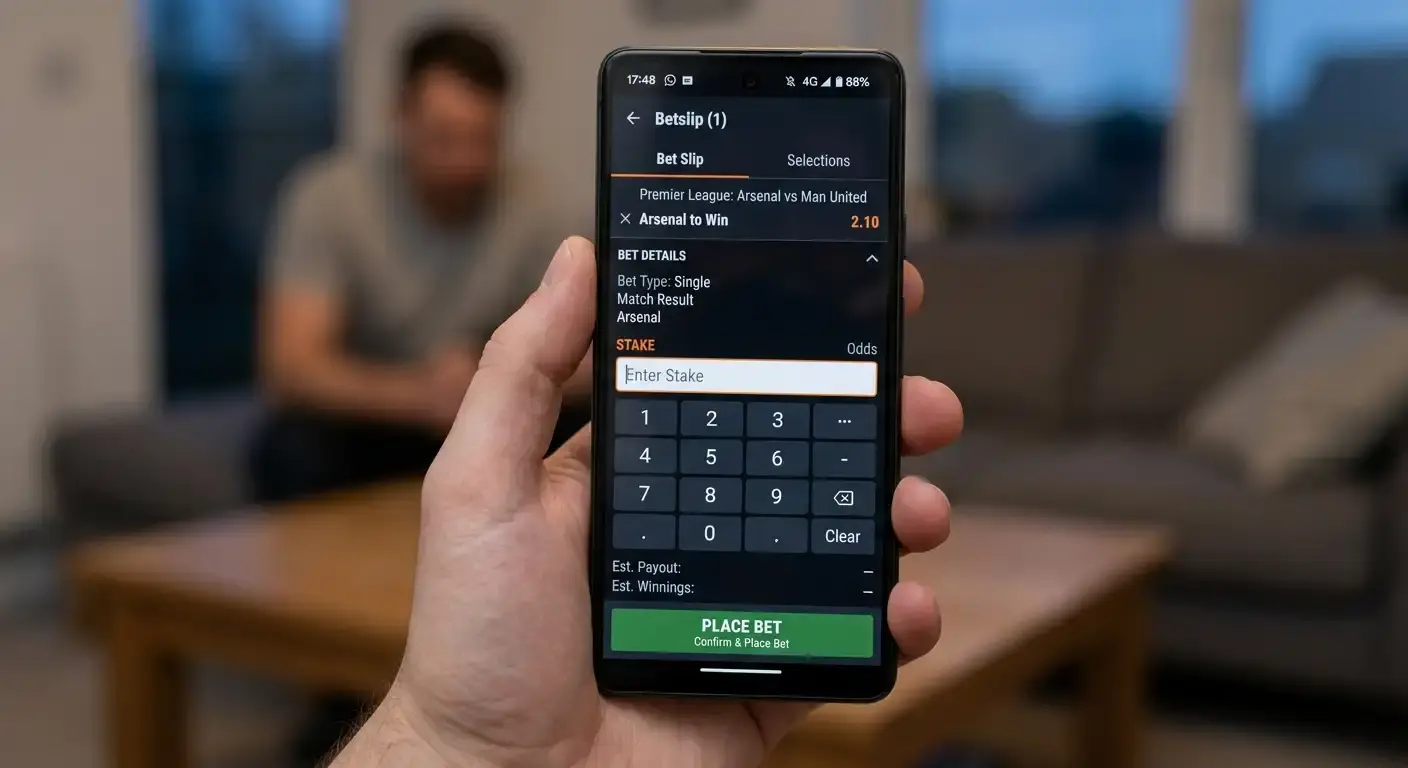
On the bet slip you enter your stake, the amount you want to risk, and the slip immediately shows your potential return, the total you would receive if the bet wins, including your stake back. If you see odds of 2.50 and stake ten pounds, the slip shows a potential return of twenty-five pounds, which is your ten-pound stake plus fifteen pounds of profit. Take a moment to understand that distinction, because confusing your return with your profit is one of the most common beginner errors. You confirm the bet, the stake leaves your balance, and you are on.
When the match finishes, the bet settles automatically. A winning bet credits your account with the full return; a losing bet simply means the stake you already risked is gone, with nothing further to pay. There is no additional liability in a standard fixed-odds bet, which is exactly why I steer beginners towards these straightforward markets rather than anything where losses can exceed the stake. Your first bet should be one where the worst case is losing the small amount you chose to risk, full stop.
The markets that suit a newcomer
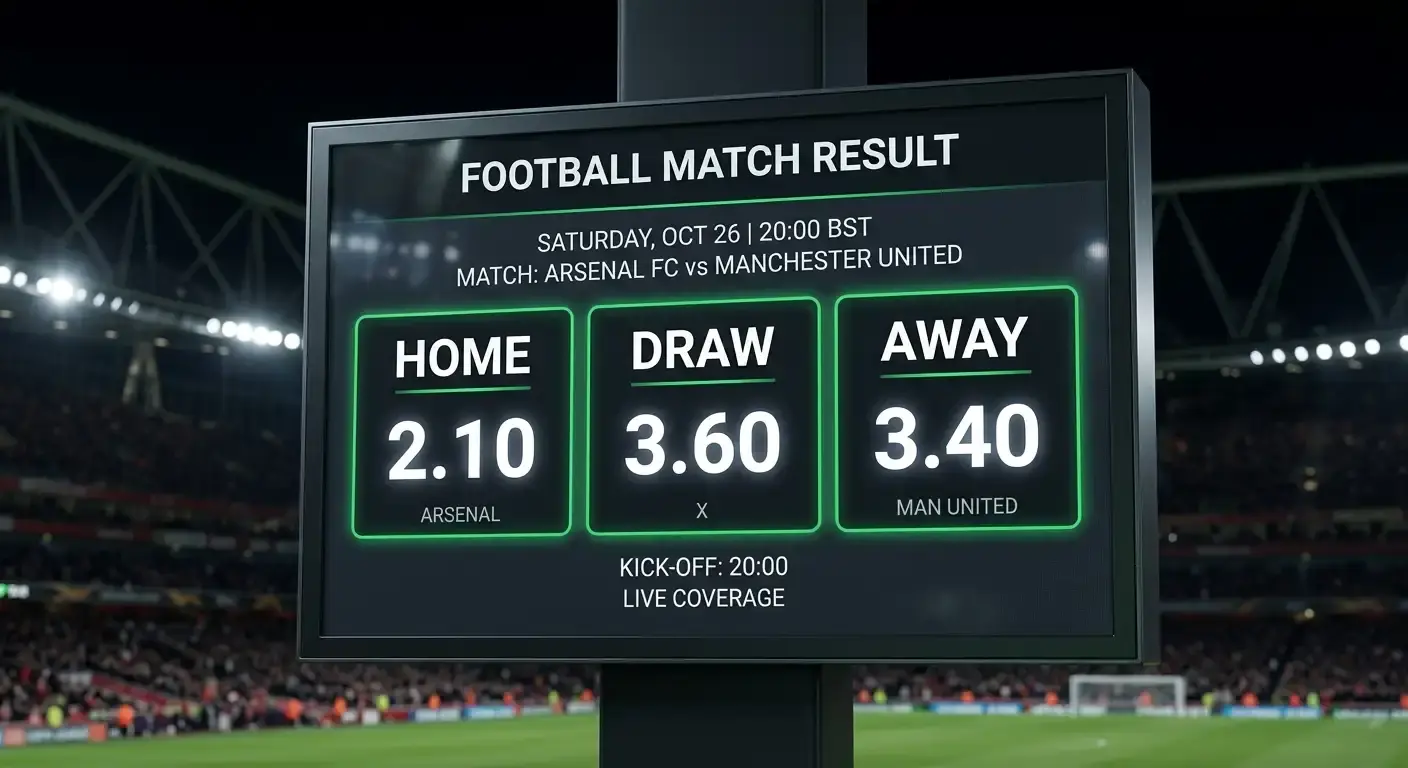
Not every market is beginner-friendly, and choosing the right ones early protects you from confusion and unnecessary losses. The match result is the natural starting point because it is intuitive: you are simply backing one of three plain outcomes, and the bet either lands or it doesn’t. From there, the goals markets are a sensible next step, with over and under totals and both teams to score offering bets that turn on the character of a game rather than requiring you to pick a winner.
I deliberately steer beginners away from the markets that look exciting but punish inexperience. Accumulators, which combine several selections into one bet for a bigger potential payout, are heavily marketed and feel like the smart way to chase a large return, but every added leg multiplies the bookmaker’s margin against you and slashes the real chance of the whole bet landing. The same caution applies to correct score, first goalscorer and the various novelty markets, which carry long odds precisely because they are hard to win.
Start simple, stay simple while you learn, and resist the pull of the markets that promise the biggest returns. The exotic bets will still be there once you understand the fundamentals, and by then you will appreciate why the experienced bettor treats them with such caution. A beginner who masters the straightforward markets and the discipline around them is far better placed than one who chases the glamorous bets and loses interest after a string of near-misses.
The habits worth building from the very first bet
The bettors who last are made in the first few weeks, by the habits they build before any of it feels like it matters. Bill Miller of the American Gaming Association captured the right mindset when he said the regulated industry “encourages all football fans to have a game plan before placing a bet”, and that game plan is precisely what separates the disciplined newcomer from the impulsive one. Decide in advance what you will stake, why you are backing a selection, and what you can afford to lose, before the bet slip is ever open.

The single most important habit is setting and respecting limits. Use the deposit limit from your first day, treat your betting money as a fixed amount you can afford to lose entirely, and never reach for more after a bad run. The demographics make this matter: 15 percent of men place sports bets against 4 percent of women, and young men in particular are the group most exposed to gambling harm, so the discipline you build early is not just about profit, it is about keeping betting a controlled and enjoyable activity rather than one that runs away from you.
Keep a simple record of every bet, the stake, the selection, the reason and the result, because that record is the only honest mirror you have. It will show you whether you are genuinely ahead or just remembering the wins, and it will reveal the patterns in your own behaviour faster than any amount of reflection. Those early habits, the game plan, the limits, the record-keeping, are the foundation everything else rests on, and the tools the UK provides to support them are worth knowing from the start. My guide to limits, time-outs and support covers exactly which controls are available and how to use them.
