

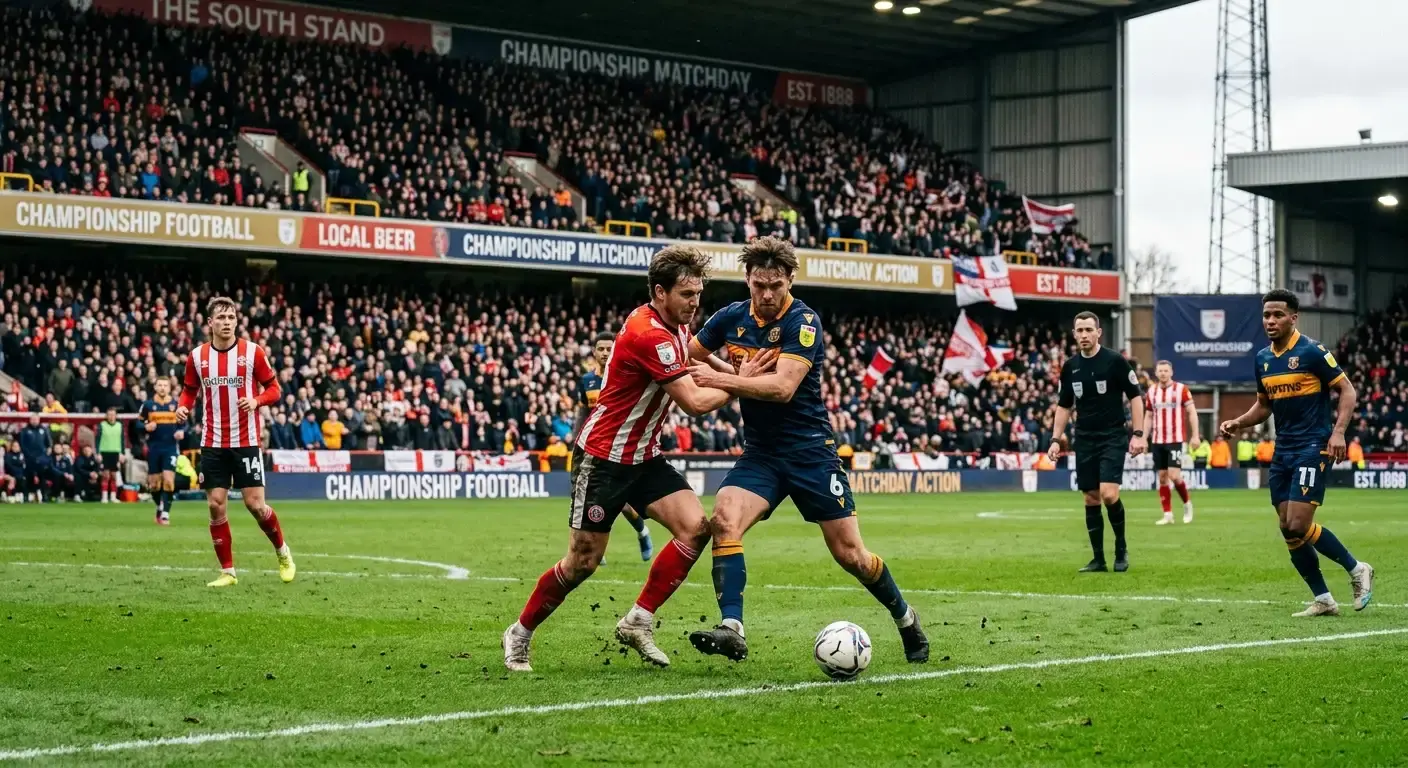
The league where the favourites lie to you
The Championship is the league that taught me to distrust reputation. Sides relegated from the top flight arrive as overwhelming favourites and finish mid-table; unfancied teams with a clever manager and a settled squad surge into the play-offs from nowhere. After a few seasons of watching the formbook get torn up weekly, I came to see the second tier as the most genuinely competitive division in English football, and that competitiveness is exactly what makes it such fertile betting ground.
It is also a division the betting industry takes seriously. The EFL retains Sky Bet as title sponsor across all three of its divisions through to 2029, and as gambling operators redirect sponsorship budgets in the wake of the Premier League’s front-of-shirt changes, the Championship has become an even more prominent fixture on the betting landscape. The money and attention flowing into the second tier mean the markets are well-developed, but the league’s inherent unpredictability keeps genuine value alive for the bettor who understands why the favourites so often disappoint.

Why parity is the whole story
The defining feature of the Championship is how little separates the teams, and understanding that parity is the key to betting it. Unlike the Premier League, where a clear hierarchy of resources produces predictable results between the elite and the rest, the second tier compresses a wide range of clubs into a remarkably narrow band of quality. The gap between a promotion contender and a relegation battler is far smaller than the league table at any given moment suggests.
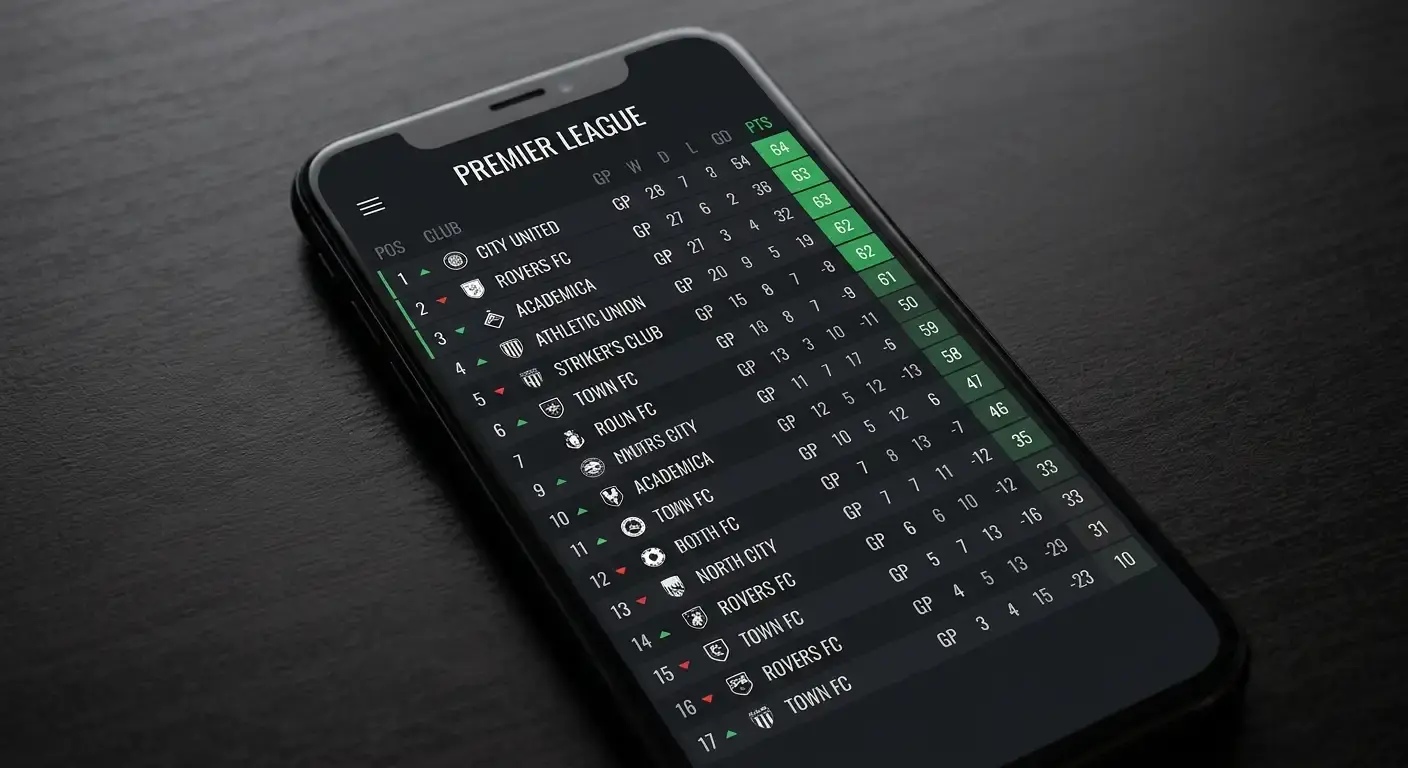
This compression has concrete causes. Parachute payments give recently relegated clubs a financial edge that often fails to translate into results, because squads built for the top flight do not always fit the relentless grind of a 46-game second-tier season. Meanwhile, well-run clubs on modest budgets punch above their weight through continuity, recruitment and a manager who knows the division. The result is a league where money predicts success far less reliably than in any other major English competition.
For a bettor, the practical consequence is that favourites are systematically overbacked. The public anchors to reputation and recent top-flight pedigree, hammering the money on the fancied names and shortening their prices below what the parity of the league justifies. The value, again and again, sits with the unfashionable home side against the overrated favourite, or with the draw in a fixture the market expects a big name to win comfortably. The 46-game marathon is brutal, and it humbles the well-resourced as reliably as it elevates the well-organised.
Promotion and play-off markets
The season-long promotion markets are where the Championship’s character pays out most clearly. Betting on the automatic promotion places, on the play-off finishers, or on the title itself, rewards a bettor who recognises that the early-season favourites are priced on reputation rather than the league’s true unpredictability. A relegated club at a short promotion price is often poor value, because the market assumes their top-flight quality will simply carry them, ignoring how often that assumption fails in this division.
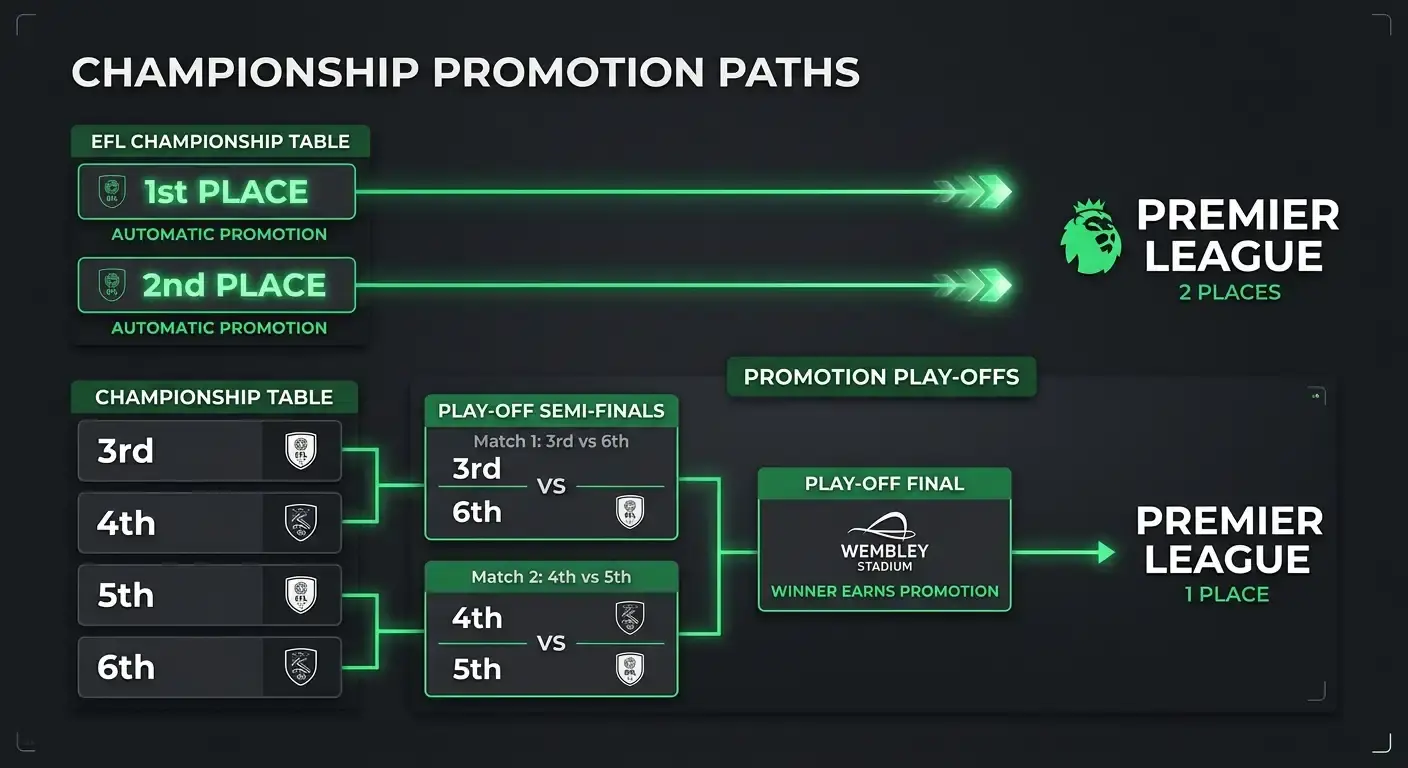
The play-off markets deserve special attention because the play-offs are the most random reward mechanism in English football. Four teams that have battled across 46 games are reduced to a handful of knockout matches, where form, momentum and a single moment can override an entire season’s superiority. Betting on the play-off final is closer to betting on a cup tie than on league quality, and the team that finishes sixth genuinely can and frequently does win promotion ahead of the side that finished third. Pricing the play-offs as a near-lottery, rather than a reflection of league position, is the right mental model.
I find the most reliable value in the to-be-promoted and to-finish-in-the-top-six markets placed early, before a strong start shortens a well-run side’s price. The relegation market offers a mirror-image opportunity, because the bottom of the table is just as compressed as the top, and a club written off in August can stabilise under a new manager while a fancied side collapses. The breadth of the promotion and relegation picture, with so many clubs realistically in contention, is precisely what keeps these long-range prices appealing.
The match markets in the second tier
Individual Championship matches reward a different kind of analysis than the headline leagues, and the goals markets are where I focus most. Football betting is the largest segment of regulated remote gambling in the UK, worth 1.3 billion pounds in gross gambling yield, and a meaningful slice of that turnover runs through second-tier match markets where the pricing leans on reputation more than current form. The relentless schedule produces tired legs, rotated squads and the kind of scrappy, unpredictable matches that defeat models built on league position alone.

The match result market is treacherous precisely because of the parity already described, so I lean towards markets that exploit the league’s chaos rather than fight it. The draw is undervalued more often in the Championship than in any other division, because the closeness of the teams produces level results that the result-market pricing, biased towards backing a favourite, consistently underrates. Both teams to score and the goals totals also reward study, because the second tier’s open, end-to-end style differs sharply from the tactical caution of the elite.
What I avoid is treating second-tier fixtures as if they follow top-flight logic. A famous name parachuted down from the Premier League is not the banker the casual bettor assumes, and the away win for a fancied side at a difficult lower-table ground is one of the most reliably overpriced bets in English football. Respecting the grind, the rotation and the genuine quality of the supposedly weaker sides is the foundation of betting this league well.
Turning Championship chaos into an edge
My practical approach to the second tier comes down to fading reputation and respecting the league’s structural parity. The single most profitable habit I have developed is questioning every short-priced favourite and asking whether the price reflects genuine superiority or merely a famous name and a fading top-flight pedigree. More often than not in this division, it is the latter, and the value sits on the other side of the bet.
I also pay close attention to the things the headline market underweights: the punishing fixture congestion, the manager who knows how to grind out results in this specific division, the newly promoted side riding momentum that the formbook has not yet caught up to. These are the insights that separate a bettor who understands the Championship from one applying top-flight assumptions to a league that punishes them. The second tier rewards local knowledge and contrarian thinking in a way the heavily traded leagues do not.
The natural counterpoint to the Championship’s chaos is the predictability and efficiency of the division above it, and understanding the contrast sharpens how you bet both. The Premier League’s clear hierarchy and razor-sharp pricing demand a completely different approach from the second tier’s parity-driven unpredictability, and recognising which league you are betting is half the discipline. My guide to markets, odds and the 2026/27 shift covers exactly how the top flight’s efficiency contrasts with the value-rich chaos one division down.
