

The moment Asian handicap stopped looking like a foreign language
I avoided Asian handicap for an embarrassingly long time. The minus signs, the quarter numbers, the talk of split stakes all looked like something you needed a maths degree to touch. Then a colleague who traded football for a living put it to me in one sentence: it is the same as backing a favourite or an underdog, except the bookmaker has cut the draw out of the equation and let you fine-tune exactly how much of a head start you are giving or taking. The fog lifted instantly.
That single design choice, removing the draw, is why sharp money gravitates to this market. European football generates more than 40% of global online betting revenue, and a disproportionate share of the professional turnover within it runs through Asian handicap lines rather than the three-way result, because two outcomes are easier to price accurately than three. When the smart money clusters somewhere, it is usually because the market is efficient and the edges are findable. Let me show you how the lines actually work, starting with the simple ones.
Whole and half lines: the foundation
A handicap is a goal head start applied before kick-off. The favourite carries a negative handicap, meaning goals are deducted from their final score; the underdog carries a positive one, meaning goals are added. You then settle the bet on the adjusted result.
Half-goal lines are the cleanest place to begin because they make a draw impossible, just like a totals line. Say you back the favourite at -0.5. They must win the match outright by any margin for your bet to land, because half a goal is deducted and there is no way to draw after that adjustment. Back the underdog at +0.5 and you win if they draw or win the actual match, since the half-goal cushion turns a real draw into a winning position. The half line behaves exactly like a two-way result bet.
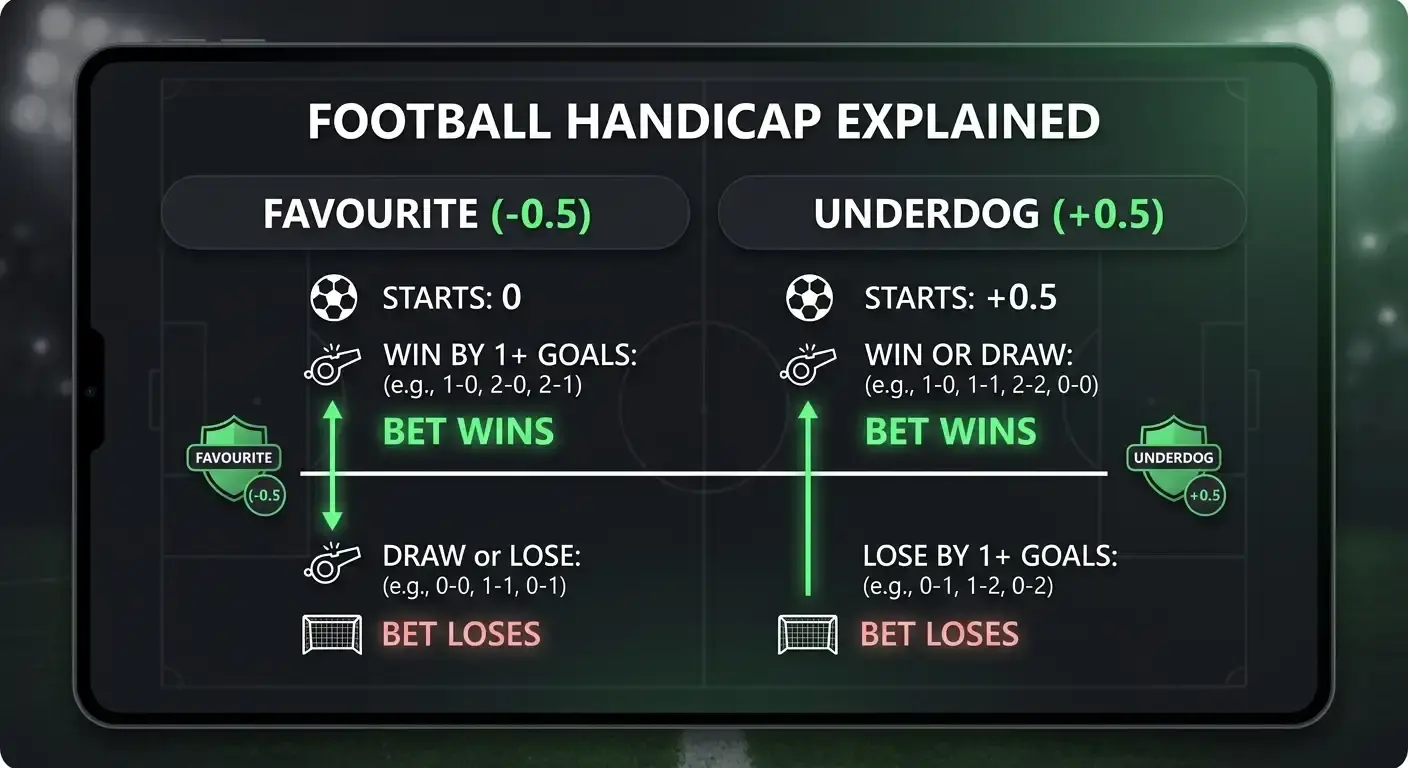
Whole-goal lines reintroduce the possibility of a refund. Back a favourite at -1.0 and they must win by two or more goals to pay you out. If they win by exactly one, the handicap turns the adjusted result into a draw and your stake is returned in full, a push. Win by one becomes a void rather than a loss, which is the safety valve whole lines provide. The same logic mirrors on the underdog side at +1.0, where a one-goal defeat is refunded rather than lost.
Quarter and split lines: where the real control lives
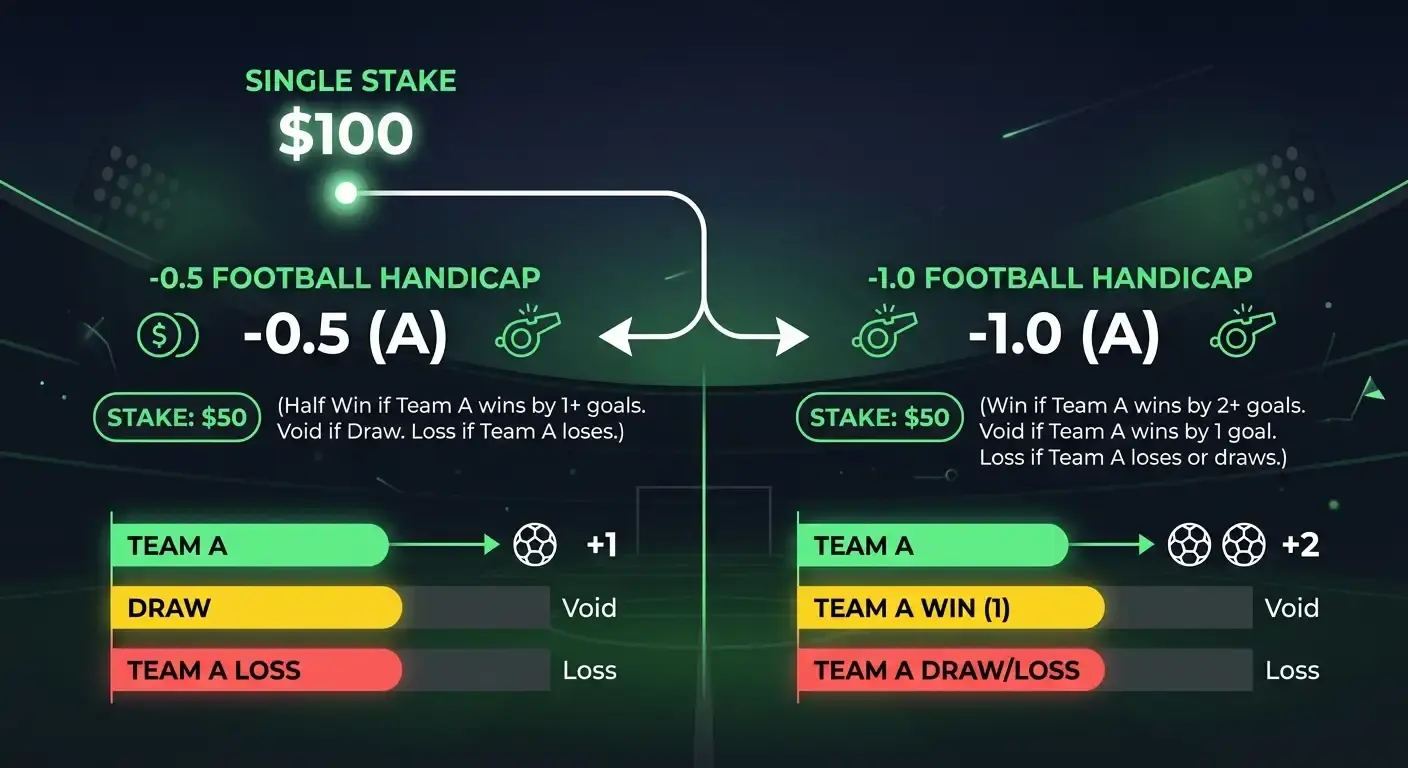
Here is the part that scares people off and shouldn’t. A quarter line, written as something like -0.75 or +0.25, simply splits your stake across the two nearest whole and half lines. The bookmaker is letting you sit between two positions instead of forcing you onto one.
Take a favourite at -0.75. Your stake divides evenly: half goes on -0.5 and half on -1.0. Now picture three outcomes. If the favourite wins by two or more, both halves win and you collect the full payout. If they win by exactly one, the -0.5 half wins outright while the -1.0 half pushes and refunds, so you bank roughly three-quarters of a full win. If they fail to win, both halves lose. That graduated settlement is the entire point: a -0.75 line lets you back a strong favourite while keeping a partial safety net against the narrowest of victories.
The mirror works on the underdog. A +0.25 line splits between level (0.0) and +0.5. If the underdog wins, both halves win. If they draw, the +0.5 half wins while the level half pushes, giving a partial return. If they lose, both halves lose. I reach for +0.25 when I fancy an underdog to avoid defeat but want some protection if the match ends level, rather than the all-or-nothing of a straight draw no bet.
Once you internalise that a quarter line is just two bets bundled together, the numbers stop being intimidating. You are not memorising a settlement table; you are reading two simple lines at once.
When I actually reach for an Asian handicap
I had a Champions League night a few seasons ago where a dominant favourite was a punitive price to win and the draw felt impossible given how the two sides matched up. Backing the win outright offered almost nothing. Laying the favourite at -1.0 transformed a stingy 1.30 into a far healthier number, with the one-goal refund protecting me against a scrappy single-goal win. The match finished 3-0 and the handicap turned a token return into a proper one.

That is the core use case: when the draw is genuinely unlikely and you want to extract more value from a result you already expect. The handicap rewards conviction. The flip side is the underdog play, where a positive handicap lets you back a team to compete rather than to win, which is often the more honest expression of a fixture between mismatched sides.
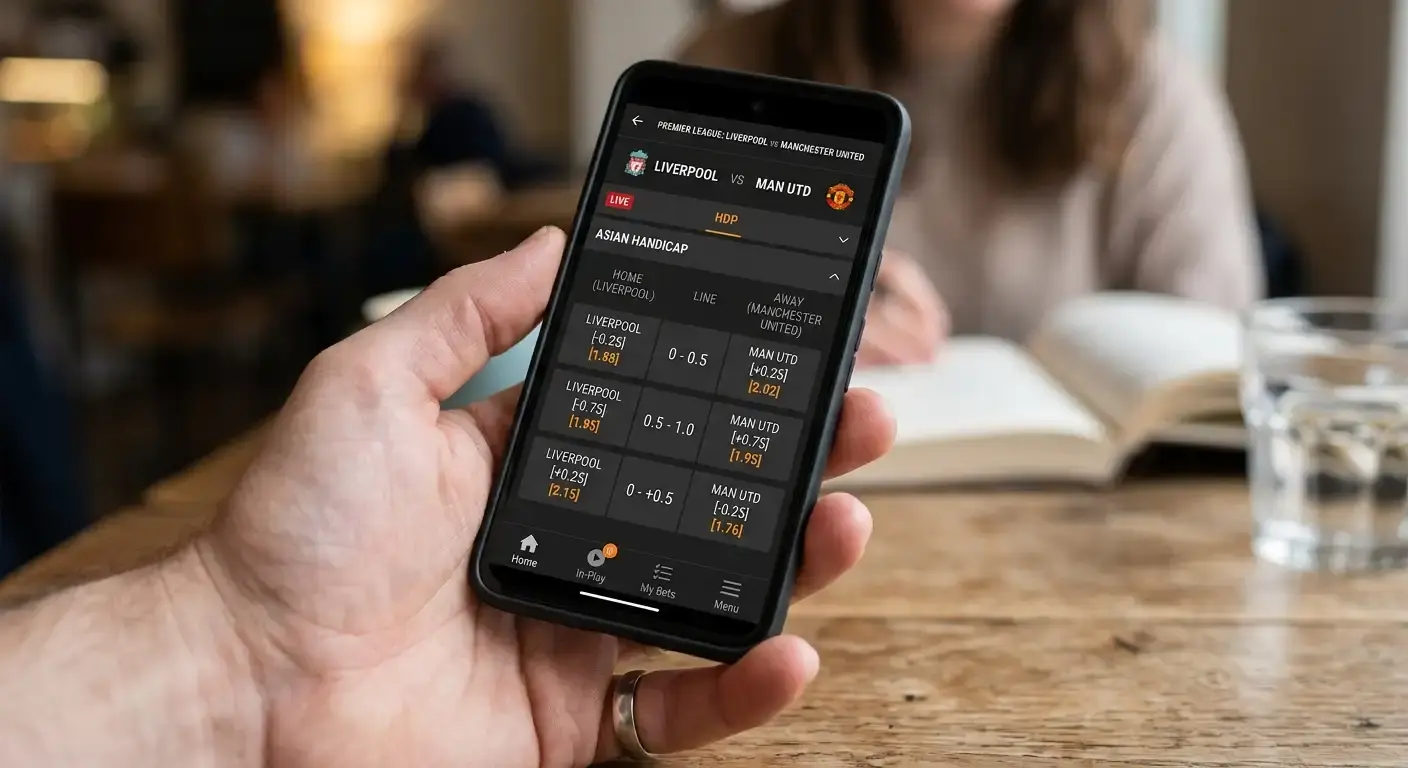
What you must bring to this market is discipline, because the granularity tempts overbetting. The American Gaming Association’s chief executive Bill Miller framed the right mindset bluntly when he said the regulated betting industry “encourages all football fans to have a game plan before placing a bet”. Asian handicap is precisely the market where a plan separates the analyst from the gambler, because the fine-tuning only pays off if you have a clear read on the expected margin rather than a vague feeling about who is better. The market is mobile-first now, with roughly 80% of online bets placed on phones, and the ease of tapping a quarter line in seconds makes a pre-decided plan more important, not less.
Asian handicap against the three-way result
The clearest way to grasp the value is to compare the same fixture across both markets. In the standard 1X2 market you are paying for three outcomes, and the draw absorbs a chunk of the bookmaker’s margin whether you back it or not. The overround is spread across three prices, and you are implicitly funding a draw possibility even when you fancy a decisive result.
The Asian handicap collapses that to two outcomes, which tightens the bookmaker’s margin and pushes more of the price back to you. On a favourite you expect to win comfortably, a -1.0 or -1.5 line frequently offers more value than the short outright price, because you are no longer paying for the draw you don’t believe in. On an underdog, a positive line gives you a winning position from a draw, something the 1X2 market charges you the full draw price for separately.
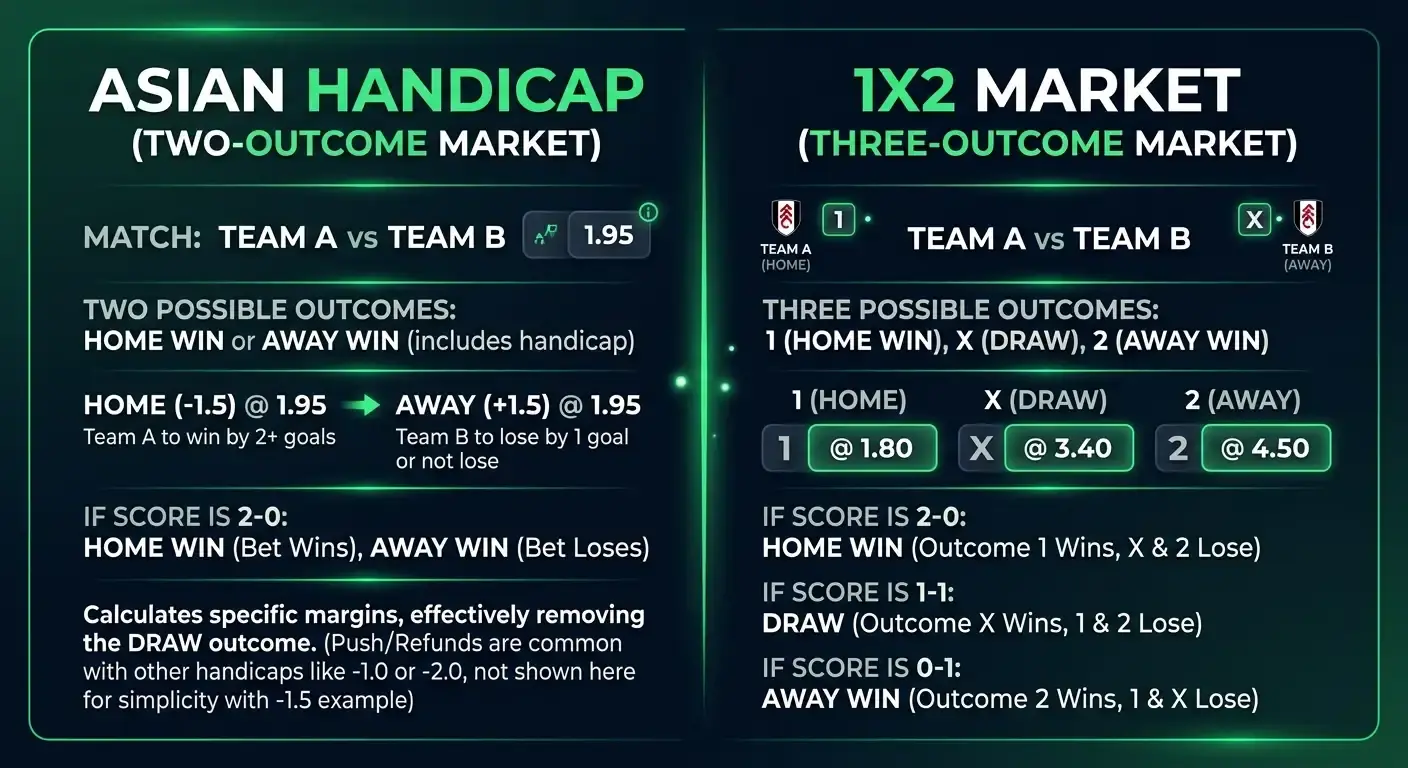
None of this makes Asian handicap automatically superior. It rewards a specific kind of read, the one where you have a firm view on the margin of victory, not just the winner. When you only know who will avoid defeat without a strong feel for the scoreline, a cleaner two-way alternative is often the better fit, and my breakdown of removing the draw from the equation covers exactly that scenario and where it beats the handicap.
