


Why BTTS won me over before I understood the maths
The first football bet I ever placed that felt genuinely comfortable was a both teams to score selection on a midweek Bundesliga game. I had no idea who would win, and frankly I didn’t care. I just knew two leaky defences were meeting and that goals at both ends looked far more likely than the bookmaker’s price implied. That bet landed, and it taught me something I’ve carried for seven years across Premier League and European markets: you do not need to predict the winner to make money on football.
That is the whole appeal. Around 10% of the UK adult population places online sports bets, and a big share of those people freeze at the three-way match-result market because picking between home, draw and away feels like a coin toss with three sides. BTTS sidesteps that paralysis entirely. You are answering one binary question, not three, and that simplicity is exactly why it has become a fixture on virtually every UK coupon. With 47% of British adults gambling in some form, the markets that reward pattern-spotting over fortune-telling tend to attract the more thoughtful punter, and BTTS sits right in that bracket.
But simplicity cuts both ways. A market this popular is a market the bookmaker has priced carefully, and the casual money flooding in keeps the value thin on the obvious games. The skill is not in knowing what BTTS is. It is in knowing when the price is wrong.

What you are actually betting on
Strip away the jargon and BTTS asks one thing: will both sides find the net at least once before the final whistle? You back “Yes” if you think they will, “No” if you think at least one team will be kept out. You will often see it abbreviated on coupons as GG (goal-goal, meaning both scored) and NG (no-goal, meaning at least one blank). The result of the match is irrelevant. A 1-1 draw, a 3-2 thriller and a 4-1 demolition all settle “Yes” identically. A 1-0 win, a goalless draw and a 5-0 thrashing all settle “No”.
That last example trips up beginners constantly. A 5-0 scoreline feels like an avalanche of goals, yet it is a losing BTTS Yes bet because one team never scored. This is the mental shift you have to make: BTTS measures distribution, not volume. Five goals shared one-sided is a “No”; two goals shared evenly is a “Yes”. I have watched people celebrate a deluge of goals only to realise their stake is gone because all of them came from a single team.
Own goals count towards the scoring side, which occasionally produces a strange settlement where a team “scores” without any of its players actually putting the ball in the net deliberately. And because the market closes at full time of normal play, anything in extra time of a cup tie is excluded unless the bookmaker explicitly states otherwise. Read the rules on knockout fixtures before you commit.
Stacking BTTS with the result for a bigger return
Here is a question I get asked more than almost any other: if BTTS is so safe, why are the odds often shorter than I’d like? The honest answer is that on goal-heavy fixtures, everybody can see the goals coming, so the price reflects it. The way regular punters chase a bigger number is by combining BTTS with the match result in a single selection, usually marketed as “BTTS and Win” or “Both Teams to Score and Result”.
The logic is intuitive. Instead of just backing both teams to score, you also stipulate which side wins. So you might back “Home win and BTTS”, which only lands if your team wins and the opposition scores at least once. A 2-1 home win pays out; a 2-0 home win does not, because the away side failed to score. You are adding a condition, the condition reduces the probability, and the reduced probability lengthens the odds.
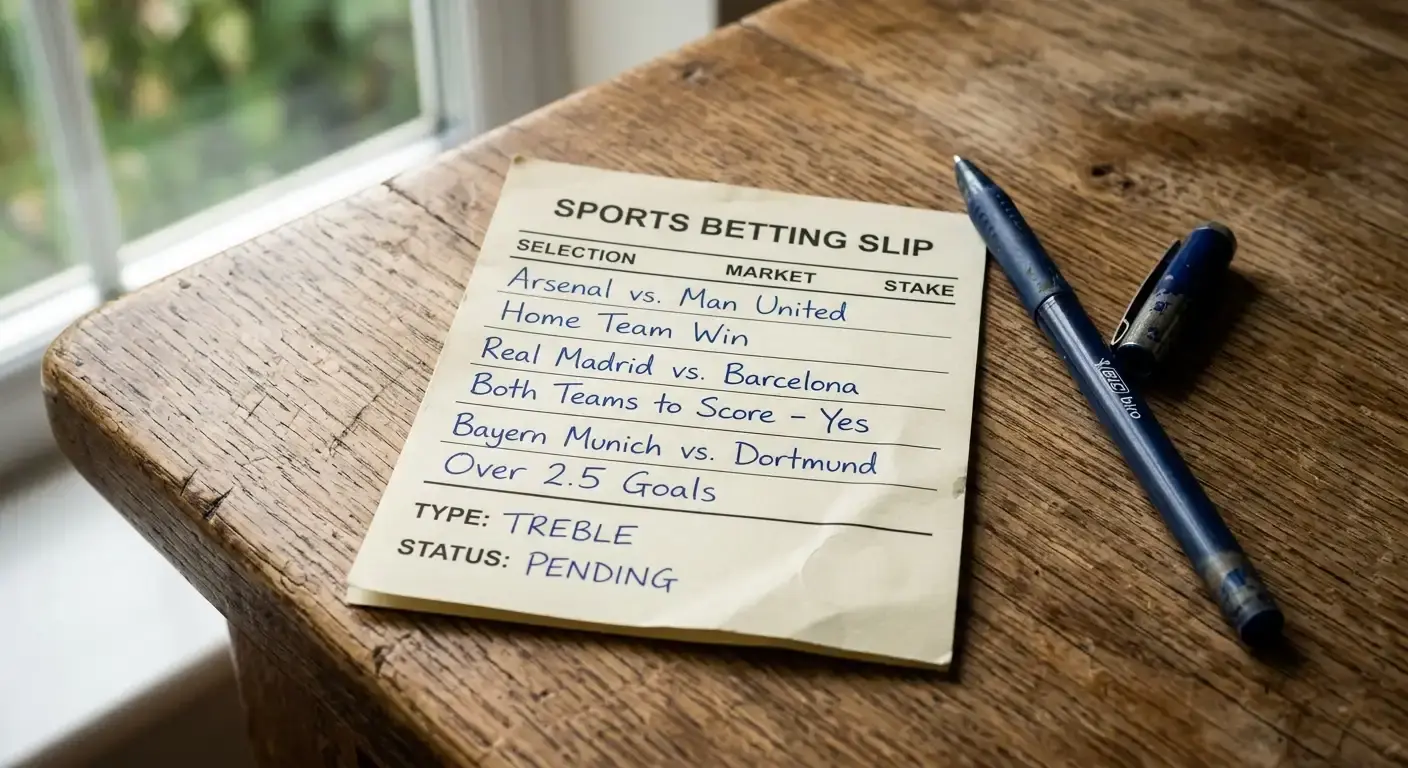
I use this combination selectively, and almost always on a strong attacking favourite facing a side that scores regularly but defends poorly. Think of a top-six Premier League team at home to a mid-table outfit with an aggressive press and a shaky back line. The favourite is likely to win, the visitor is likely to grab a consolation, and the combined price can sit at attractive odds where the standalone home win would be far too short to bother with. The trap is doing this on a game where the favourite tends to win to nil, because then you are paying for a goal you don’t expect and bleeding value with every bet.
Where the genuine value actually hides
The single most useful habit I ever built was tracking BTTS hit rates by league rather than by team. Goals at both ends are a structural feature of how a competition is refereed, coached and played, far more than a property of any individual fixture. Leagues that reward attacking football and tolerate open midfields, the Eredivisie and the Bundesliga being perennial examples, produce BTTS Yes far more often than tactically conservative divisions where a 1-0 is treated as a job well done.
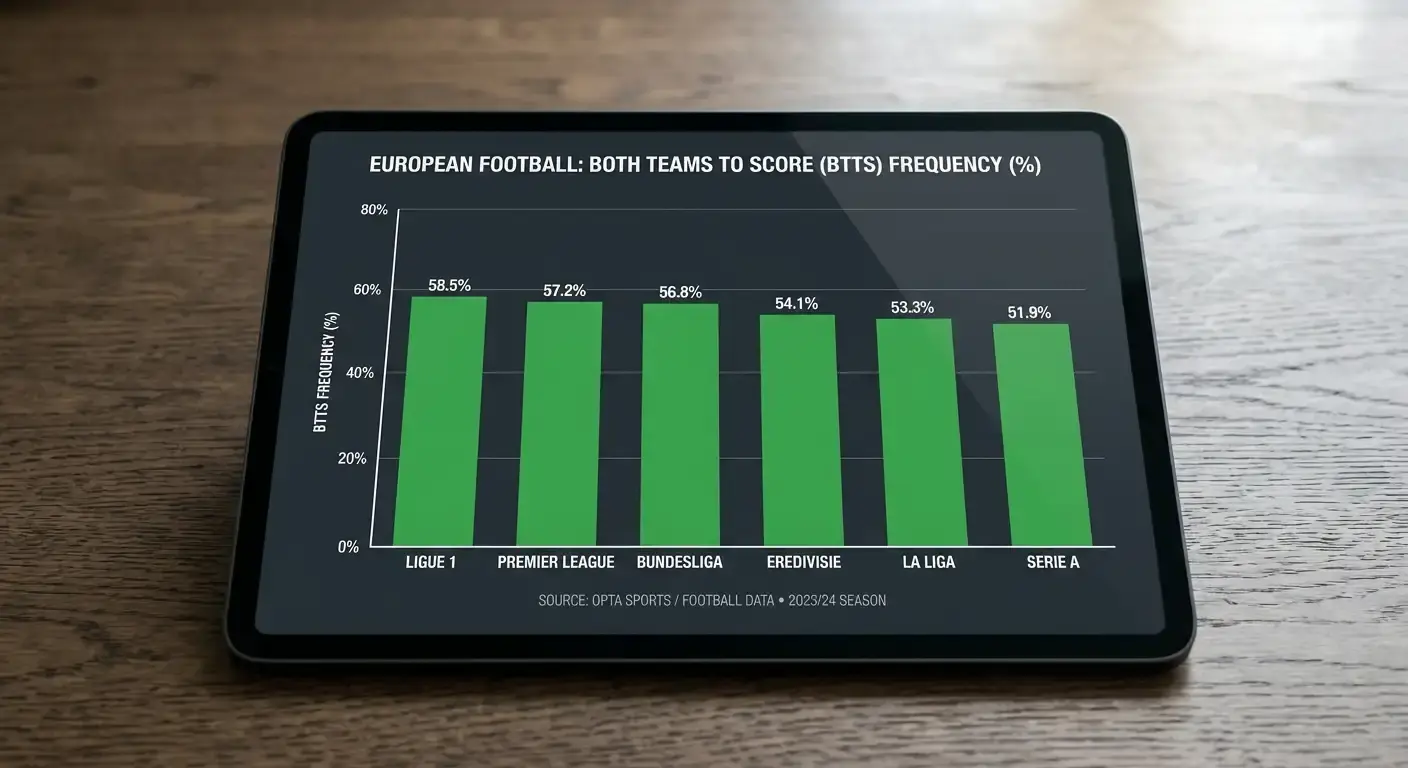
Within a league, I look for three things before I touch the Yes price. First, both teams scoring consistently in recent matches, not just one prolific attack carrying a side that keeps clean sheets. Second, defensive injuries or suspensions, because a reshuffled back four leaks goals it would otherwise prevent. Third, the game state and motivation, since a team chasing the league or fighting relegation will commit bodies forward and abandon the caution that produces clean sheets.

The “No” side is criminally underused by recreational bettors, and that is precisely why it offers value. When two well-drilled, low-scoring sides meet in a fixture that suits a cagey draw, the BTTS No price is often inflated because the crowd piles onto Yes out of habit and excitement. I have made more money fading the goals than backing them, simply because nobody wants to bet on a boring game. If your read is that the match will be tight and one defence will hold, the unfashionable bet is frequently the correct one.
One discipline worth borrowing from the broader goals markets: BTTS and the total goals line move together, and understanding one sharpens the other. If you want to see how the over and under framework prices the same underlying goal expectation differently, my piece on trading the total goals market walks through the relationship in detail.
The mistakes that quietly drain a BTTS bankroll
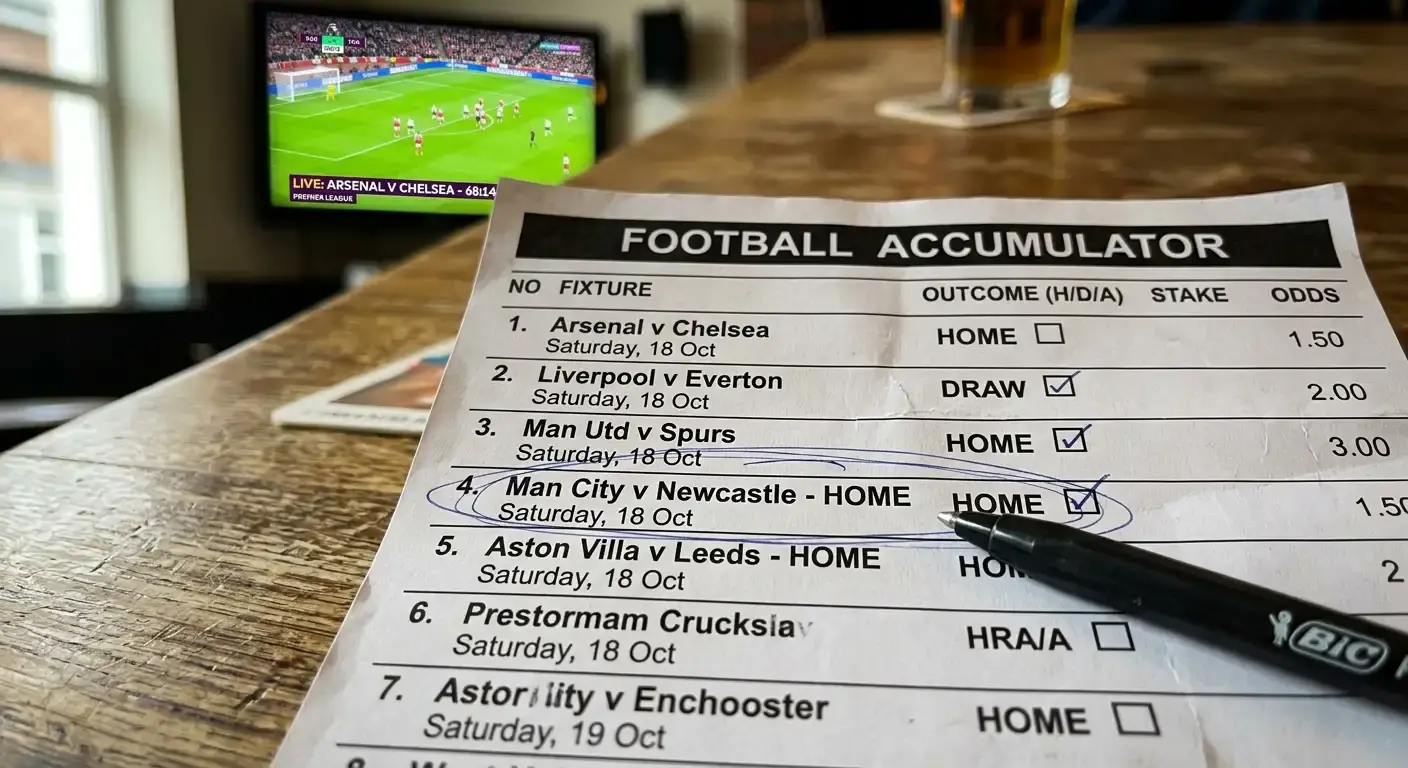
The biggest error is treating BTTS as a banker. Because it lands so often on the right fixtures, punters start slapping it into accumulators as the “safe” leg, then watch a single shock clean sheet collapse a four-fold. A bet that wins 60% of the time on its own becomes a long shot once you stack four of them, and the bookmaker’s margin compounds on every selection.
The second mistake is recency bias dressed up as analysis. Two teams that both scored last weekend are not destined to both score again; one strong attacking performance against weak opposition tells you little about a fixture against an organised defence. I always check who the goals came against, not just that they came.
The third is ignoring the manager and the calendar. A side with a cup final in three days will rotate and protect players, a newly appointed manager often tightens the defence first, and a dead-rubber end-of-season fixture can produce either a goal glut or a procession depending on what is at stake. None of that shows up in a raw goals-per-game figure, and all of it moves the true probability away from the headline number.
