


The only idea that separates winners from everyone else
If I could delete one phrase from football betting forever, it would be “I fancy this one to win”. Backing the outcome you think is most likely is not betting, it is supporting, and it is why most punters lose. The single concept that took me from losing to breaking even to slowly profiting was value, and once it clicks, you cannot unsee it.
Value has nothing to do with who wins the match. A heavy favourite can be terrible value and a long-shot underdog can be a brilliant bet, on the very same fixture. Value exists when the odds on offer are longer than the true probability of the outcome justifies, meaning you are being paid more than the risk deserves. Everything else in this article is just the machinery for finding those moments and proving they are real rather than imagined.

What value really means
Strip it to the bone: a bet has value when its probability of winning, multiplied by the odds, comes out greater than one. That product is your expected value, and a number above one means that if you could place the same bet a thousand times, you would finish ahead. Below one, you would finish behind no matter how the individual bets fell.
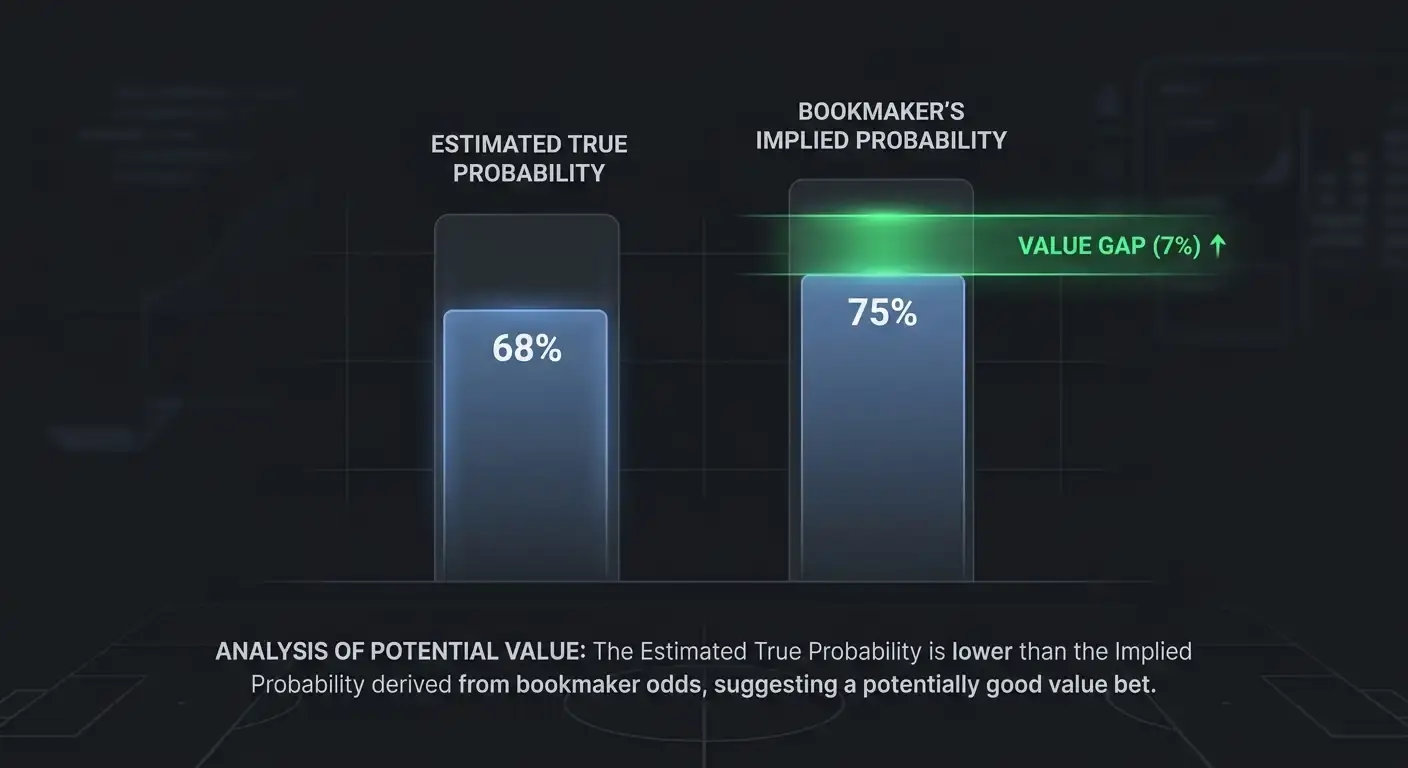
Picture a fair coin. The true probability of heads is fifty percent, so fair odds are 2.0. If a bookmaker offered you 2.2 on heads, that is a value bet, because half the time you collect at 2.2 and the maths runs in your favour over the long haul. If they offered 1.8, it is a losing bet even though heads still lands half the time, because the price doesn’t pay you enough for the risk. The coin’s behaviour never changed; only the price did, and the price is everything.
Football is just a coin with thousands of faces and no fixed probabilities printed on it. Your entire job as a value bettor is to estimate the true chance of an outcome more accurately than the price implies, then bet only when the odds exceed your estimate. You will lose plenty of individual value bets, that is guaranteed, but the edge compounds across hundreds of them. The discipline is betting the price, not the outcome.
Estimating the true probability
This is the hard part, and anyone who tells you it is easy is selling something. To know whether 2.2 is value, you first need your own honest estimate of the real probability, and that estimate has to come from analysis the market has underweighted, not from the same information everyone else is pricing in.
The richest source is underlying performance data rather than results. A team drawing games it dominated, creating far more than it concedes while the scoreline refuses to reward it, is a side whose true win probability outstrips its recent record and often its price. European football generates over 40% of all global online betting revenue, which means the major leagues are the most efficiently priced markets on earth, and the edges in them are thin slivers that only open up when your probability estimate diverges from the crowd’s for a defensible reason.
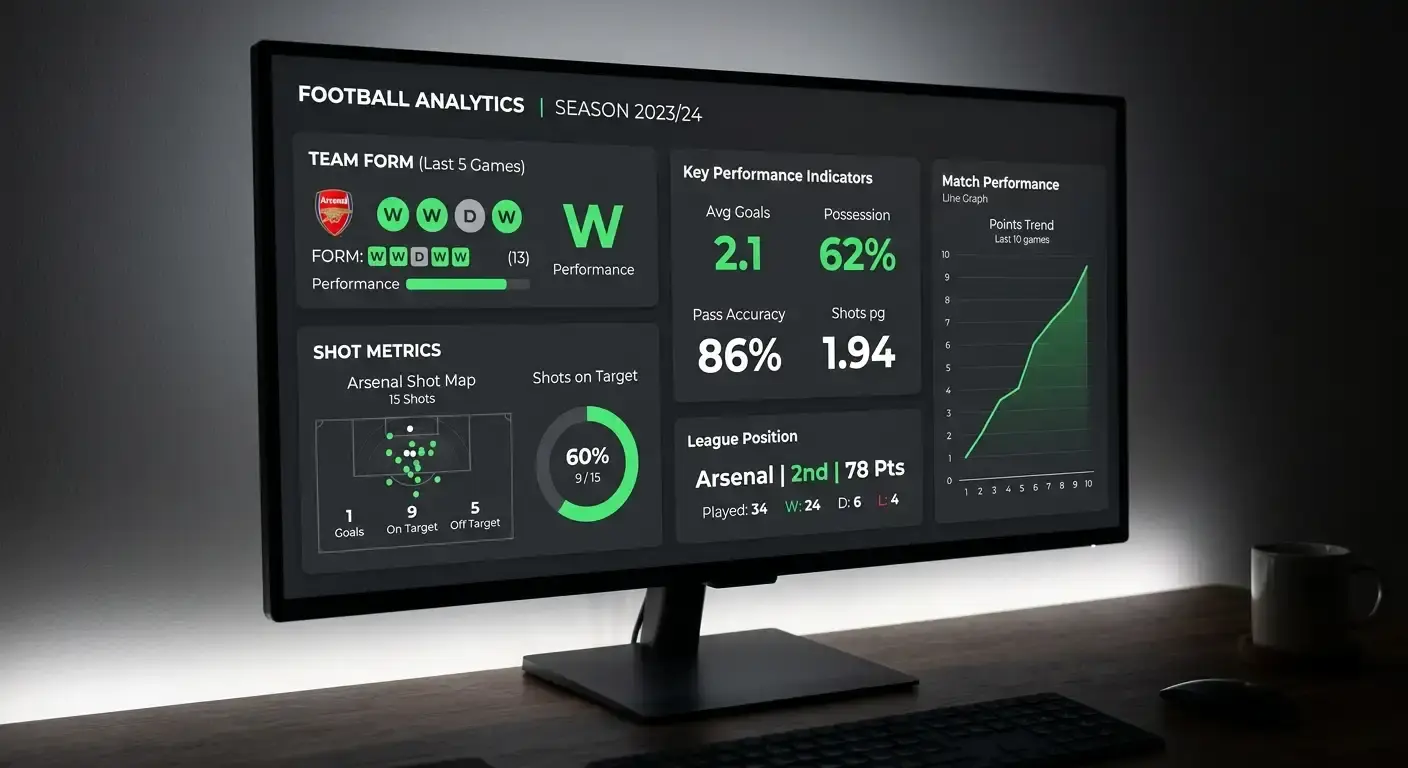
What makes this harder still is that the markets themselves keep shifting under your feet. Andrew Rhodes, the former chief executive of the Gambling Commission, warned that “the next five years will be more consequential for gambling regulation than we have seen in many years, and even more so than I saw as Chief Executive of the Gambling Commission in the previous five years”. Regulatory change reshapes which operators offer what, how prices are set and where soft lines survive, and a value bettor has to keep recalibrating rather than assuming yesterday’s edges persist. The discipline of building your own probability estimate, from data the market underrates, is the engine of the whole approach, and reading shot quality is central to it; my piece on reading the numbers behind results lays out the method I lean on most.
Devigging the odds to see the truth
Before you can judge whether a price is value, you have to strip out the bookmaker’s margin, and this is a step almost every casual bettor skips. The odds you see are not a clean statement of probability; they are probability plus a built-in cut, and that cut has been growing, with the average hold rate climbing from 6.7% in 2018 to 10.15% in 2025. Devigging is the process of removing that cut to reveal the market’s genuine implied probabilities.
The method is straightforward once you see it. Convert every outcome’s odds into its implied probability by taking one divided by the decimal odds. Add those probabilities across all outcomes of the market and you will get a figure above one hundred percent, and the excess is the margin, the overround. To devig, you scale each implied probability back down so they sum to exactly one hundred percent, which gives you the market’s true opinion stripped of its cut.
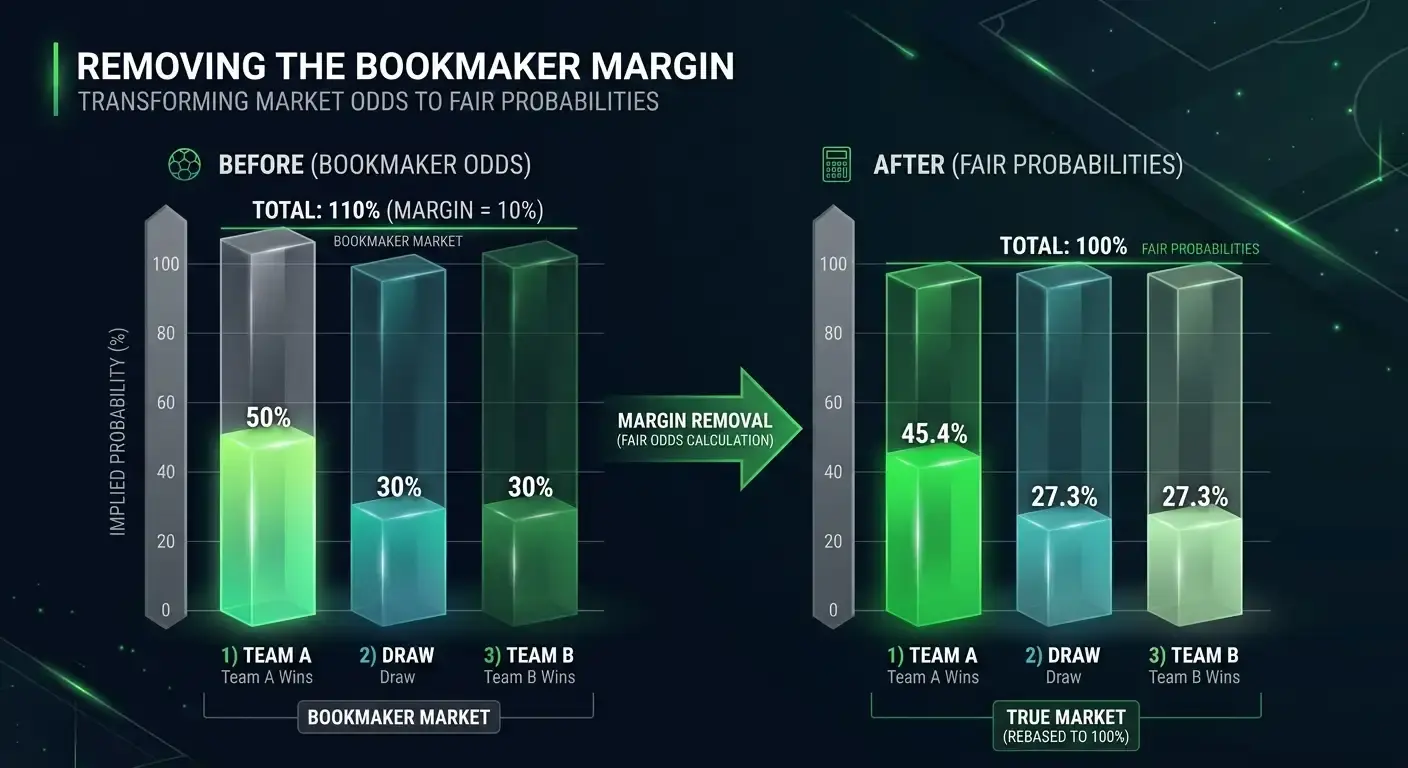
Why bother? Because the devigged price is the sharpest available estimate of the real probability, often sharper than your own, and comparing your number against the devigged consensus tells you whether you genuinely disagree with the market or have just been fooled by the raw, margin-inflated odds. When my estimate beats the devigged probability by a clear margin, that is a value bet I can trust. When it only beats the raw odds but not the devigged number, I have found nothing but the bookmaker’s vig dressed up as opportunity.
Putting value to work without fooling yourself
The theory is clean; the practice is a minefield of self-deception, and managing that is most of the battle. The first trap is overconfidence in your own probability estimate. It is easy to convince yourself you have an edge when you have simply talked yourself into a fancy, so I demand a concrete, data-backed reason my number differs from the market before I stake a penny.

The second is mistaking variance for being wrong. A genuine value bettor loses a large share of individual bets and still profits, which means a losing week or month tells you almost nothing about whether your method works. You need a large sample, disciplined record-keeping and the emotional steadiness to keep backing value through the inevitable cold spells. Most people abandon a winning approach during a normal downswing because the losses feel like failure rather than expected noise.
The honest question is whether a casual bettor can realistically find value in the most efficient markets, and my answer is qualified. In the headline Premier League win-draw-win market, the lines are razor sharp and the edges are tiny and fleeting. In the neglected corners, lower leagues, niche markets, in-running prices that move faster than the operator can adjust, value persists for the patient analyst willing to do work the crowd won’t. Value betting is not a trick or a system you buy. It is the unglamorous habit of pricing matches yourself, stripping out the vig, and betting only when the numbers, not your hopes, say the price is wrong.
