


The competition that humbles confident bettors
European nights have cost me more confident bets than any domestic league, and I have come to see why. The Champions League throws together teams that rarely meet, from leagues that play wildly different styles, in a format that produces fixtures with no recent head-to-head history to anchor a price. That unfamiliarity is precisely what makes it both treacherous and, for the prepared bettor, full of opportunity the domestic markets simply cannot offer.
The scale of money involved is enormous. The global sports betting market was valued at over 112 billion dollars in 2025 and is forecast to more than double to over 325 billion by 2035, with football accounting for roughly 35 percent of that total, and the Champions League is the jewel of the European game that drives much of that football turnover. Yet the very glamour and unfamiliarity of these ties means the prices are set with less of the granular local knowledge that sharpens a domestic line, which is where a diligent bettor can find an edge.

Reading the league-phase markets
The competition’s revamped opening stage, the league phase, replaced the old group format and changed the betting landscape with it. Instead of small groups of four, every club now sits in a single expanded table, playing a set number of matches against different opponents, with the top finishers advancing automatically and the next tier dropping into a play-off round. This structure creates markets that did not previously exist and rewards bettors who understand the new qualification maths.
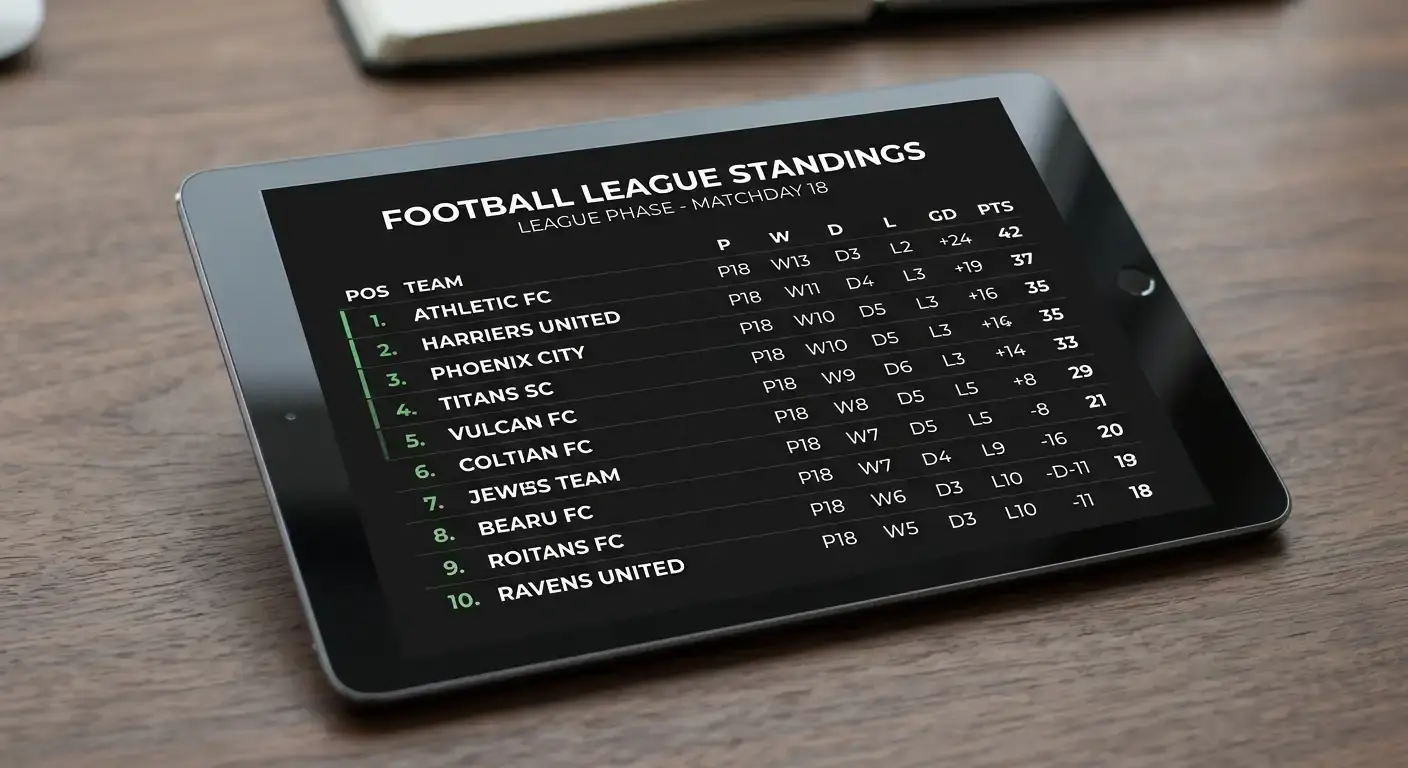
The most interesting of these is the qualification market, betting on whether a club finishes in the automatic places, the play-off zone, or fails to advance at all. Because the league phase spreads each team across several varied fixtures, a side’s path is less about one decisive group and more about accumulating points across a schedule of differing difficulty. Reading which clubs have a kind run and which face a brutal slate of opponents is a genuine analytical edge, especially early before the table takes shape and the market firms up.
Individual league-phase matches present their own puzzle. A mid-table European heavyweight playing a debutant from a smaller league is a fixture with little betting history, and the price often leans heavily on reputation and ranking rather than current form or tactical fit. I look for situations where a famous name is overpriced on prestige alone, or where a well-organised underdog at home on a passionate European night is undervalued because the market cannot quite believe in them.
The peculiar maths of two-legged ties
Once the knockout rounds arrive, the two-legged tie introduces a structure with no equivalent in domestic league betting, and it demands a different way of thinking. A tie played over two matches, home and away, is settled on aggregate, the combined score across both legs, which means you are betting on a contest that unfolds across roughly three hours of football spread over two weeks rather than a single ninety minutes.
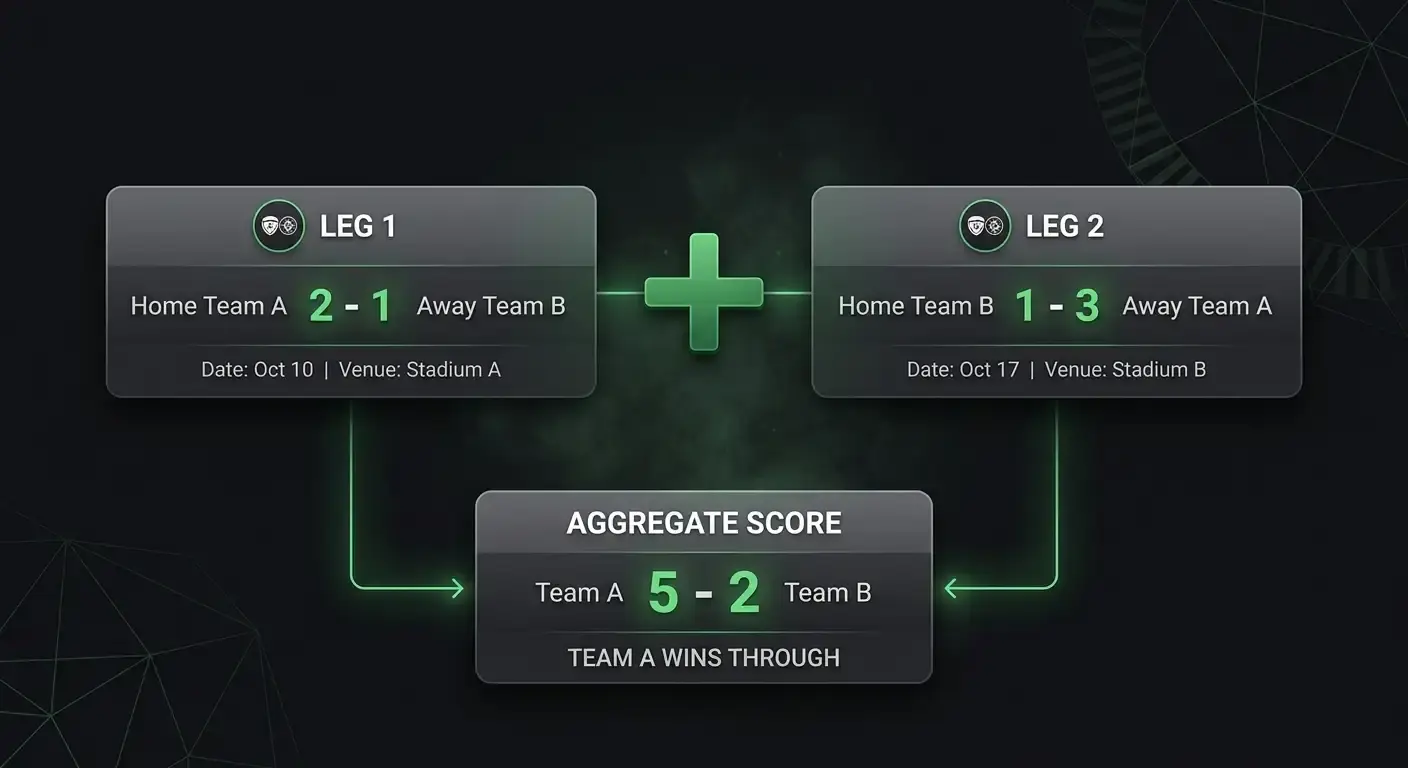
The aggregate markets are where this gets interesting. Betting on the tie winner, the team to progress rather than to win a single leg, requires you to weigh how the two legs interact: a team that wins the first leg away from home is in a commanding position, while a narrow home win in the first leg can be deceptively fragile. The order of the legs, which team plays the second leg at home, shapes the dynamics in ways a one-off match never does, because the side at home in the decisive second leg controls the tie’s endgame.
It is worth knowing that the away-goals rule, which for decades gave extra weight to goals scored away from home and broke many a tie, has been abolished from the competition. A tie level on aggregate after both legs now proceeds to extra time and, if needed, penalties, with away goals counting no differently from home ones. This changed the strategy meaningfully: teams no longer chase or protect away goals the way they once did, which alters how cagely first legs are played and how the markets should be read. If you grew up with the old rule, recalibrating to its absence is essential.
Where the outright winner market hides value
Backing a team to win the whole competition is a long-haul bet with a particular value profile, and timing it well is everything. The outright winner market opens with a cluster of usual suspects at short prices, the established European powers who dominate the latter stages year after year, and the value in those favourites is usually negligible because the market knows exactly who they are.

The opportunity, when it exists, sits one rung below the favourites, in the strong sides priced long enough to offer real reward if the bracket breaks their way. European football generates over 40 percent of all global online betting revenue, and the Champions League outright is one of its showcase markets, which means it is well-traded and the obvious prices are efficient, but the knockout format’s inherent randomness, a single bad night ends anyone’s run, keeps the longer prices honestly long. A genuinely excellent team at a generous price, backed early before a deep run shortens them, is the classic outright play.
I treat the outright as a small, early-season position rather than a serious staking decision, precisely because the variance is so high. The best team does not always win a knockout competition; the team that navigates the draw, avoids the catastrophic off-night and gets the rub of the green does. That randomness is what keeps the prices appealing and what makes the outright a flutter rather than an investment, however confident you feel about a side’s quality.
Sharpening your European betting edge
My strongest advice for the Champions League is to lean into the unfamiliarity rather than away from it. The edge here is not in the matches everyone watches, the marquee clashes between household-name clubs, because those are priced as sharply as any Premier League fixture. The edge is in the games involving clubs from leagues the broad market follows less closely, where reputation and ranking do more of the pricing work than current form and tactical reality.
Do the work the price-setters cannot fully do at scale. Knowing that a particular smaller-league champion is in dreadful domestic form, or that a famous club is missing key players for a European tie, or that a specific side is formidable at home under the lights but timid away, these are the insights that the headline price underweights. The Champions League rewards the bettor who treats it as many distinct puzzles rather than one familiar competition.
Finally, recognise that the appetite for tournament football is only growing, and the showpiece events stretch the betting markets in similar ways. The same disciplines that find value in unfamiliar European ties, reading new formats, weighing unfamiliar opponents, exploiting reputation-driven mispricing, apply even more powerfully to the international game’s biggest stage, where an expanded format multiplies the markets and the uncertainty. My guide to the 48-team format and its markets covers exactly how that larger stage reshapes the betting puzzle.
