


The market that finally made football betting click for me
For my first two seasons of serious betting I obsessed over who would win matches, and I lost money at a steady, demoralising rate. The turning point was the day a sharper bettor told me to stop guessing winners and start counting goals. The total goals market does not ask you to know which side prevails. It asks a far easier question: will this match be a high-scoring affair or a tight one?
That reframing matters because football is a low-scoring sport where a single deflection or red card can decide the result, yet the overall goal volume of a fixture is remarkably predictable across a season. European football is the most heavily traded betting product on the planet, generating over 40% of all global online sports betting revenue, and a huge slice of that turnover flows through the totals market precisely because it is more forecastable than the result. You are betting on the character of a game rather than its winner, and character is something you can actually analyse.
How the totals market settles
The bookmaker sets a line, almost always expressed with a decimal point so a draw is impossible, and you bet on whether the combined goals from both teams will finish above or below it. The default line in football is 2.5. Back the over and you need three goals or more; back the under and you need two goals or fewer. Because no match can produce 2.5 goals, there is no push and no refund. The result is always a clean win or loss.
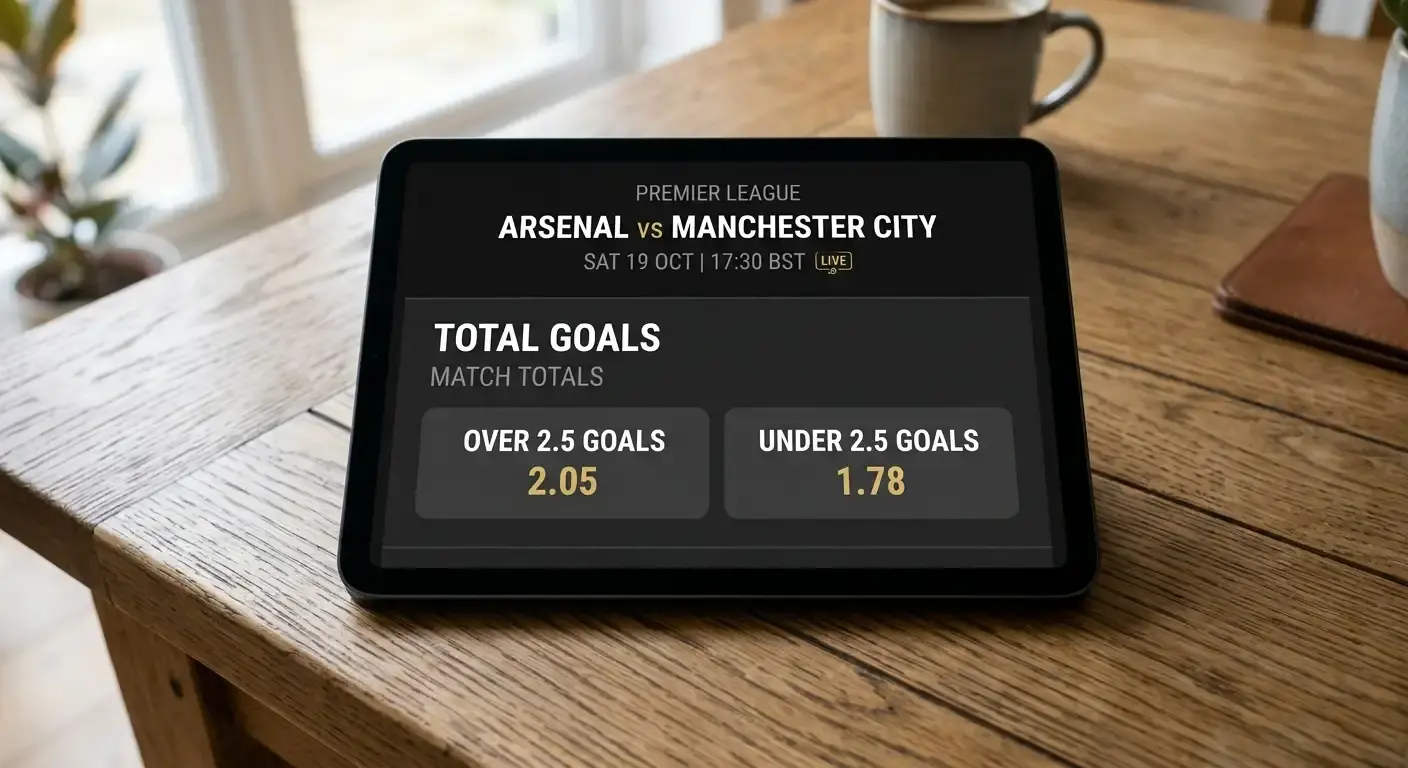
Only goals in normal time count towards standard totals, so a late winner in stoppage time settles your bet but a goal in cup extra time does not, unless the bookmaker specifies otherwise. Own goals count exactly as any other goal. And crucially, the total is the sum of both sides, so a 2-1 and a 3-0 both produce three goals and both settle an over 2.5 as a winner regardless of who scored them.
That last point is what separates totals from the both teams to score market. Totals care purely about volume; they are blind to distribution. A 4-0 hammering smashes the over and loses BTTS Yes simultaneously, which is why I never treat the two as interchangeable even though casual punters often lump them together.
The lines beyond 2.5 and why they exist
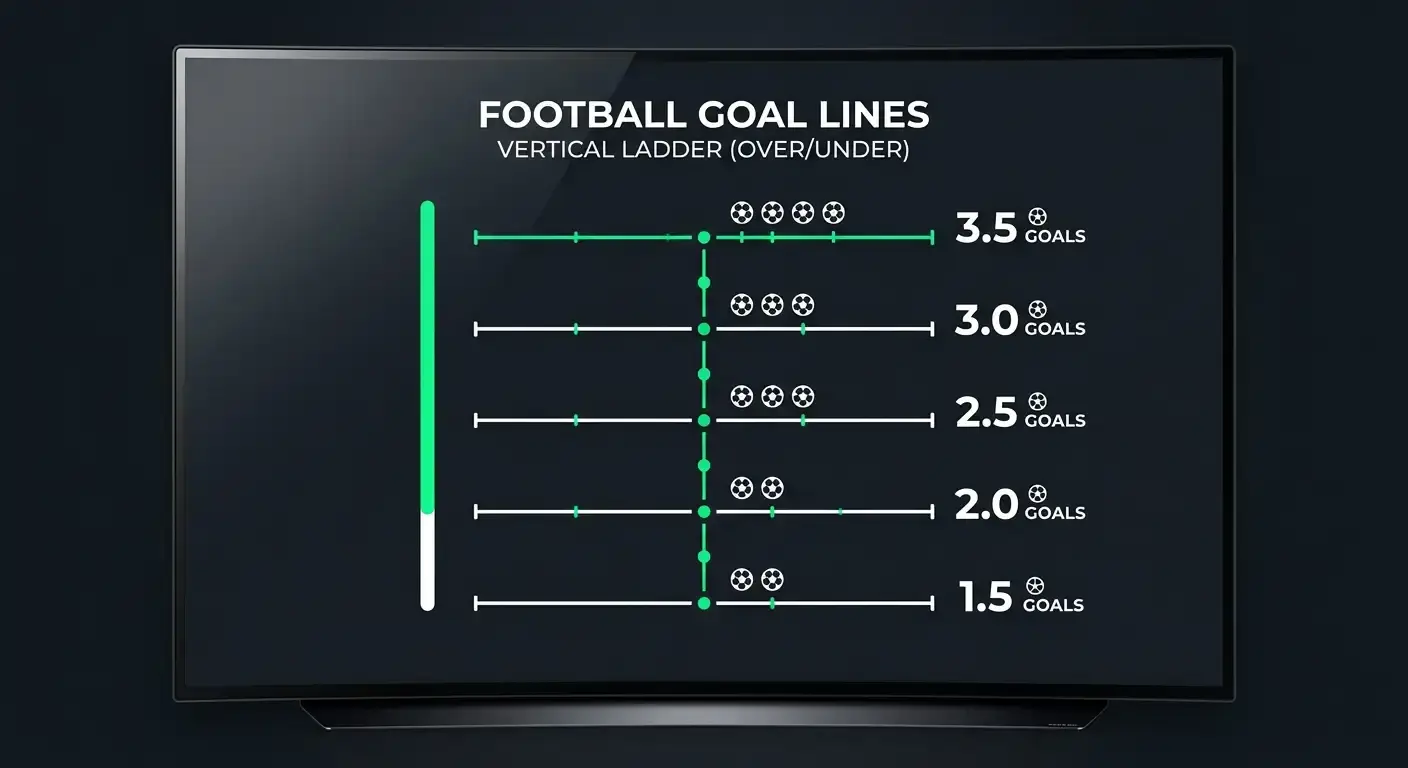
Once you understand 2.5, the rest of the ladder follows naturally, and each rung serves a different read. Whole-number lines like 2.0 or 3.0 reintroduce the push: if a match lands exactly on the line, your stake is refunded. Back over 2.0 and a two-goal game is a void, a three-goal game wins, a one-goal game loses. These are useful when you want a little insurance against the exact-line scoreline.
Quarter lines are where it gets interesting. A line of 2.25, sometimes shown as 2-2.5, splits your stake across two adjacent totals. Backing over 2.25 puts half your money on over 2.0 and half on over 2.5. If the game produces exactly two goals, the over 2.0 half pushes and refunds while the over 2.5 half loses, so you take a partial loss rather than a full one. This is the Asian-style approach to goals, and it lets you express a view with more nuance than a blunt 2.5 either-or.
The further you move from 2.5 in either direction, the more you are taking a strong position. Over 3.5 needs a genuine goal glut and pays accordingly; under 1.5 needs a tense, defensive grind and offers shorter odds because such games are common in cagey fixtures. I treat the extreme lines as specialist tools for when I have real conviction, not everyday bets.
Choosing a total that the bookmaker has mispriced
The mistake I see constantly is people picking a total based on a single number, usually a team’s goals-per-game average, and stopping there. Goals are produced by the interaction of two attacks and two defences in a specific context, and the bookmaker has already baked the obvious averages into the line. To beat it you need to find the games where the public number lies.
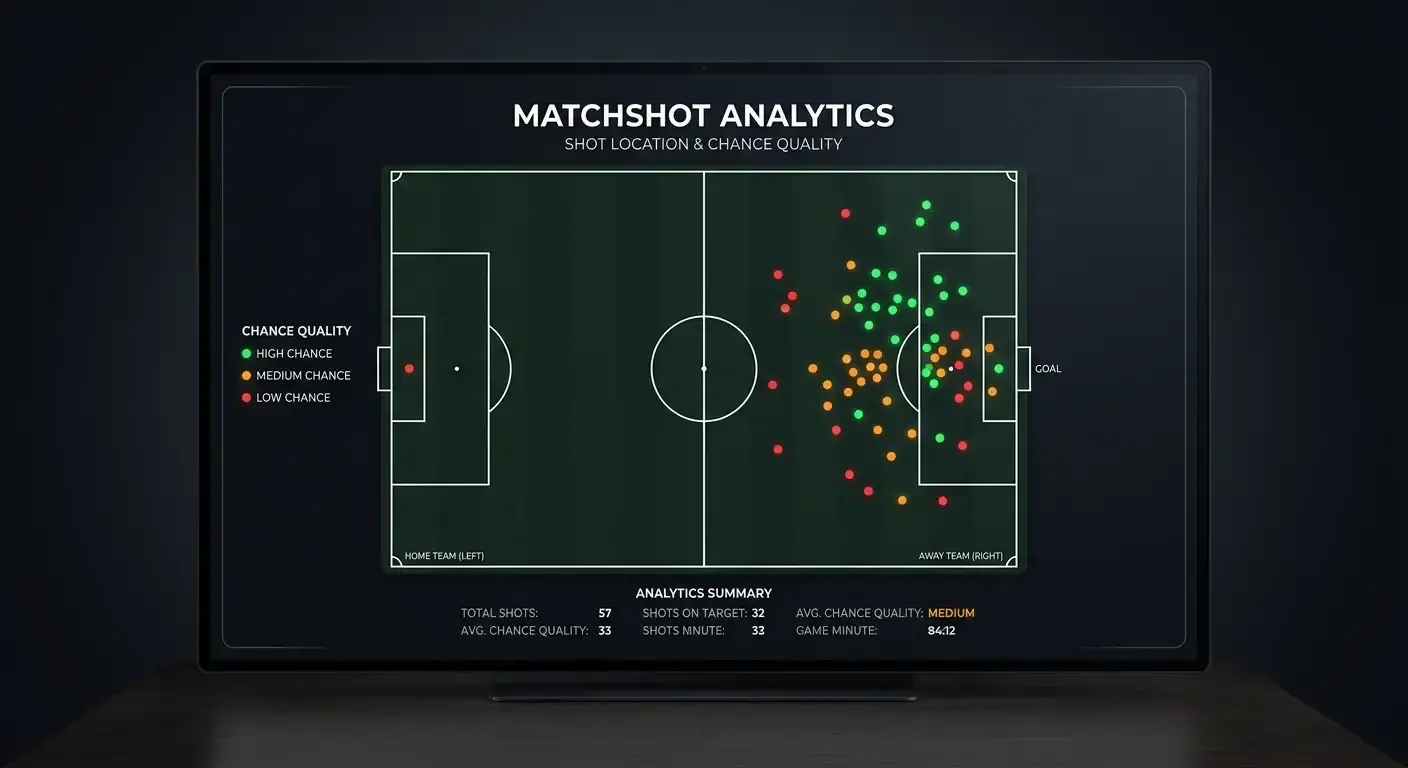
I start with the underlying numbers rather than the scorelines. A team can be drawing 1-1 every week while creating chances worth two or three goals a game, and those sides are primed to start winning totals once their finishing regresses to normal. The gap between how many goals a team should be scoring and how many it actually has is the single richest source of value in this market, and it is the foundation of how I build a totals read. If you want the full method behind reading shot quality rather than results, my piece on reading the numbers behind results lays out the framework.
From there I layer in the situational factors that move goals without showing up in averages. Wind and heavy rain suppress passing and shooting accuracy, pushing games towards the under. A high-tempo derby or a relegation six-pointer where both sides must chase a result tends to crack open late and tip towards the over. Refereeing strictness, injury-time additions and even kick-off temperature all nudge the true total a fraction of a goal, and a fraction of a goal is the entire margin you are competing for.

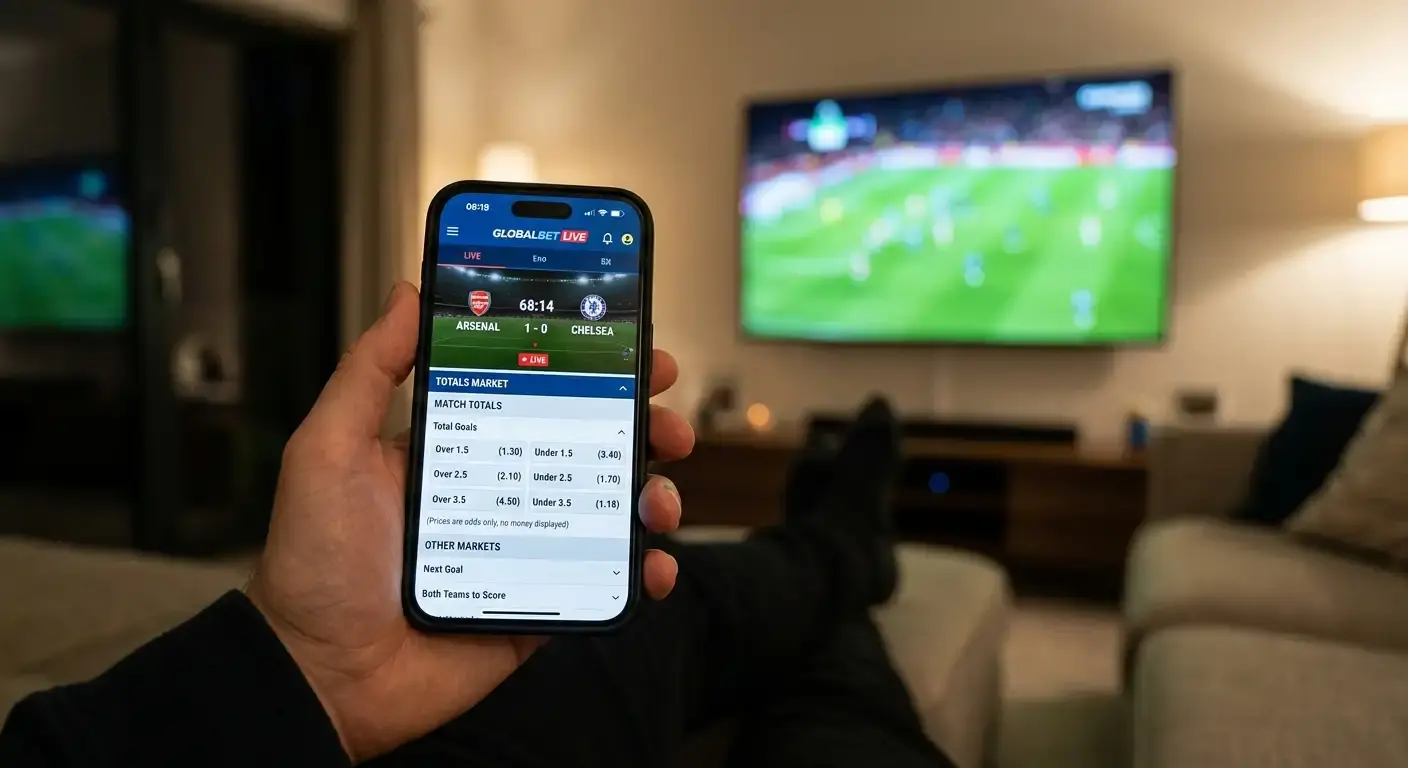
The character of the market itself has shifted, too. Live and in-play betting now accounts for 53.4% of all online betting activity at the start of 2026, and totals are the spine of in-play goal trading because the line drifts upward as a goalless game eats into the clock. Knowing the pre-match number gives you a baseline to judge whether the live price has overcorrected after an early goal or a long goalless spell.
Errors that turn a winning angle into a losing one
Chasing overs is the classic recreational trap. Goals are exciting, betting on goals feels optimistic, and the over is the bet most punters reach for by default, which means the over line is frequently shaded a fraction too high to soak up that enthusiasm. The disciplined money is often on the under, and it is the least glamorous bet on the coupon, which is exactly why it survives at value.
The second error is ignoring how a game evolves. Totals are not static; a red card, an early goal or a tactical switch at half time can transform a fixture’s scoring trajectory. Backing a pre-match under and then watching both managers throw on strikers chasing a result is a position you should have anticipated by reading the stakes, not one you should be surprised by.
The last trap is treating the totals market as immune to the bookmaker’s edge. The margin is built into both the over and the under, so betting both sides of a line to “cover yourself” simply guarantees you pay the house twice. Pick the side you believe is mispriced, stake it properly, and leave the hedging to people who have not done the work.
