

The biggest betting event football has ever staged
I have bet through five World Cups, and none of them comes close to what 2026 is shaping up to be. The tournament has been expanded to 48 teams playing 104 matches, and the betting numbers reflect that scale: the projected global handle sits at 36.9 billion dollars, with an estimated 12.3 million new accounts expected to open around the tournament. This is not a bigger version of what came before. It is a different beast, and betting it well starts with understanding why.
The industry knows exactly what is coming. The Betting and Gaming Council framed the stakes plainly, noting that “with 2026 bringing the World Cup, the Commonwealth Games and the Grand National, weakening that ecosystem now is purely an act of self-harm”, a reminder of just how central the tournament is to the betting calendar. For the individual punter, the flood of new markets and new money is both an opportunity and a trap, because more matches mean more chances to find value and more chances to overbet. Let me walk you through the format first, because everything else flows from it.
How the expanded format changes everything
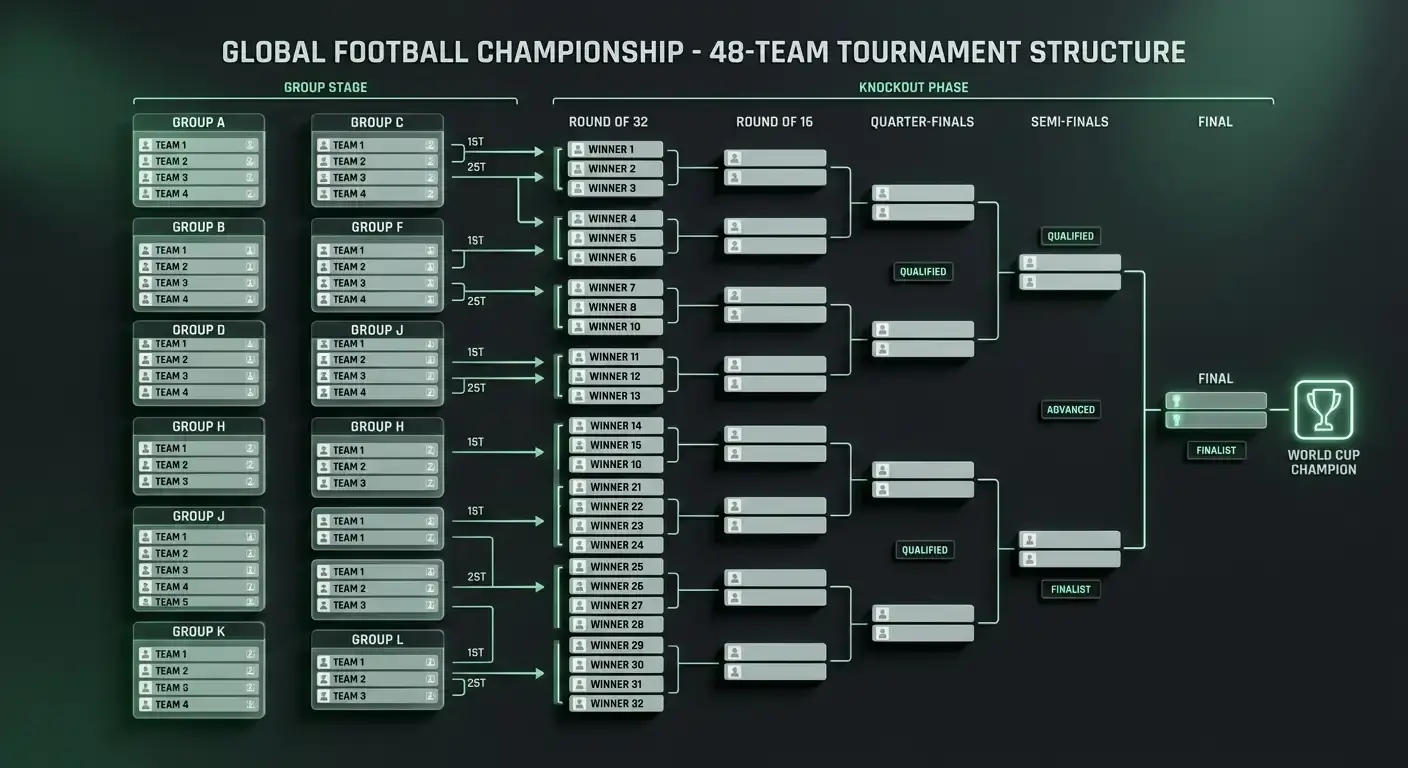
The jump from 32 to 48 teams is not a cosmetic expansion, it reshapes the entire tournament structure and the betting that hangs off it. With 104 matches packed into the schedule, the sheer volume of fixtures dwarfs anything previous, and the early stages now include a swathe of nations that rarely reach this level, which scatters quality unevenly across the draw in ways the old 32-team format never did.
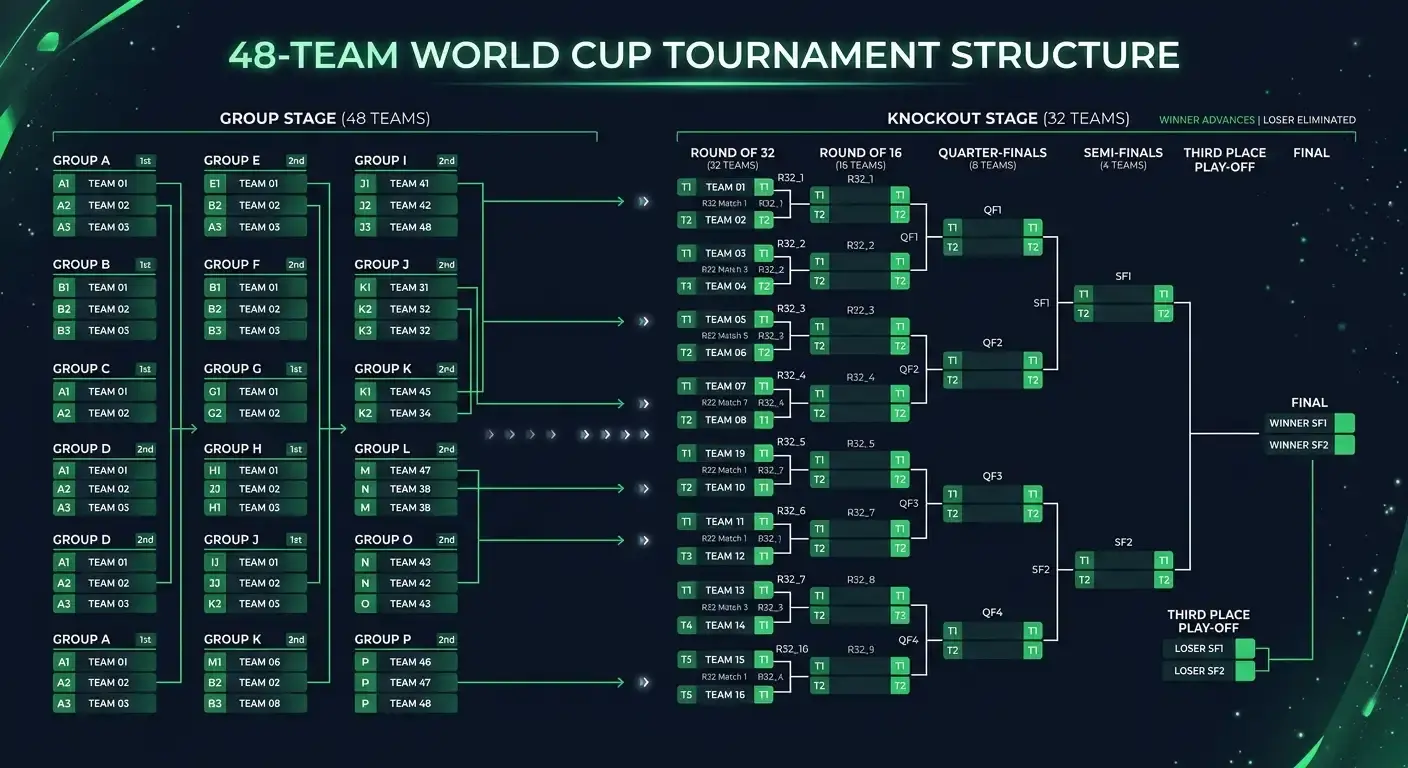
The group stage has been reorganised to accommodate the extra teams, and the qualification maths from those groups is the first thing a bettor must master. More teams advancing through a restructured group phase means the path to the knockouts is longer and more forgiving for the favourites, while creating genuine uncertainty about which mid-tier and outsider nations sneak through. The expanded bracket also means more knockout rounds before a champion emerges, lengthening the road and increasing the number of high-variance single-match shootouts where anything can happen.
For betting, the practical consequence is that the tournament generates an unprecedented quantity of markets, and quantity is where mispricing hides. Operators model the elite nations exhaustively, but the fixtures involving unfamiliar teams from confederations that the major markets follow loosely are priced with far less granular knowledge. That gap between how well the favourites are modelled and how loosely the outsiders are priced is the single richest source of value the format creates.
Reading the outright and group markets
The outright winner market is the headline bet of any World Cup, and the expanded format changes its value profile. A longer tournament with more rounds means more opportunities for a favourite to suffer a catastrophic off-night, which keeps the longer prices honestly long and rewards backing a genuinely strong nation priced beyond the small cluster of elite favourites. The very best teams will be short, as always, and the value, when it exists, sits among the strong contenders the market has not fully backed.
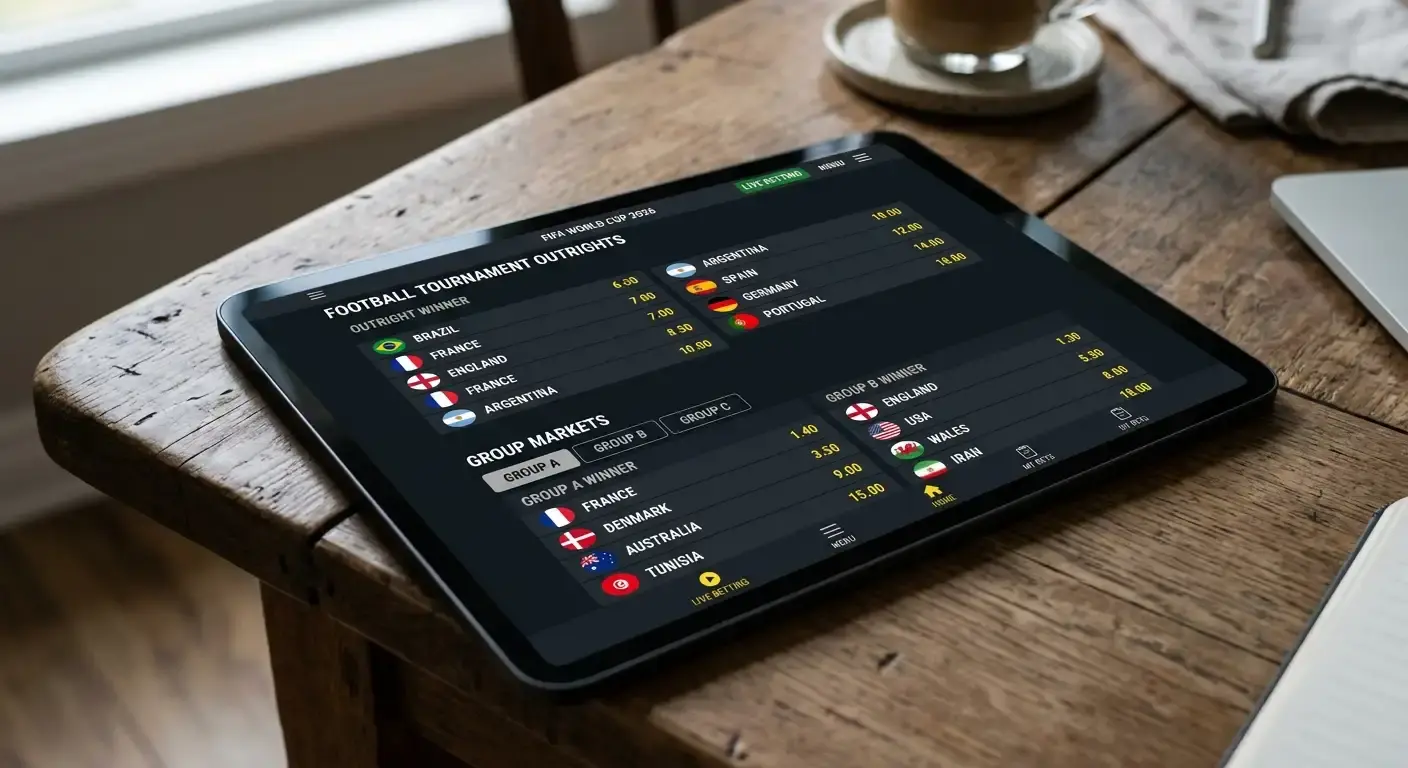
Group markets are where the expanded format opens new ground. Betting on group winners, on which teams qualify from each group, and on the various group-position markets rewards a bettor who studies the draw carefully and spots groups where the seeding has created a soft path for a particular side or an unexpectedly brutal one for a fancied nation. Early in the tournament, before the markets firm up around emerging form, these group qualification bets can carry real value for anyone willing to do the homework on unfamiliar opponents.
I treat the to-reach-the-final and to-reach-the-stage markets as a sweet spot between the lottery of the outright and the short prices of individual matches. Backing a strong side to reach the latter stages, rather than to win the whole thing, captures value from a deep run without requiring the perfect tournament that an outright demands. It is a way to be right about a team’s quality without needing them to survive every single knockout coin-flip.
Golden boot, specials and the novelty markets
Beyond the team markets, the tournament spawns a galaxy of player and special markets, and the golden boot is the headline among them. Betting on the tournament top scorer is an each-way-friendly market with a wide field of contenders, where a prolific striker from a nation expected to go deep offers the combination of goals and games that the award demands. The longer the expanded format runs, the more matches the deep-running nations play, which subtly favours strikers from the strongest teams who get the most opportunities to accumulate goals.
The specials market is where the World Cup gets creative and where caution matters most. Markets on the stage of elimination, on whether there will be a hat-trick in the tournament, on the nationality of the winning manager, on countless other novelties, are priced loosely because they are hard to model and lightly traded, which cuts both ways. Occasionally a genuine value angle appears in a special that the operator has priced carelessly, but far more often these markets are entertainment dressed up as opportunity, with margins fat enough to punish the casual punter who treats them as serious bets.
My rule with specials is simple: bet them only when I have a specific, defensible reason the price is wrong, and treat the rest as the fun flutters they are designed to be. The golden boot and the each-way player markets reward genuine analysis; most of the novelty specials reward the operator. Knowing which is which keeps the specials a source of enjoyment rather than a steady leak.
Keeping your head when the whole world is betting
The greatest danger of a World Cup is not bad odds, it is the volume of opportunity, and I have watched disciplined bettors lose their heads precisely because there is a match to bet on almost every day for a month. Surveys taken ahead of the tournament found that 68 percent of UK bettors planned to increase their betting activity across the 2026 sporting calendar, driven largely by the World Cup, and that surge of enthusiasm is exactly the conditioning that turns a sensible punter into a reckless one.
The format makes this worse than usual. With 104 matches crammed into a few weeks, the temptation to have something on every game is relentless, and betting every match is the surest way to hand back any edge you have to the operator’s margin. I bet a fraction of the tournament’s fixtures, the ones where I have a genuine read, and I deliberately skip the matches between unfamiliar sides where I am guessing rather than analysing. Sitting out is a position, and during a World Cup it is often the most profitable one.
The same staking discipline that governs any serious betting applies with extra force during a tournament, because the compressed schedule magnifies both the wins and the chasing. I keep my unit size fixed, I do not increase stakes to recover a bad day, and I treat the month as a marathon rather than a daily sprint of must-have bets. The patient approach that wins value across a World Cup is the same one that finds value in any concentrated burst of fixtures, and the longer-term tournament positions, the outrights and group bets placed early for the best prices, are where much of that value lives. My guide to ante-post and futures markets covers exactly how to time those longer positions for maximum value.
