

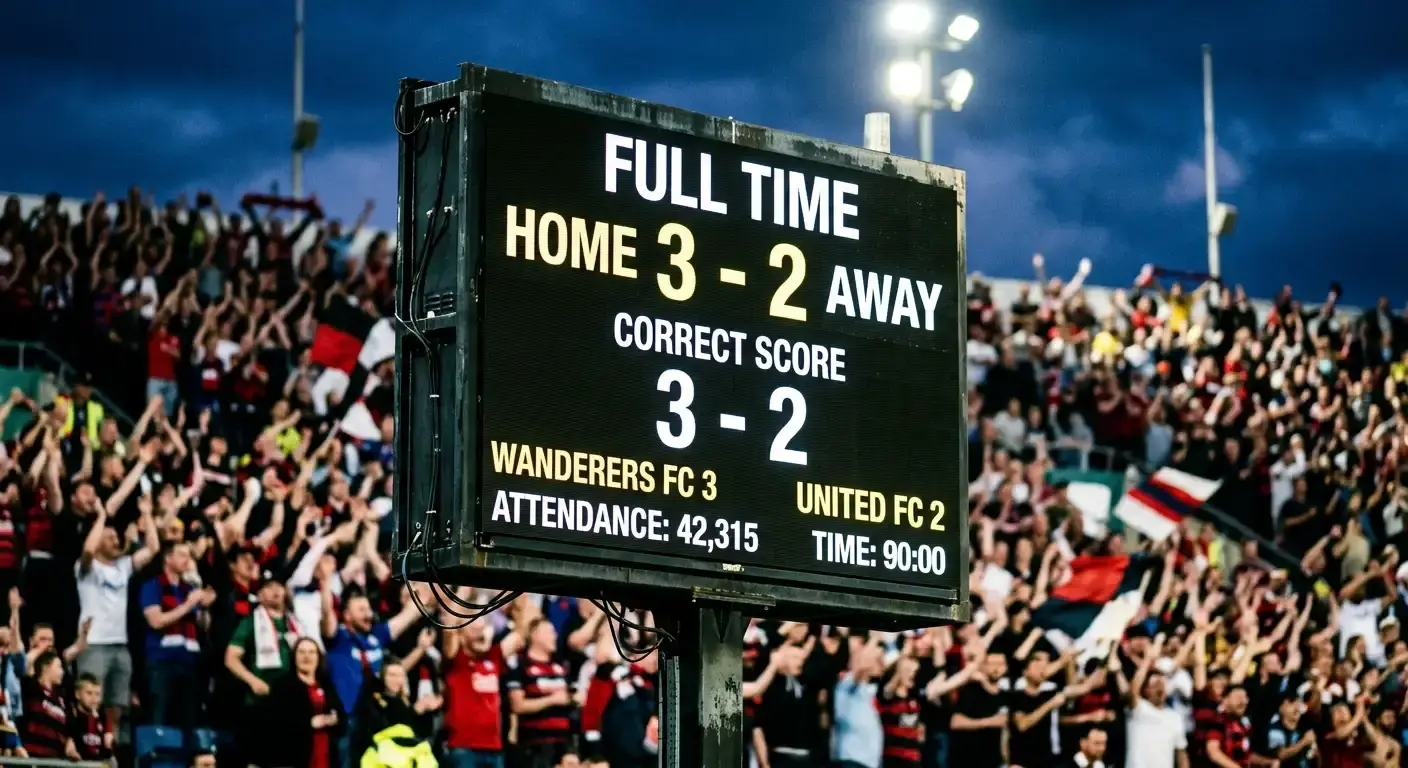
The bet that pays like a lottery and behaves like one
Early in my betting life I hit a 5-1 correct score at odds that paid for a weekend away. I felt like a genius for about a week, until I tallied up the dozens of correct score slips I’d lost in between and realised the maths had been quietly fleecing me the whole time. That single win papered over a long stretch of losses, and the lesson stuck: correct score is the most seductive market on the coupon and the one where the bookmaker’s edge bites hardest.
The appeal is obvious. You are predicting the exact final scoreline, and because there are so many possible scorelines, the odds are enormous compared to anything in the result market. A correctly called 3-2 can pay double figures. But the size of those odds is not generosity. It is a direct reflection of how unlikely you are to be right, and the gap between the price and the true probability is where the house quietly takes its cut.
How the bookmaker builds the scoreline prices
The pricing of a correct score market is one of the more elegant things in football betting once you see under the bonnet. The bookmaker starts with an expected number of goals for each team, derived from attacking and defensive strength, home advantage and recent form. From that, statistical models estimate the probability of every plausible scoreline, then convert those probabilities into odds and add a margin on top.
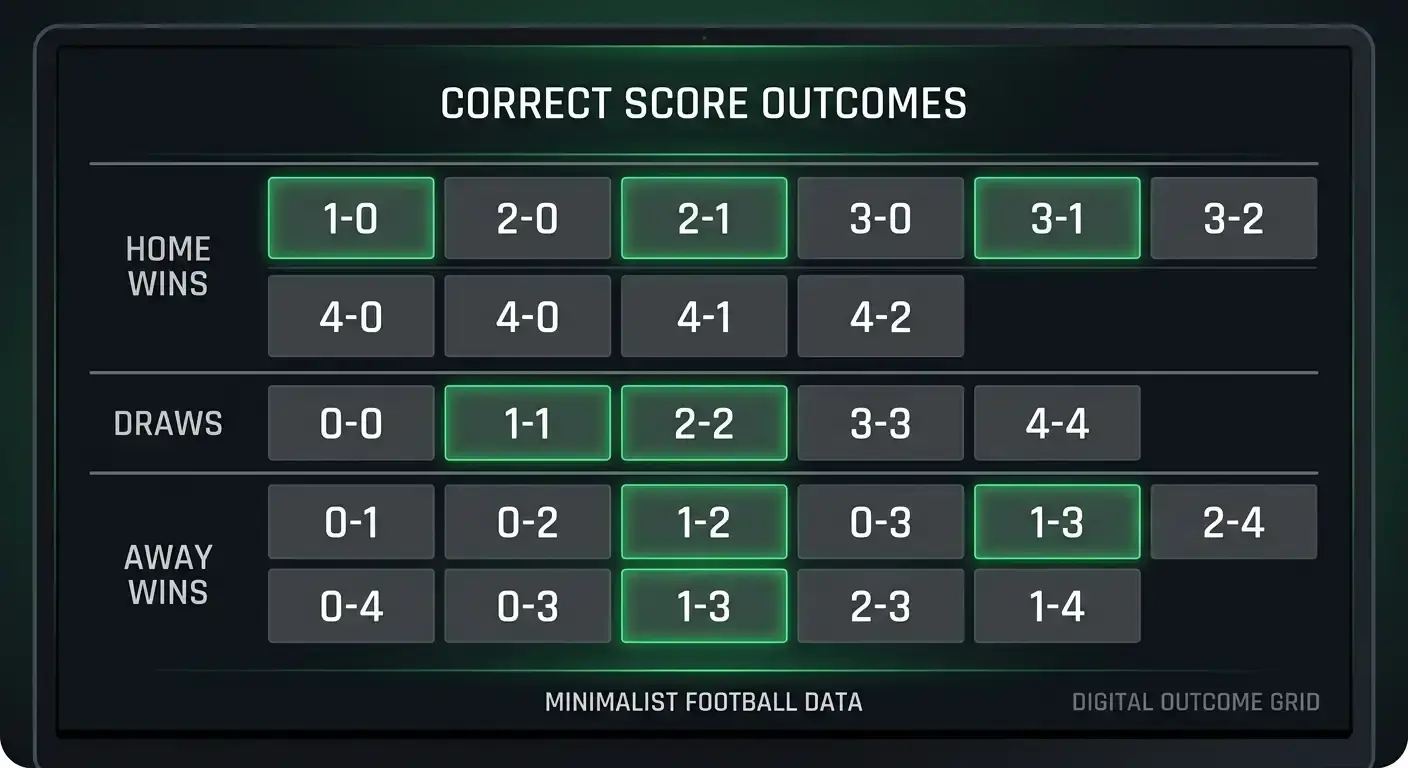
What you end up with is a grid. The most likely scorelines, the 1-0s, 1-1s and 2-1s that football produces week in and week out, sit at the shortest prices. The improbable ones, the 4-3s and 5-0s, balloon out to odds that look tempting precisely because they almost never happen. Every cell in that grid carries the bookmaker’s margin, and because the market has so many outcomes, the cumulative overround across the whole scoreline market is among the fattest on any football coupon.
That structural margin matters more than ever. The average bookmaker hold rate has climbed from 6.7% in 2018 to 10.15% in 2025, and high-margin novelty markets like correct score are exactly where that creeping edge is concentrated. When you back a single scoreline you are not just fighting the difficulty of being precisely right; you are paying a premium for the privilege of trying.
The scorelines that actually dominate
If you only remember one thing about this market, make it this: football is a low-scoring sport, and a handful of scorelines account for a startling share of all results. The 1-0, 2-1, 1-1, 2-0 and 0-0 cluster recurs across virtually every league season after season, while the dramatic high-scoring results that punters dream of backing are statistical rarities.
This concentration cuts against the recreational instinct. People want to back the exciting 3-2, but the boring 1-0 is far more likely to land. The catch is that the bookmaker knows this too, so the common scorelines carry the shortest, least generous prices while the value, if it exists at all, hides in the slightly-less-obvious results that the model underrates for a specific fixture.
My approach is to ignore the headline favourites and the lottery tickets alike, and hunt for the scoreline that a particular matchup makes more likely than the grid suggests. A defensively brittle side missing two centre-backs against a clinical attack shifts the probability towards a specific two or three-goal margin that the generic model hasn’t fully captured. That is the only correct score angle I trust, and even then I size the stake as entertainment money rather than a serious investment.
Scorecasts and combination scoreline bets
Bookmakers love to bolt extra conditions onto the scoreline because each one widens the odds and deepens the margin. The most common is the scorecast, which pairs a goalscorer with the correct final score in a single bet. You might back a striker to score first and the game to finish 2-1, and if both legs land the payout is spectacular, often in the dozens or hundreds.
The problem is that you are now compounding two difficult predictions, and the combined probability is brutal. A scorecast asks you to be right about who scores and the exact final score, two things that are only loosely related and each individually unlikely. The odds look life-changing because the chance of landing is correspondingly tiny. If you want to understand how the goalscorer half of that bet is actually priced, my breakdown of the goalscorer markets is worth reading before you ever attach one to a scoreline.
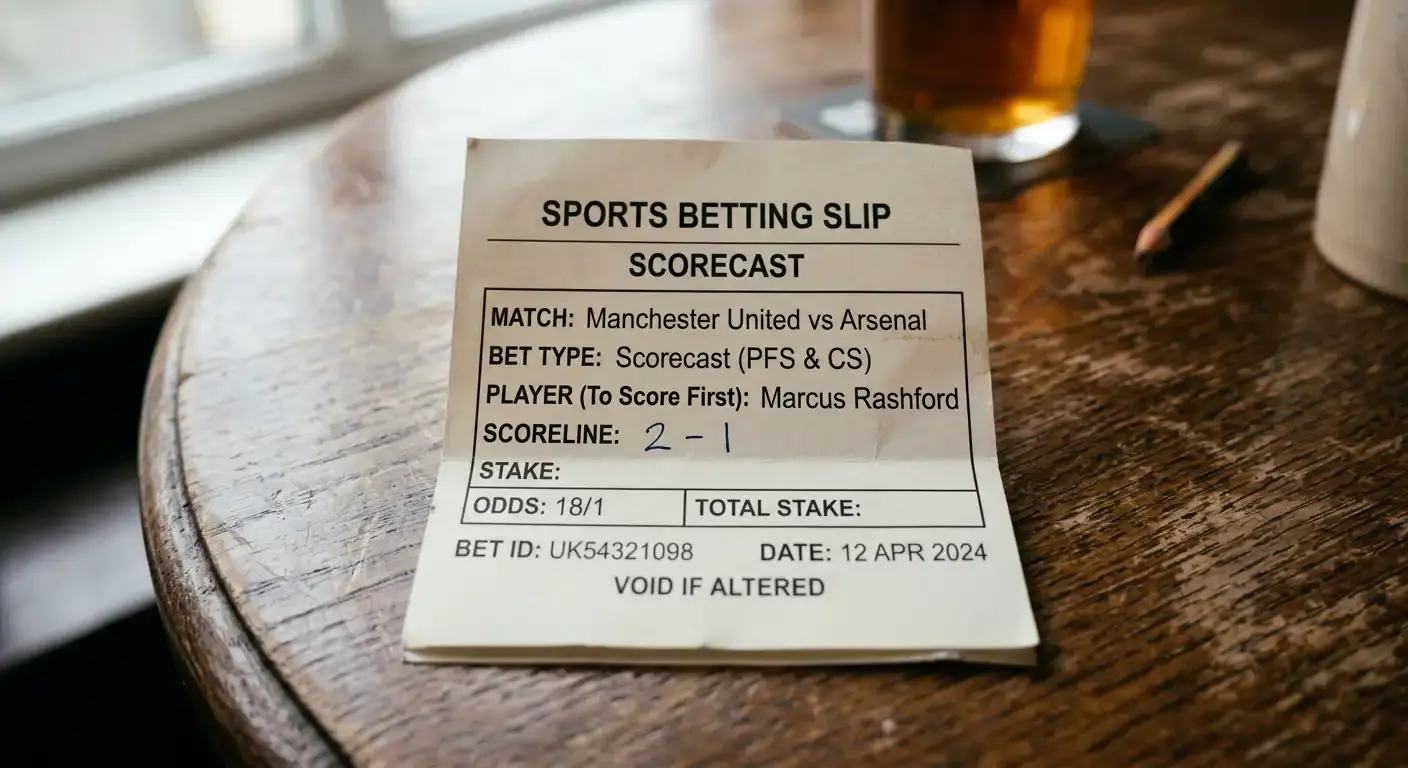
The wincast is a gentler cousin, pairing a scorer with the match result rather than the exact score, which improves your chances at the cost of a smaller payout. I treat the whole family of combination scoreline bets the same way: fun for a big match, fine in tiny stakes, but never confused with a strategy that pays the bills.
Setting expectations you can actually live with
The hardest conversation I have with newer bettors is the one about hit rate. Even a sharp correct score selection lands a small fraction of the time, and you must be psychologically prepared for long losing runs punctuated by the occasional big win. If a single lost slip ruins your evening, this is the wrong market for your temperament.
The global sports betting market was valued at over 112 billion dollars in 2025 and is forecast to more than double by 2035, and a meaningful chunk of that growth comes from exactly these high-odds novelty markets that pull players in with the promise of a huge return from a small stake. The industry’s expansion is partly built on the dopamine of the near-miss, and correct score is engineered to deliver near-misses constantly. Your 2-1 prediction finishes 2-0 and you feel agonisingly close, but close pays nothing.
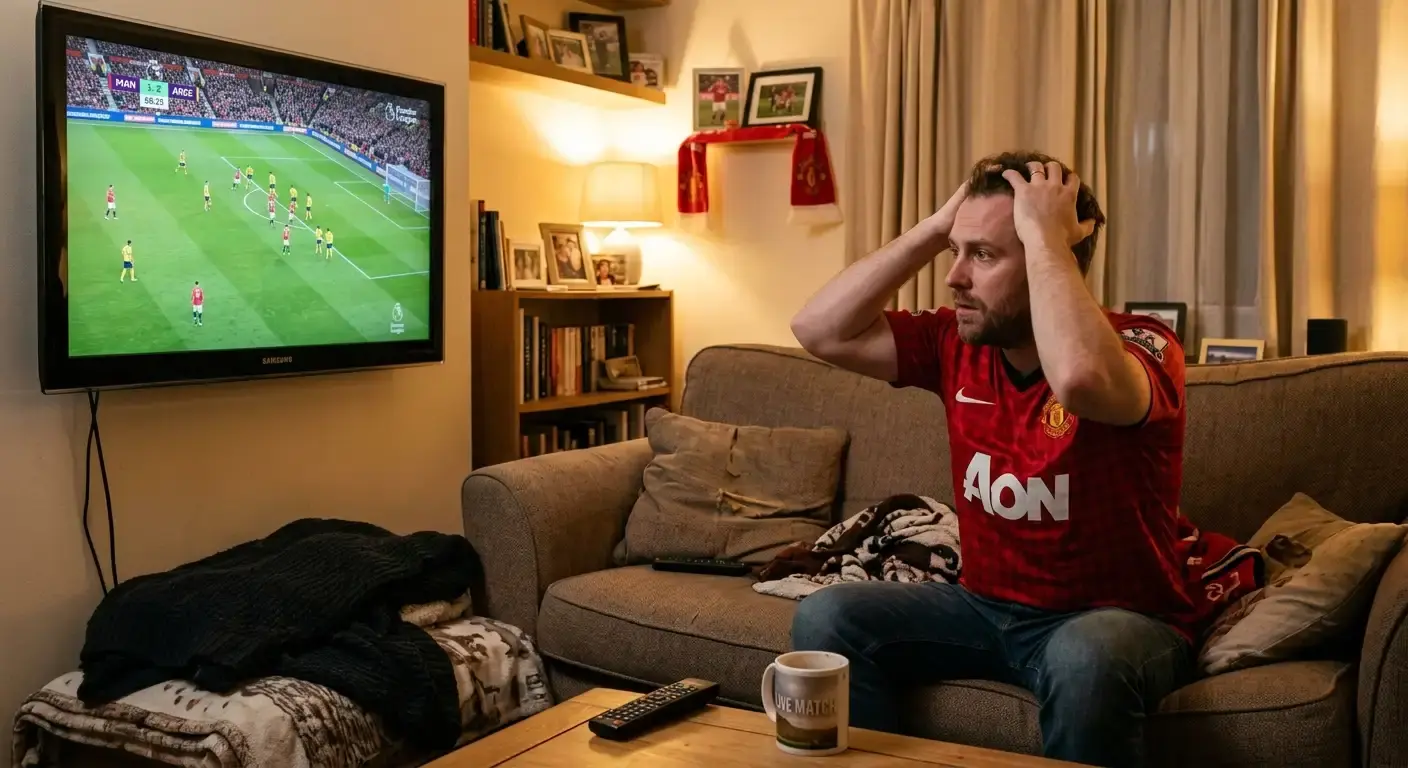
I keep correct score in my betting life as a deliberately small line item, the equivalent of a flutter on a big derby rather than a market I expect to profit from. Stake what you would happily lose, accept that the long odds are long for a reason, and never let one memorable win convince you the maths has changed. It hasn’t.
