


Betting on the game’s texture, not its result
Some of my most reliable profits over the years have come from markets that do not care who wins. Corners and cards betting asks a completely different question from the match result: not who triumphs, but how the game will be played and how it will be officiated. That shift in focus, from outcome to texture, opens up an analytical world that rewards a particular kind of preparation the result-obsessed punter never does.
These secondary markets thrive on the biggest occasions precisely because they add layers of engagement to a match. Bill Miller of the American Gaming Association captured why showpiece events draw so much betting interest when he said that “no single event brings fans together like the Super Bowl, and this record figure shows just how much Americans enjoy sports betting as part of the experience”. The same appetite for deeper involvement drives the corners and cards markets on a big derby or a cup final, where fans want something riding on every flashpoint and set-piece. For the analytical bettor, that popularity creates markets worth studying, because they turn on factors quite separate from the scoreline.
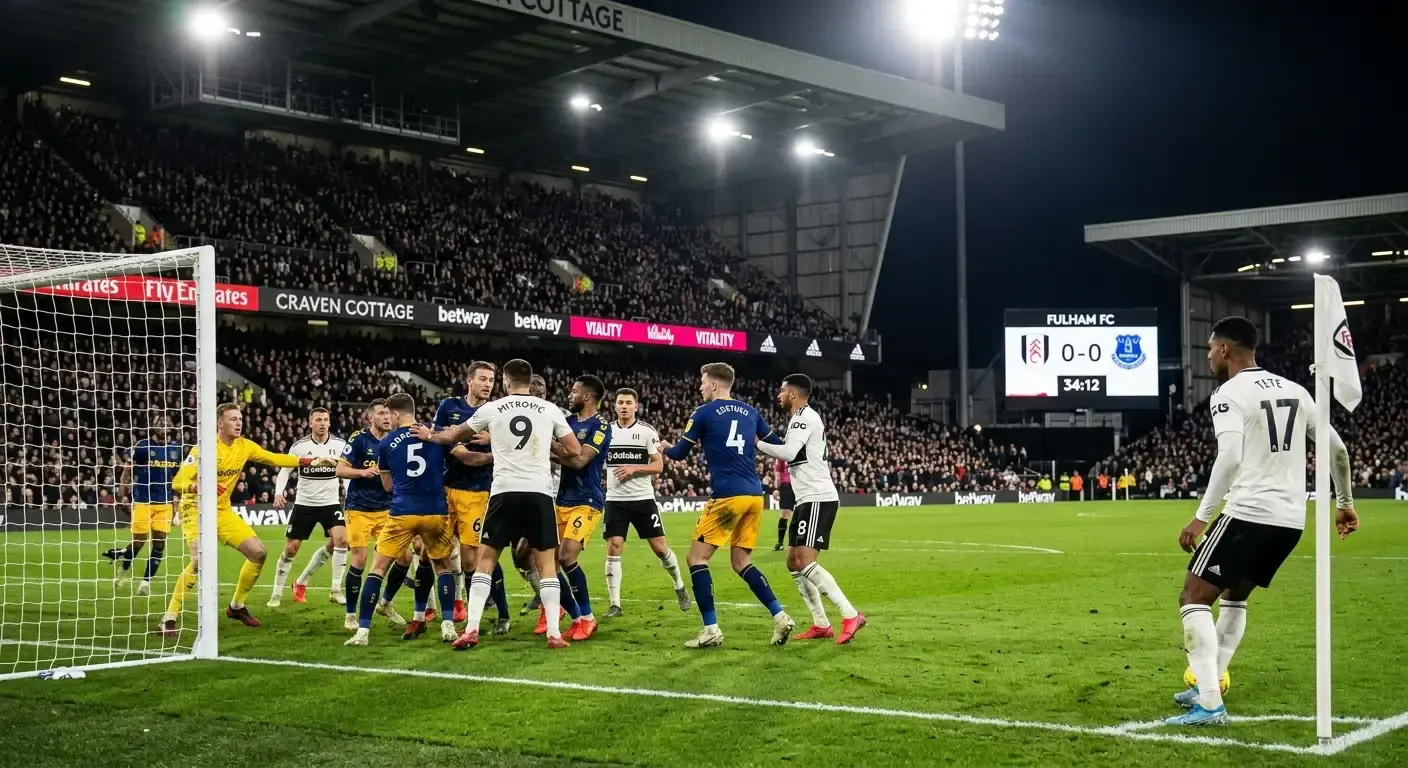
The corner markets and how they behave
Corner betting is fundamentally a bet on attacking pressure and playing style, and grasping that is the key to reading these markets. The most common is the total corners market, an over or under line on the combined number of corners in a match, settled exactly like a goals total but driven by entirely different factors. A match between two attacking sides that get wide and deliver crosses produces far more corners than a tight, narrow contest between two cautious teams, regardless of how many goals are scored.

Beyond the basic total, the markets branch out in useful ways. You can bet on the corners won by each team individually, on the match corner handicap, and on Asian corner lines that work just like Asian handicaps applied to corners, with quarter lines that split your stake and remove the push. These Asian-style corner markets are popular with serious corner bettors because they offer the same fine-tuning and the same value-hunting opportunities that the Asian handicap brings to the result market.
What makes corners so analysable is that they correlate strongly with identifiable tactical patterns. A team that attacks down the flanks, that shoots often and forces blocks and deflections, that chases a game and throws bodies forward, all of these generate corners predictably. A side that plays through the middle, sits deep, or controls possession without penetrating produces fewer. Reading a fixture for these stylistic signatures, rather than for who will win, is how you find value in the corner markets that the result-focused crowd overlooks.
Cards, bookings and the points systems
Card betting turns on aggression, stakes and officiating, and it operates through systems that newcomers must understand before they bet. The simplest markets are the total cards over or under, betting on how many yellow and red cards a match will produce, and the team cards markets covering each side individually. But the most distinctive feature of card betting is the bookings points system, which is how many of these markets actually settle.
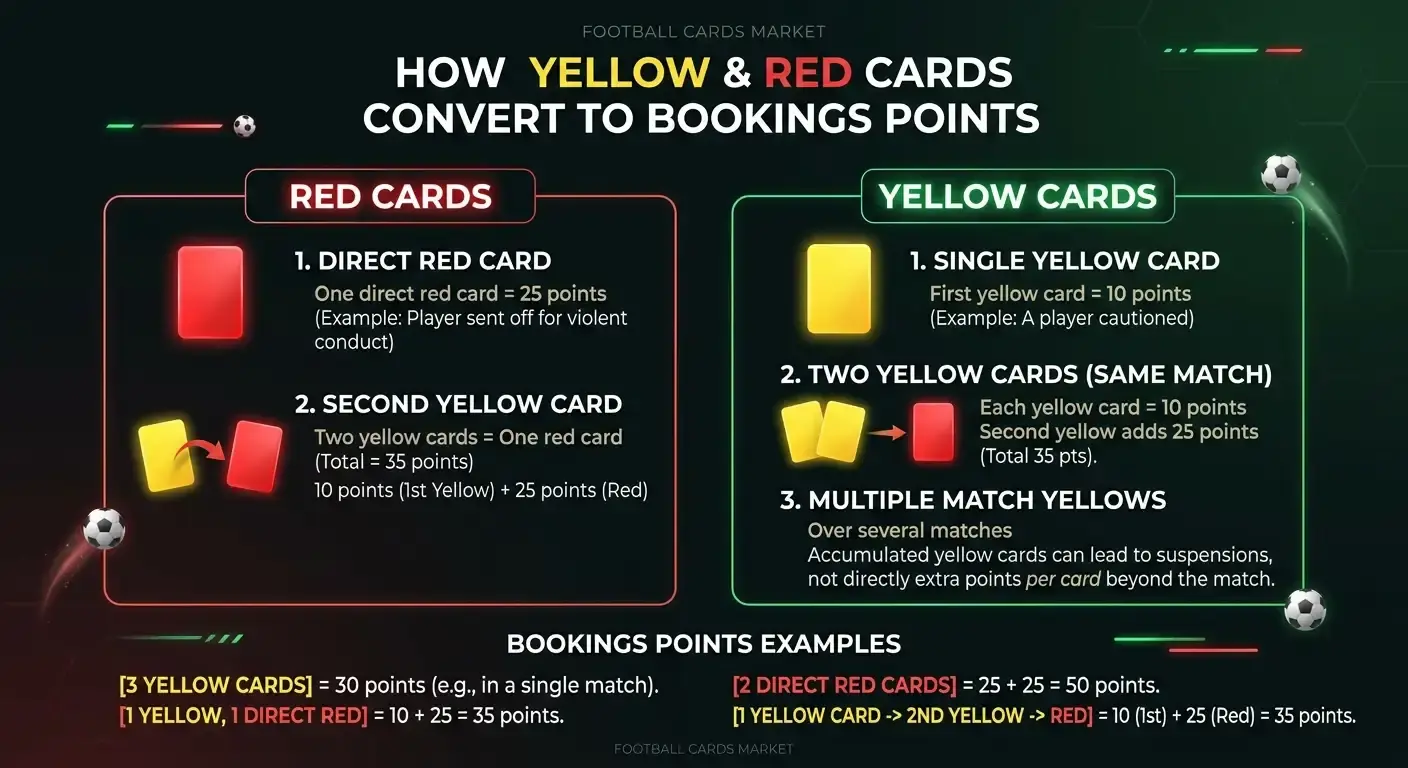
Under the standard bookings points system, a yellow card is typically worth ten points and a red card twenty-five points, with a second yellow leading to a red counting accordingly. So a match with three yellows and one straight red would total fifty-five bookings points, not four cards. The points system exists to weight the severity of cards rather than just counting them, and it means you are betting on a points total that can land between the round numbers a simple card count would produce. Knowing whether a market settles on card count or bookings points is essential, because they behave differently and the lines are set accordingly.
The markets that drive card betting are the fixtures with edge: heated derbies, relegation six-pointers, matches between sides with a history, and games where the stakes inflate the tension. These are the contests where tackles fly in, tempers fray and cards accumulate, and they are where the card markets become genuinely predictable for the bettor who reads the context. A tame mid-table fixture between two sides with nothing to play for is the opposite, and the card lines reflect that calm.
The referee and the role of playing style
The single most overlooked factor in card betting, and one of the most powerful, is the referee. Officials vary enormously in how readily they reach for their cards, and a referee’s individual tendency is one of the most reliable predictors of how many cards a match will produce, often more reliable than the identity of the teams involved. A strict, card-happy official can turn an ordinary fixture into a booking-fest, while a lenient referee lets games flow and keeps the cards in his pocket.
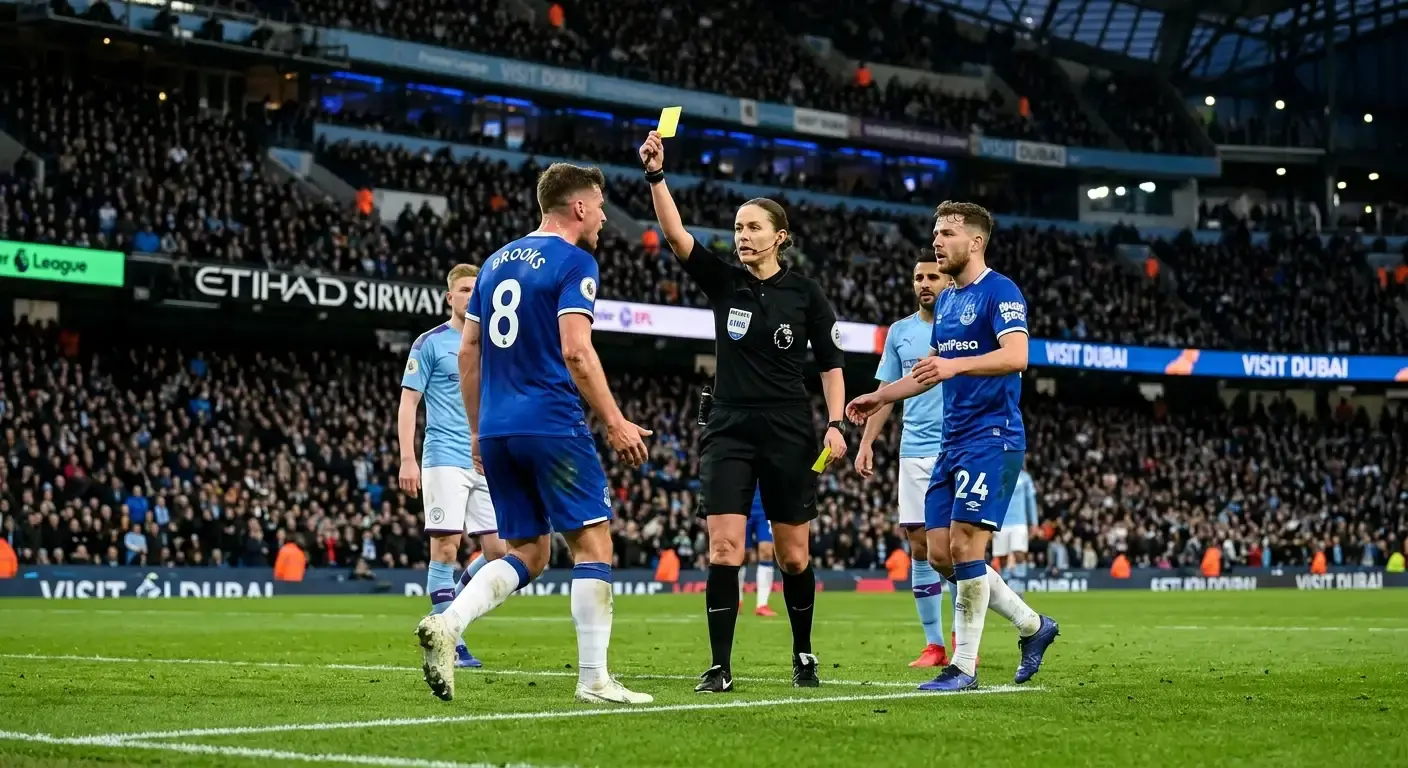
Studying referee profiles, their average cards per game, their disciplinary record over a season, is exactly the kind of unfashionable homework that gives a corners and cards bettor an edge. European football generates over 40 percent of all global online betting revenue, and within that vast market the card lines are set partly on team aggression and partly on the assigned official, yet the casual money fixates on the teams and underweights the referee. The bettor who knows that a particular official is among the strictest in the league has a genuine informational advantage on the card markets he officiates.
Playing style shapes both corners and cards in ways that reward joined-up analysis. A high-pressing, physical side commits more fouls and draws more cards while also forcing more corners through sustained pressure, so a single tactical read can inform bets across both markets. Combining an understanding of how two teams play with knowledge of the referee assigned to the match is the foundation of a serious approach to these secondary markets, and it is analysis the result-focused bettor simply never does.
A measured way into the secondary markets
My advice for approaching corners and cards is to treat them as specialist markets that reward specialist knowledge, not as casual add-ons to a match-result slip. The edge here belongs to the bettor who studies the specific, unglamorous factors that drive them: team playing styles, fixture context and stakes, individual referee tendencies, and the historical corner and card profiles of the teams involved. This is research the broad market underweights, which is precisely why value survives in these corners of the coupon.

I am also disciplined about the margins, because the secondary markets are less heavily traded than the headline ones and the operators build in healthy edges to compensate. The variety of corner and card markets, the totals, the handicaps, the Asian lines, the bookings points, gives a knowledgeable bettor plenty of room to find a mispriced line, but it also gives the operator room to load the margin on the less-scrutinised options. Sticking to the markets I understand deeply and the lines where my research genuinely disagrees with the price is how I keep these bets profitable rather than recreational.
The Asian-style structures that appear in corner betting are worth particular attention, because they bring the same value-hunting precision to corners that they bring to the result market, with quarter lines and split stakes that let you express a nuanced read. If you understand how those lines work in the main markets, you can apply the same thinking directly to corners, and my guide to quarter lines and split stakes covers exactly how that mechanism works and how to read it for value.
