

The number you are actually looking at
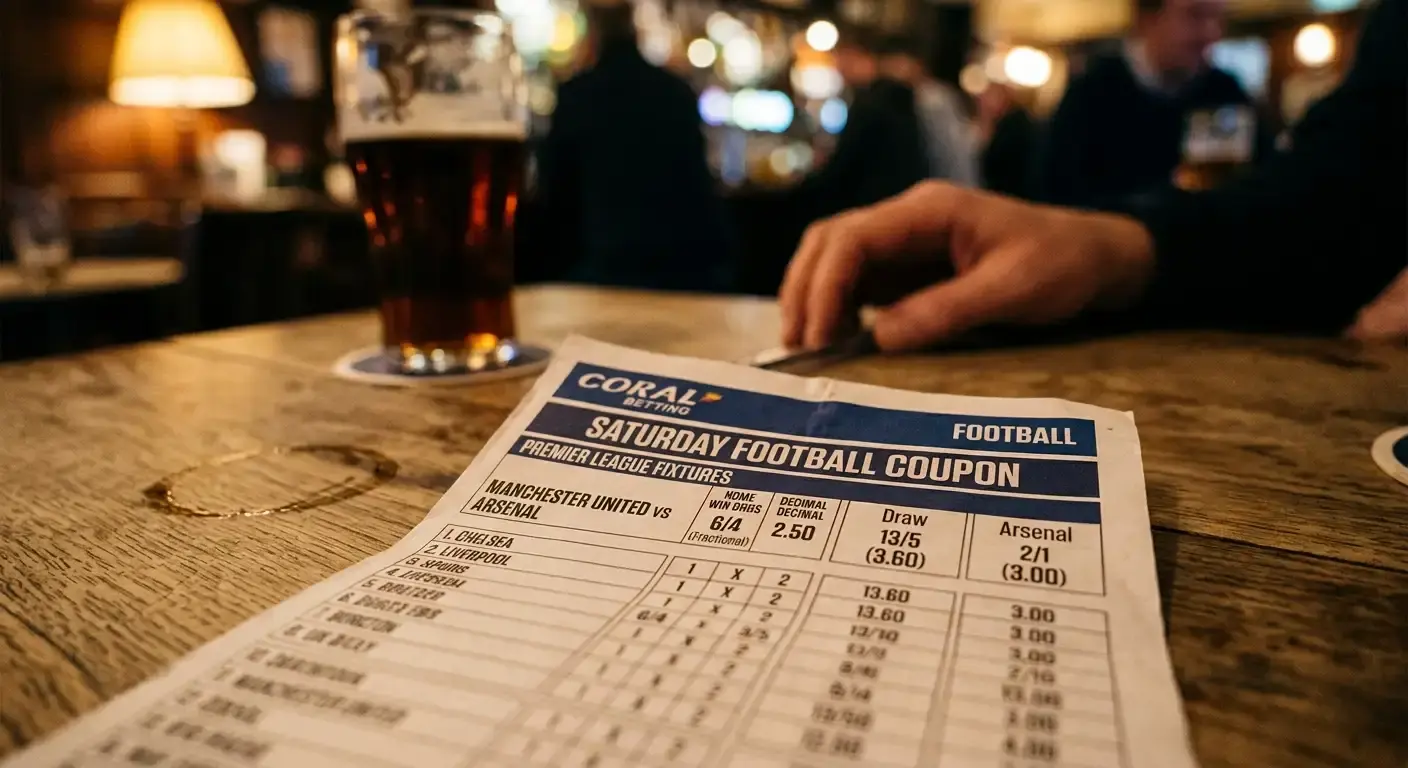
The first coupon I ever studied properly was a Saturday accumulator a colleague had filled in at the bookies, and I genuinely could not tell whether 6/4 was better or worse than 2.50. He could not explain it either, which told me everything about how most people bet. They stake real money on a number they have never decoded.
Here is the thing that took me far too long to work out, and that I now tell every newcomer in the first five minutes. A football betting odds figure is not a mysterious bookmaker code. It is a probability with a mark-up bolted on. Whether you see 6/4, 2.50, or +150, all three describe the same underlying chance of an outcome and the same return on your stake. The format is just a costume. Once you can strip the costume off and read the probability underneath, you stop being a punter who hopes and start being one who calculates.
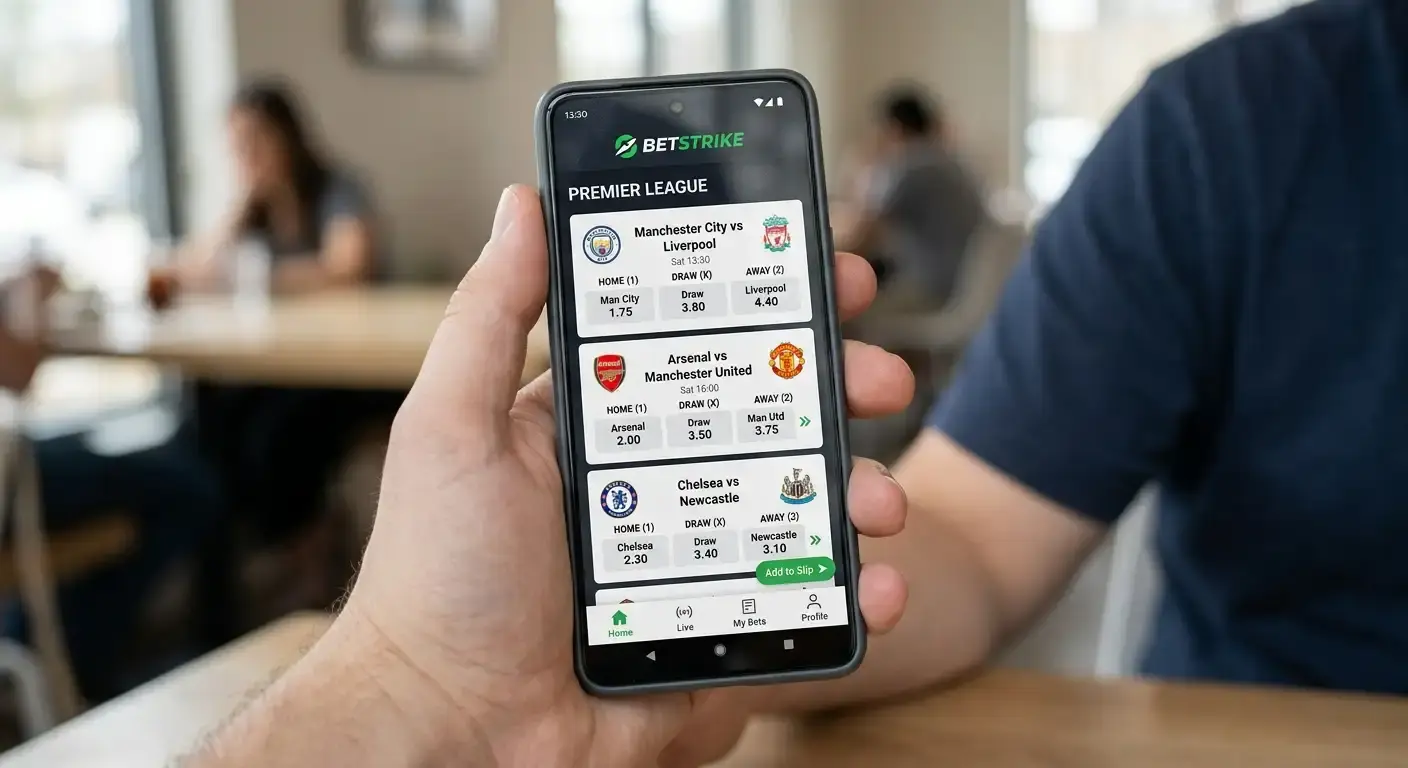
UK bettors have a particular reason to get fluent in this. Around eighty per cent of online bets worldwide are now placed on a mobile screen, and in Britain the phone is the dominant channel by a distance. That matters because mobile apps flip between fractional and decimal at a tap, and they price markets in real time while you are halfway through tapping. If you cannot read the number instantly, you are at the mercy of a screen designed to make you bet faster than you think.
Over the next few thousand words I am going to walk you through every odds format you will meet on a UK football market, show you how to convert between them in your head, and most importantly teach you to spot the bookmaker’s margin hiding inside the prices. None of this requires maths beyond primary school. It just requires someone to show you the trick once.
Fractional odds: the British default
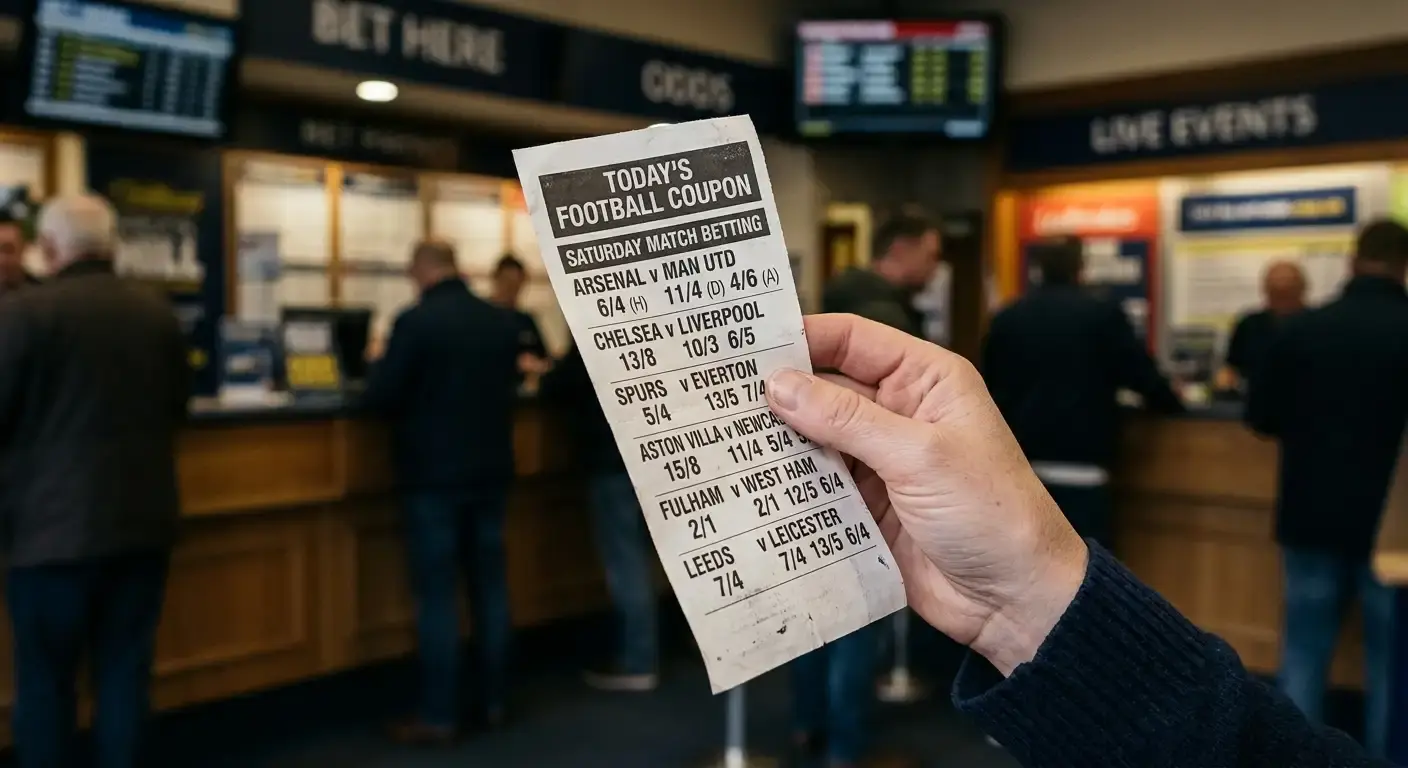
Ask a cab driver in Manchester what odds Liverpool are to win and he will say something like “five to four on” without blinking. Fractional odds are the native tongue of British betting, printed on coupons since long before anyone had a smartphone, and they are the format you will still see quoted in newspapers, on television, and in the high street shop.
The structure is simple once you stop reading it as a fraction and start reading it as a sentence. Take 6/4. The number on the left is what you win, the number on the right is what you stake. So 6/4 means: stake four units, win six in profit, and get your four back on top. A successful 10 pound bet at 6/4 returns 25 pound, which is 15 pound profit plus your 10 pound stake. The slash is not telling you to divide. It is telling you a ratio of profit to stake.
Once that clicks, the rest of the fractional world opens up. Evens, written as 1/1 or sometimes EVS, means you double your money: stake 10 pound, win 10 pound profit, get 20 pound back. Anything where the left number is bigger than the right is odds-against, an outcome the bookmaker thinks is less likely than a coin flip. Anything where the right number is bigger, like 4/6, is odds-on, an outcome judged more likely than not. Odds-on prices are everywhere in football because strong favourites at home are common, and a lot of beginners are put off by them without understanding that a short price simply reflects a high probability.
Let me show you a couple worked through, because the awkward fractions are where people freeze. Take 11/4 on an away win. Stake 4 pound, win 11 pound. To find the return on a 10 pound stake, you work out the profit per pound staked, which is 11 divided by 4, or 2.75. Multiply by your 10 pound stake and you get 27.50 pound profit, plus your tenner back, for 37.50 pound total. Now 4/6, an odds-on favourite. Profit per pound is 4 divided by 6, roughly 0.667. A 10 pound stake returns 6.67 pound profit plus your stake, so 16.67 pound back. The maths is identical every time: divide left by right, that is your profit per pound, multiply by stake.
Where fractional odds get genuinely irritating is comparison. Is 11/8 bigger or smaller than 6/4? Most people cannot answer instantly, and that is the format’s fatal weakness. To compare two fractional prices you almost have to convert them to decimals in your head anyway, which is precisely why the rest of Europe abandoned fractions decades ago and why every serious bettor I know thinks in decimal even when the app is showing fractions.
Decimal odds: built for comparison
The day I switched my brain over to decimal odds was the day my betting got noticeably sharper, and I am not exaggerating that. Decimal odds answer the one question fractional odds make you fight for: which price is bigger? The answer is always the larger number, with no mental arithmetic at all.
A decimal odds figure tells you the total return per unit staked, including your stake back. That last part trips people up, so hold onto it. Odds of 2.50 mean that for every 1 pound you stake, you get 2.50 pound back in total if you win, which is 1.50 pound profit plus your original pound. A 10 pound bet at 2.50 returns 25 pound. Notice that 2.50 and 6/4 produce exactly the same 25 pound return on a tenner. They are the same price wearing different clothes.
The conversion between the two formats is worth committing to memory because it makes you bilingual at the coupon. To turn fractional into decimal, divide the fraction and add one. So 6/4 becomes 6 divided by 4, which is 1.5, plus 1, giving 2.50. The plus one is your stake coming back. Evens, or 1/1, becomes 1 plus 1, which is 2.00, the clean number that means double your money. Going the other way, subtract one from the decimal and that is your fractional profit ratio. Decimal 3.50 minus 1 is 2.50, or 5/2 in fractional terms.
What makes decimal odds so powerful for calculation is multiplication, especially when you start combining selections. If you want the return on a four pound stake at 2.75, you simply multiply: 4 times 2.75 is 11 pound total return. No dividing, no adding stake back separately, the figure is already baked in. This becomes essential the moment you build an accumulator, where you multiply the decimal odds of every leg together to get the combined price, something that is borderline impossible with fractions.
My honest advice, and I give it to everyone: set your betting app to display decimal odds and never look back. Most UK apps default to fractional because it feels traditional and familiar, but tradition is not helping you when you are trying to spot which of two bookmakers is offering the better number on the same match. Decimal lets you see value at a glance, and seeing value at a glance is most of the game.
American odds and why you will still meet them
You will not see American odds on a domestic UK coupon, but you will trip over them constantly online, in betting forums, in tipster posts, and on the increasing volume of US-facing content that bleeds into British feeds. Given that the regulated US sports betting market generated 16.96 billion dollars in revenue in a single year off a handle approaching 167 billion dollars, the American moneyline format is not going away, and understanding it stops you misreading a price by a mile.
American odds, also called the moneyline, use a baseline of 100 units and split into positive and negative. A positive number, like +150, tells you the profit on a 100 unit stake: bet 100, win 150 profit. A negative number, like -110, tells you how much you must stake to win 100 profit: stake 110 to win 100. Favourites carry the minus sign, underdogs carry the plus sign, and the figure -110 is the one you will see most often because it represents the standard pricing on an even two-way market once the bookmaker margin is applied.
To convert American to decimal so it lines up with everything else, there are two quick rules. For a positive figure, divide it by 100 and add 1, so +150 becomes 1.5 plus 1, which is 2.50, the same price we have already met twice. For a negative figure, divide 100 by the number and add 1, so -110 becomes 100 divided by 110, roughly 0.909, plus 1, giving about 1.91. The fact that -110 lands at 1.91 rather than a clean 2.00 is your first glimpse of the margin we will pull apart shortly. A true coin flip should pay 2.00. It pays 1.91 because the house has taken its cut.
Implied probability: reading the chance behind the price
This is the section that changes how you bet, so slow down here. Every odds figure, in any format, contains a hidden percentage: the probability the bookmaker is effectively assigning to that outcome. Learning to extract that percentage is the single most useful skill in this entire article, because it lets you compare what the bookmaker thinks against what you think, and the gap between those two numbers is where every profitable bet lives.
The formula is mercifully easy with decimal odds. Implied probability equals 1 divided by the decimal odds, expressed as a percentage. Odds of 2.00 give 1 divided by 2, which is 0.50, or fifty per cent. That makes sense: even-money should be a coin flip. Odds of 4.00 give 1 divided by 4, which is 0.25, or twenty-five per cent. Odds of 1.50 give 1 divided by 1.5, roughly 0.667, or sixty-seven per cent. The shorter the price, the higher the implied probability, exactly as your instinct says it should be.
Let me run a real three-way football market so you can see it working. Imagine a Premier League match priced like this: home win 2.00, draw 3.40, away win 4.00. Convert each to implied probability. The home win is 1 divided by 2, fifty per cent. The draw is 1 divided by 3.4, roughly 29.4 per cent. The away win is 1 divided by 4, twenty-five per cent. Now add those three percentages together. Fifty plus 29.4 plus 25 gives 104.4 per cent.
Stop and look at that total. The three outcomes in a football match are mutually exclusive and one of them must happen, so in a fair world the probabilities should sum to exactly one hundred per cent. They do not. They sum to 104.4 per cent. That extra 4.4 per cent is not an error and it is not bad luck. It is the bookmaker’s margin, deliberately built into the prices, and it is the reason the house wins over time regardless of which team scores. Every market you will ever bet is inflated like this. The skill is in knowing how much.
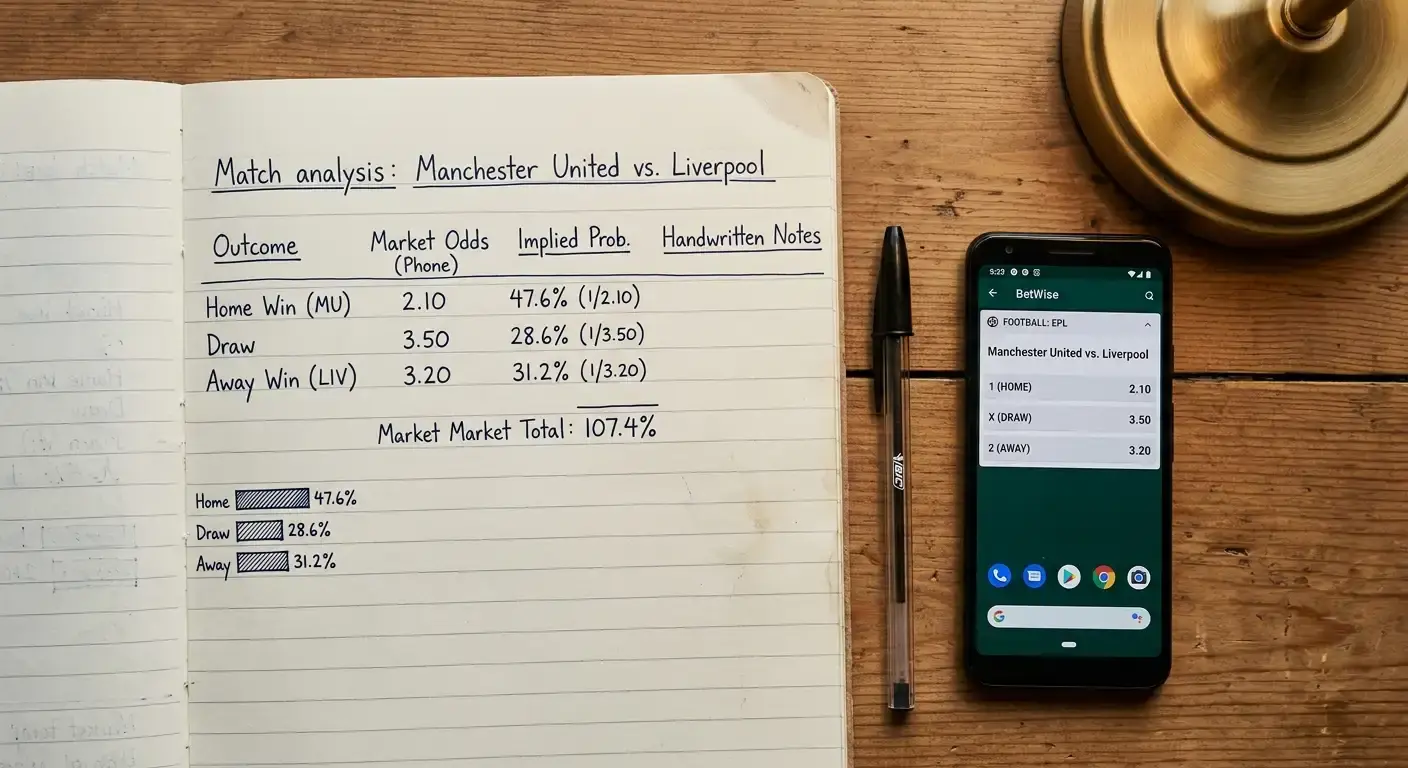
Here is why this matters for your decisions rather than your understanding. Suppose you have watched a team closely and you genuinely believe the home side has a sixty per cent chance of winning, not the fifty per cent the odds imply. The fair odds for a sixty per cent shot are 1 divided by 0.60, which is 1.67. The bookmaker is offering 2.00. You are being paid 2.00 for something you think is worth 1.67. That is a value bet, the only kind worth making, and you can only find it because you converted the price into a probability and had an opinion to compare it against.
The overround: where the bookmaker’s money comes from
I once spent an afternoon pricing up a single Saturday fixture list the way a trader would, and it was the most educational afternoon of my betting life. What it taught me is that the bookmaker is not betting against you on individual matches. The bookmaker is running a percentages business, and the percentage is called the overround.
That 104.4 per cent we calculated in the last section is the overround, sometimes called the book percentage or, in American slang, the vig or juice. The four-point-four per cent over one hundred is the theoretical margin the bookmaker has loaded into that specific market. If they could balance their liabilities perfectly across every customer, they would keep roughly that slice of all money staked no matter the result. In practice they do not balance perfectly, but the principle holds: the overround is the engine, and it runs whether your team wins or loses.
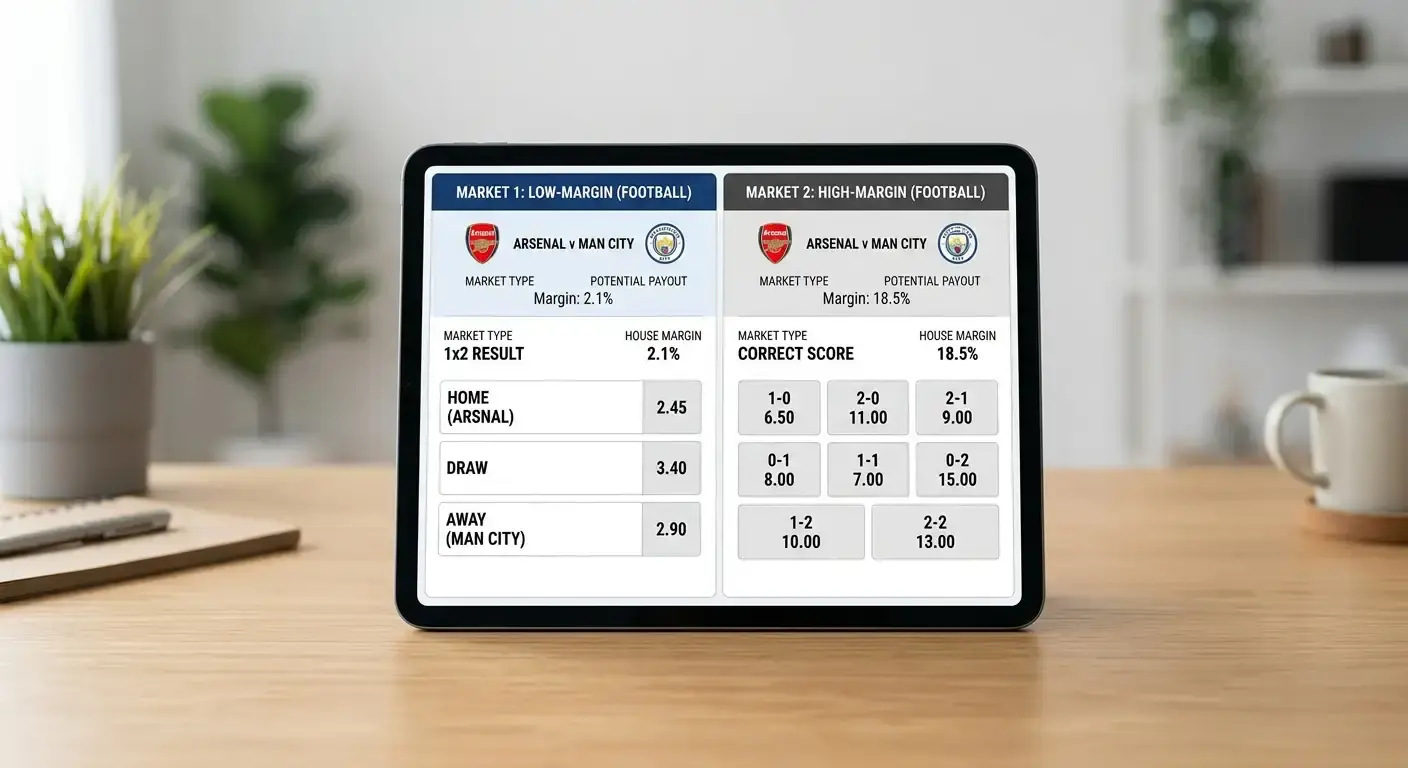
The size of the overround varies enormously by market, and knowing where it is fattest protects your bankroll. A standard match-result market between two well-known sides at a competitive bookmaker might carry an overround of four to six per cent. A correct-score market, with dozens of possible outcomes, can carry a margin north of twenty per cent. The more selections a market contains, the more places the bookmaker has to hide its cut, which is exactly why exotic markets feel exciting and quietly drain accounts. If you have a deeper appetite for the mechanics here, I have broken the full calculation down in my piece on how bookmaker margins and overround actually work.
The margin question is not abstract, and the numbers have been moving against bettors for years. The average hold rate at US sportsbooks climbed from 6.7 per cent in 2018 to 10.15 per cent by 2025, more than half as much again taken out of every dollar staked across the market. The same pressure exists everywhere odds are set. Operators have learned that customers do not shop around as much as they should, so margins creep upwards on the markets people bet impulsively. Andrew Rhodes, who led the UK Gambling Commission through this period, warned that “the next five years will be more consequential for gambling regulation than we have seen in many years,” and a fair chunk of that consequence is about how transparently these built-in costs are presented to the people paying them.
What do you do with this knowledge? Two things. First, you treat every quoted price as a price the house has marked up, never as the true chance of the event. Second, you concentrate your betting on the low-margin markets, the match results and the major totals, where the overround is thin, and you treat the high-margin exotics as entertainment you have priced into your budget rather than as a route to profit. The bettor who understands the overround does not try to beat it on every market. They pick the markets where it is smallest and they shop for the best available number.
Reading a real coupon without freezing
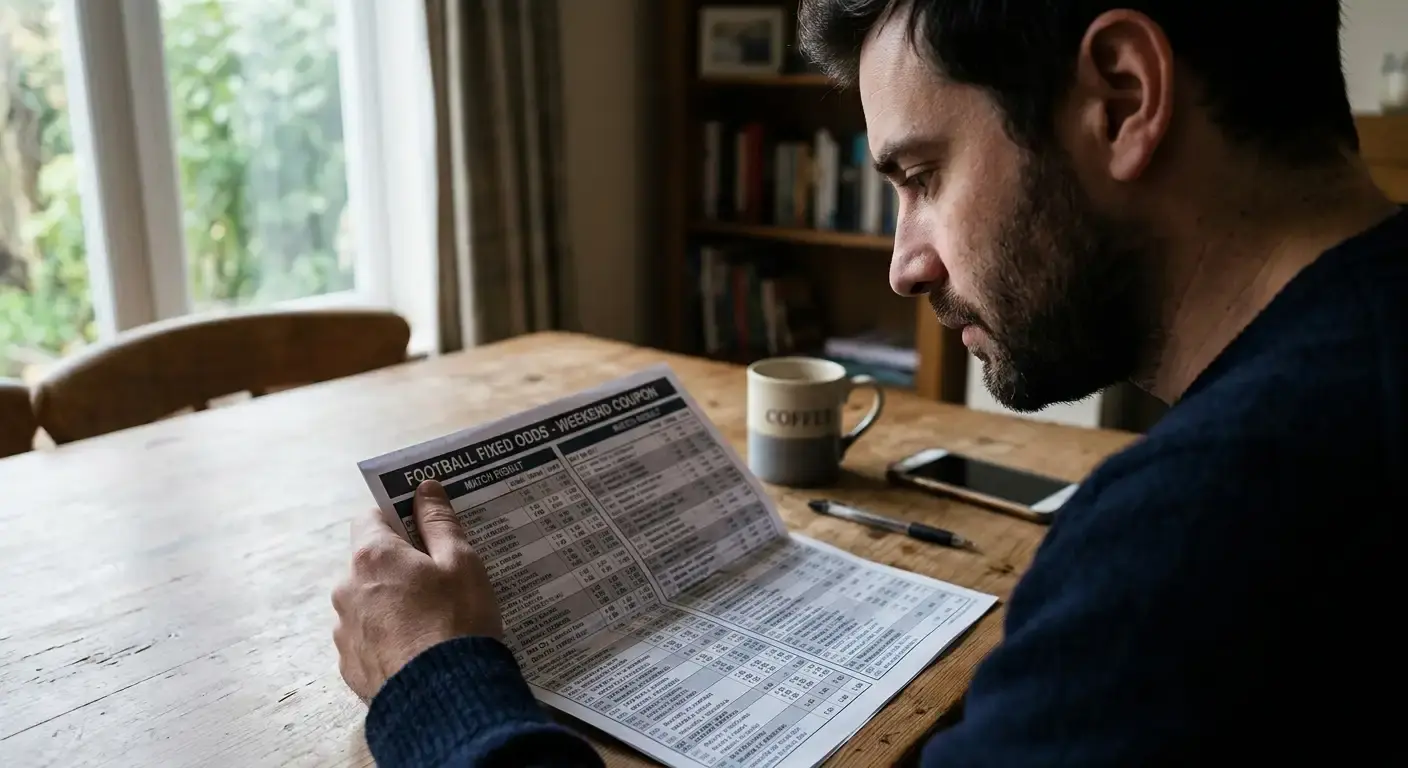
Picture the moment that actually matters: you are standing in the queue, or you are three taps into an app, and the screen is a wall of numbers, team names, and little symbols you half recognise. With 290 million online bets placed in the UK every month, this is a scene repeating tens of millions of times a day, and most of the people staring at that wall are guessing. Let me give you a reading order so you never have to.
Start with the market header, which tells you what you are actually betting on. “Match Result” or “Full Time Result” or “1X2” all mean the same three-way market: home win, draw, away win. The “1” is the home team, the “X” is the draw, the “2” is the away team, a notation borrowed from the football pools that has survived into the digital age. If the header says anything else, “Over/Under”, “Both Teams to Score”, “Correct Score”, you are in a different market with a different overround, so register that before you look at a single price.
Next, find the three prices and convert them in your head. If the app is in decimal, you are reading total return per unit instantly. If it is stuck in fractional, do the divide-and-add-one on each one. Then, and this is the step almost nobody takes, glance at whether the favourite’s price makes sense to you. A home side priced at 1.40 is being given a roughly seventy-one per cent chance of winning. Do you agree? If you have no opinion, you have no business betting that market, because betting without an opinion is just donating to the overround.
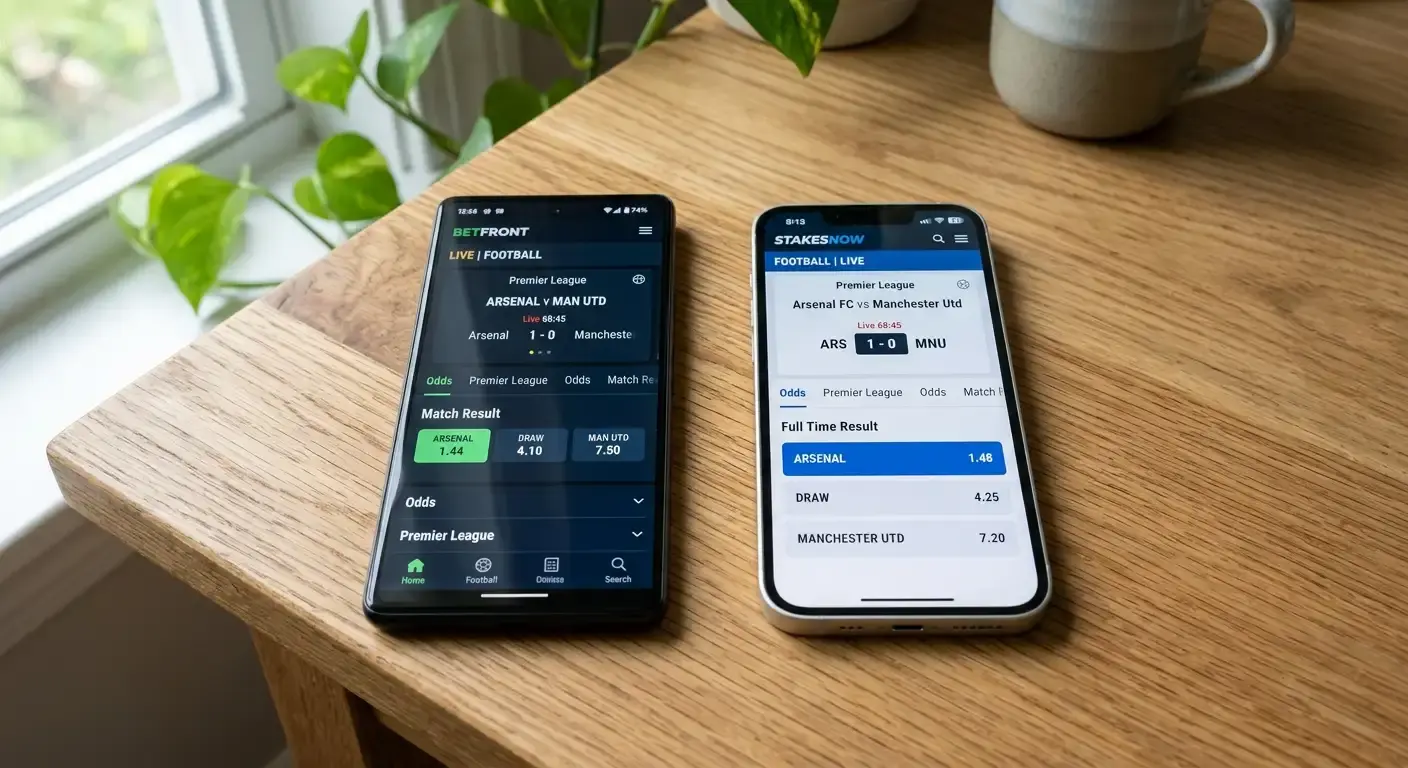
Finally, check the small print that the design tries to bury. Look for the each-way terms if it is an outright market, the maximum stake, and crucially whether the price you are about to confirm is the price you saw thirty seconds ago. On in-play and fast-moving markets the number updates while you decide, and a price drift of a few points changes the value of your bet. Confirm the figure, then confirm the stake, then place. Reading a coupon is not about speed. The app wants you fast. Your edge is in being the one person in the queue who is slow on purpose.
The mistakes that quietly cost you
If I could sit next to every new bettor for their first month, I would spend most of my time stopping them making four specific errors, because these are the ones I see again and again and the ones that turn a fun hobby into a leaky bucket.
The first is confusing the formats and not noticing. People see 2/1 in fractional and 2.00 in decimal and assume they are the same because both contain a two. They are not. Fractional 2/1 is two pound profit per one pound staked, which is decimal 3.00, a much bigger price than decimal 2.00. Mixing these up means you think you are getting a generous number when you are getting a stingy one. Pick one format, set your app to it, and stick to it until conversion is reflexive.
The second is ignoring the stake-back distinction. Decimal odds include your stake in the return; fractional odds describe profit only. A beginner who reads decimal 1.50 as “I win one and a half times my money” is wrong, because that 1.50 is the total back, meaning only fifty pence profit per pound. This single confusion makes short-priced favourites look far more attractive than they are, which is how people end up loading accumulators with odds-on selections that pay almost nothing.
The third, and the most expensive, is betting a price without converting it to a probability. I covered the method above, so I will only repeat the discipline: if you cannot say roughly what percentage chance the odds imply, and whether you think the real chance is higher or lower, you should not place the bet. Every bet you make should be a disagreement with the bookmaker’s probability in your favour. No disagreement, no edge, no bet.
The fourth is taking the first price you see. The same match is priced differently across operators, and on a low-margin market those differences are the difference between a long-term winner and a long-term loser. The number you accept is the number you live with, so the habit of checking two or three prices before you commit is, over a year of betting, worth more than any tipster you will ever pay for.
Putting the numbers to work
Everything in this article reduces to one habit: see the price, find the probability, form an opinion, compare. Do that and the wall of numbers stops being intimidating and starts being a menu of the bookmaker’s opinions that you are free to disagree with. Fractional, decimal, American, they are three accents speaking the same language, and once you are fluent you can switch between them without thinking, which is exactly where you want to be when an app is updating prices faster than you can blink.
The bettors who last are not the ones with secret systems. They are the ones who read the number properly, respect the overround, shop for the best available price, and only stake when their probability beats the bookmaker’s. None of that is glamorous and none of it is hard. It is just the small, repeatable discipline of understanding what you are looking at before you risk money on it, and it is the foundation everything else in football betting is built on.
