

The bet that can cost more than you put down
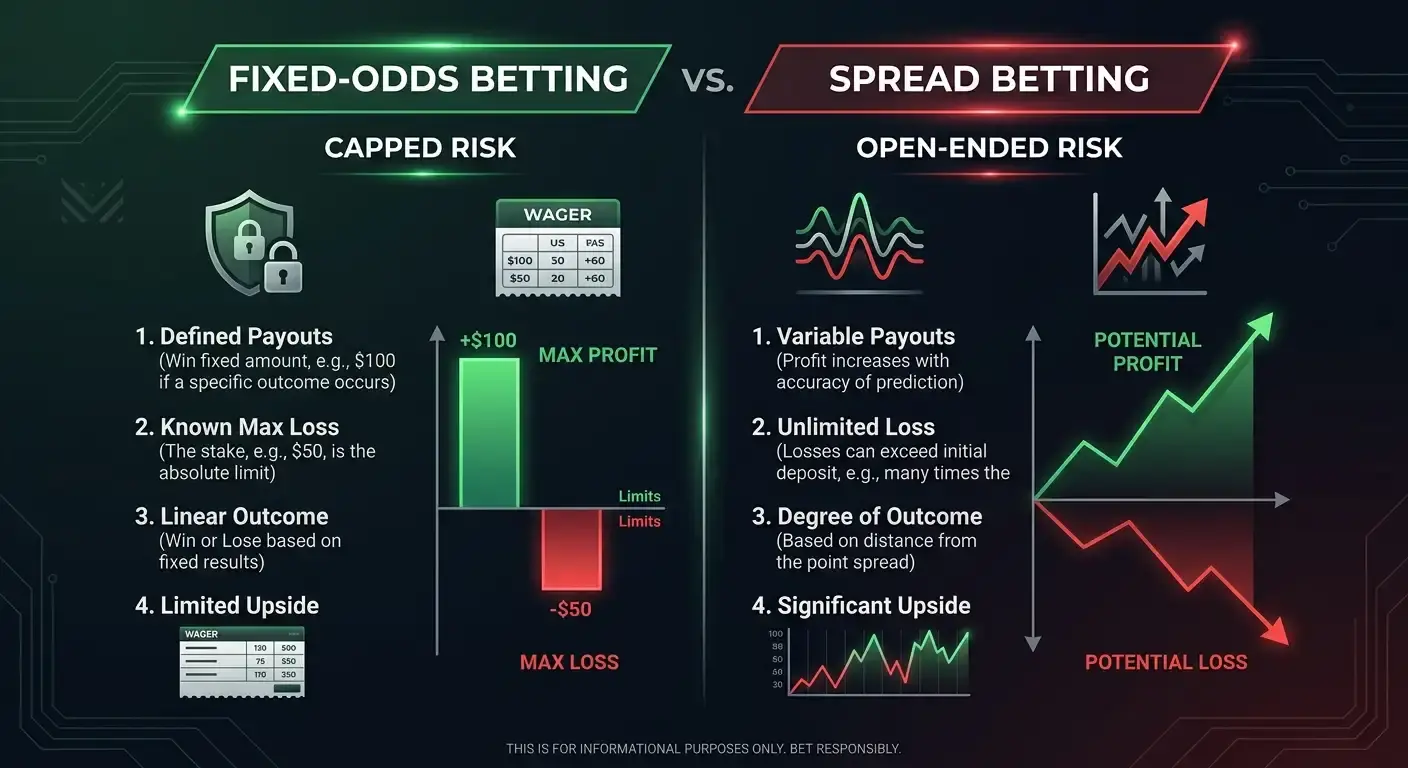
I’ll be blunt before I explain anything: spread betting is the only football market where I have seen someone lose four figures on a ten-pound stake and have no recourse. That is not a scare story, it is the defining feature of the product, and if you take one thing from this article, make it that. Every other market on the coupon caps your loss at your stake. Spread betting does not.
The reason it deserves a serious look despite that danger is that it rewards being right by degree rather than simply right or wrong. With around 10% of UK adults betting on sport online, the overwhelming majority stick to fixed-odds bets where you win a set amount or lose your stake. Spread betting works on a different axis entirely: your profit and your loss both scale with how correct or incorrect your prediction turns out to be. Get something spectacularly right and the returns dwarf a fixed-odds equivalent. Get it spectacularly wrong and the losses do too.
How the spread actually works
A spread betting firm quotes a two-sided prediction on some measurable element of a match, total goals, total corners, booking points, the supremacy of one team over another, and you decide whether the real outcome will land above or below that quote. The quote itself is the spread, expressed as a small range like a buy price and a sell price sitting a fraction apart.
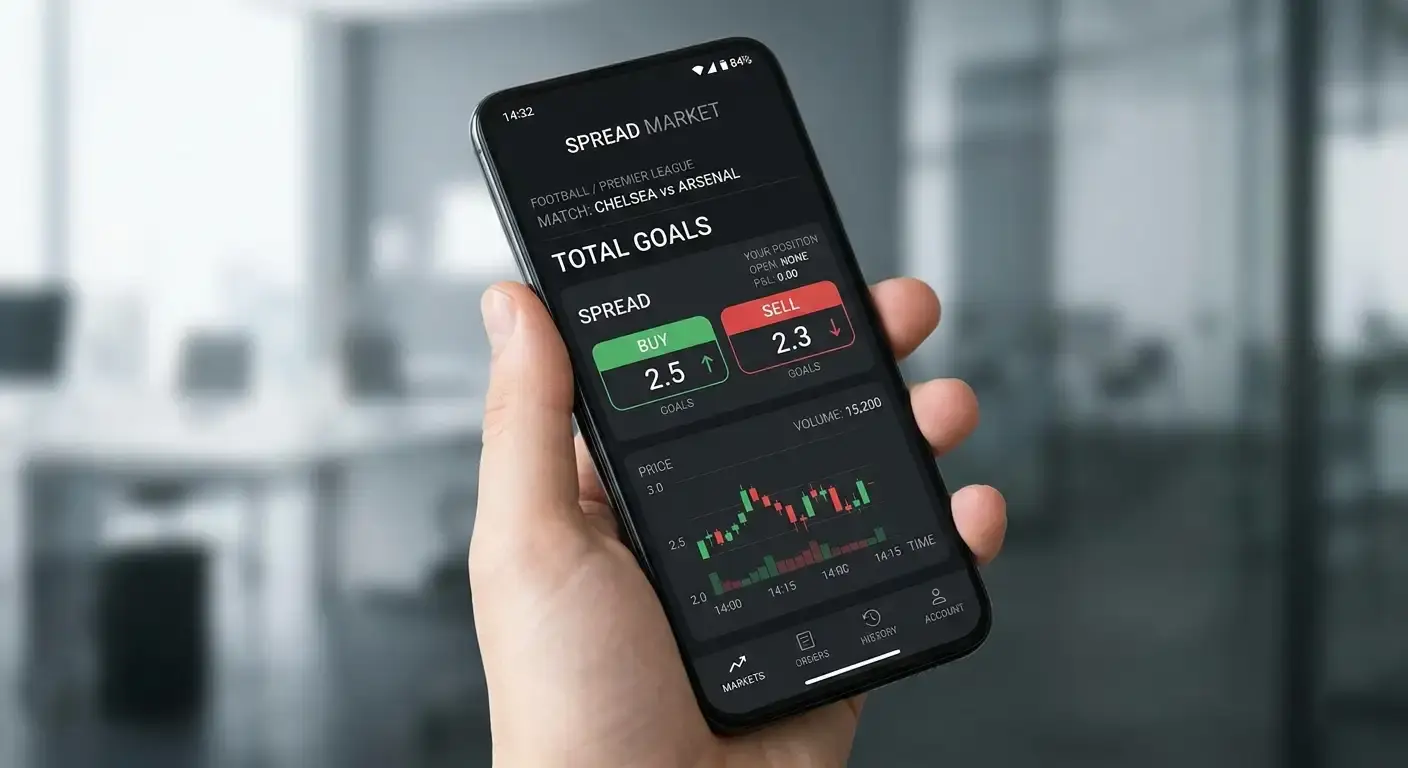
Here is the mechanic that makes it unlike anything else. You don’t win or lose a fixed amount. You win or lose your stake multiplied by how far the actual result finishes from the price at which you entered. If you buy total goals at a quote of 2.8 and the match produces four goals, you win your stake multiplied by 1.2, the gap between four and 2.8. If the match finishes goalless, you lose your stake multiplied by 2.8. The further reality drifts from the quote in your favour, the more you make; the further it drifts against you, the more you lose, with no built-in floor.
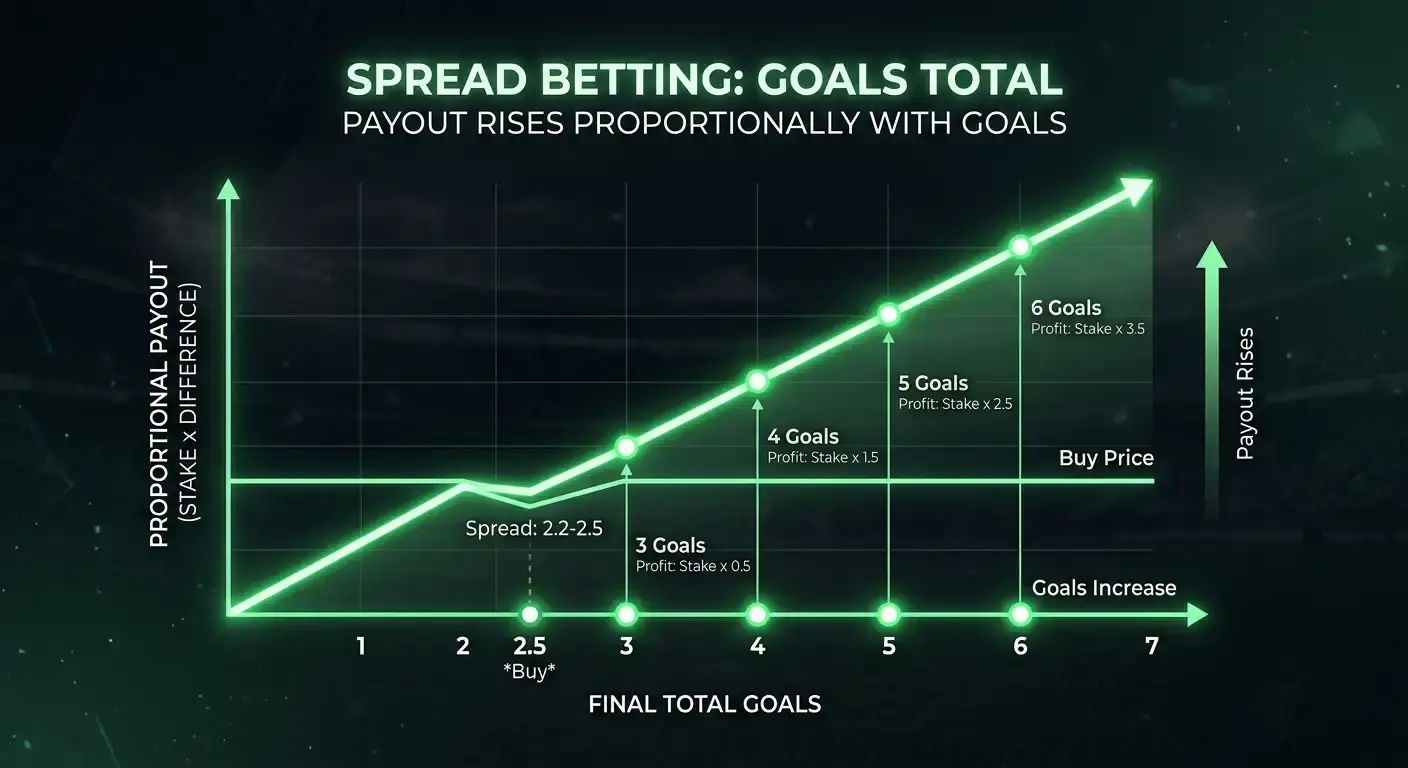
That uncapped exposure is the whole personality of the market. In a fixed-odds bet the worst case is known the moment you place it. In a spread bet the worst case depends on how extreme the match becomes, and football’s capacity for the extreme, a seven-goal thrashing, a card-strewn derby, is exactly where the danger lives.

Buying and selling in practice
Let me run two concrete examples in a goals market, using a round stake to keep the arithmetic clean. Suppose the firm quotes total match goals at a spread of 2.6 to 2.9. If you expect a high-scoring game, you buy at the higher figure, 2.9, staking ten pounds per goal. The match finishes 3-2, five goals. You win ten pounds for every goal above 2.9, which is 5 minus 2.9, or 2.1, so your return is 21 pounds profit.
Now flip it. You expect a tight defensive struggle, so you sell at the lower figure, 2.6, again at ten pounds a goal. But the game opens up and finishes 4-3, seven goals. You are now on the wrong side by 7 minus 2.6, which is 4.4, multiplied by your ten-pound stake. That is a 44-pound loss from a position you opened thinking ten pounds was your exposure. The stake was never your maximum loss; it was merely the multiplier on every unit you were wrong by.
The same logic drives the corners and booking markets, which are popular spread products precisely because they can swing violently. Buying corners in a match that turns into a one-sided siege can pay handsomely, while selling bookings in a fixture that descends into a brawl can hurt far more than the stake suggested. The leverage cuts both ways, every single time.
Why the risk profile differs from fixed odds
The cleanest way to grasp spread betting is to set it directly against the fixed-odds world. In fixed odds, the bookmaker bakes a margin into the price and your downside is sealed at your stake. The house edge has been climbing across the industry, with the average hold rate rising from 6.7% in 2018 to 10.15% in 2025, and in a fixed-odds bet that margin is the entire mechanism by which the firm profits from you.
Spread firms make money differently. Their edge sits in the spread itself, the gap between the buy and sell quotes, which functions like a bid-offer spread in financial trading. You are always entering slightly against yourself, buying a touch high or selling a touch low, and that built-in friction is the firm’s reliable take. But the firm’s real protection, and your real danger, is the uncapped nature of the position. A fixed-odds bookmaker knows its maximum liability on your bet; a spread firm relies on extreme outcomes punishing the wrong side far beyond what a fixed stake would imply.
This is why I treat the two as completely separate disciplines rather than two flavours of the same thing. A fixed-odds losing run drains your bankroll at a predictable rate. A spread betting losing position can blow a hole in it from a single freak result, which is a fundamentally different kind of risk to manage. If you want to understand how the fixed-odds margin is constructed in detail, my breakdown of the bookmaker’s built-in edge shows exactly where that money goes.
Who should and shouldn’t go near it
Spread betting suits a narrow, specific type of bettor, and I am protective about who I encourage towards it. It rewards people who think in terms of magnitude rather than binary outcomes, who can model how extreme a match might become, and crucially who have the bankroll and the discipline to absorb a position that runs against them violently. If a single bad result that costs many times your stake would damage your finances or your composure, this is not your market.
The non-negotiable tool is the stop loss, which most spread firms offer and which caps your downside at a predetermined level in exchange for slightly worse terms. I would never hold an uncapped football spread position on a volatile market like goals or corners without one, because football produces enough freak scorelines to ruin an unprotected bettor over a long enough run. Treating the stop loss as optional is how people end up with the four-figure horror stories.
It is also worth knowing that UK spread betting is regulated as a financial product by the Financial Conduct Authority rather than purely under gambling rules, which is why the firms carry risk warnings that read like an investment prospectus. That regulatory framing is a clue to how seriously you should take the leverage. Used by the right person, with stops in place and a genuine edge in modelling match extremes, spread betting is a powerful tool. Wandered into by a casual punter chasing a bigger thrill, it is the fastest way to lose far more than you ever intended to risk.