


The number that explains why the house always profits
For years I bet without understanding the single most important number in the entire industry, and once I learned to calculate it, I never looked at a price the same way again. The overround is the bookmaker’s built-in edge, the mechanism by which the house profits no matter who wins, and it hides in plain sight in every market you have ever bet. Most punters never calculate it, which is precisely why most punters lose.
The concept is simple enough to grasp in a minute and powerful enough to reshape how you bet forever. When you add up the implied probabilities of every outcome in a market, they should total exactly 100 percent if the odds were fair. They never do. They always sum to more than 100 percent, and that excess is the overround, the margin the bookmaker has baked into the prices. Learning to see it, measure it and compare it across markets is the closest thing to a foundational skill that football betting has.
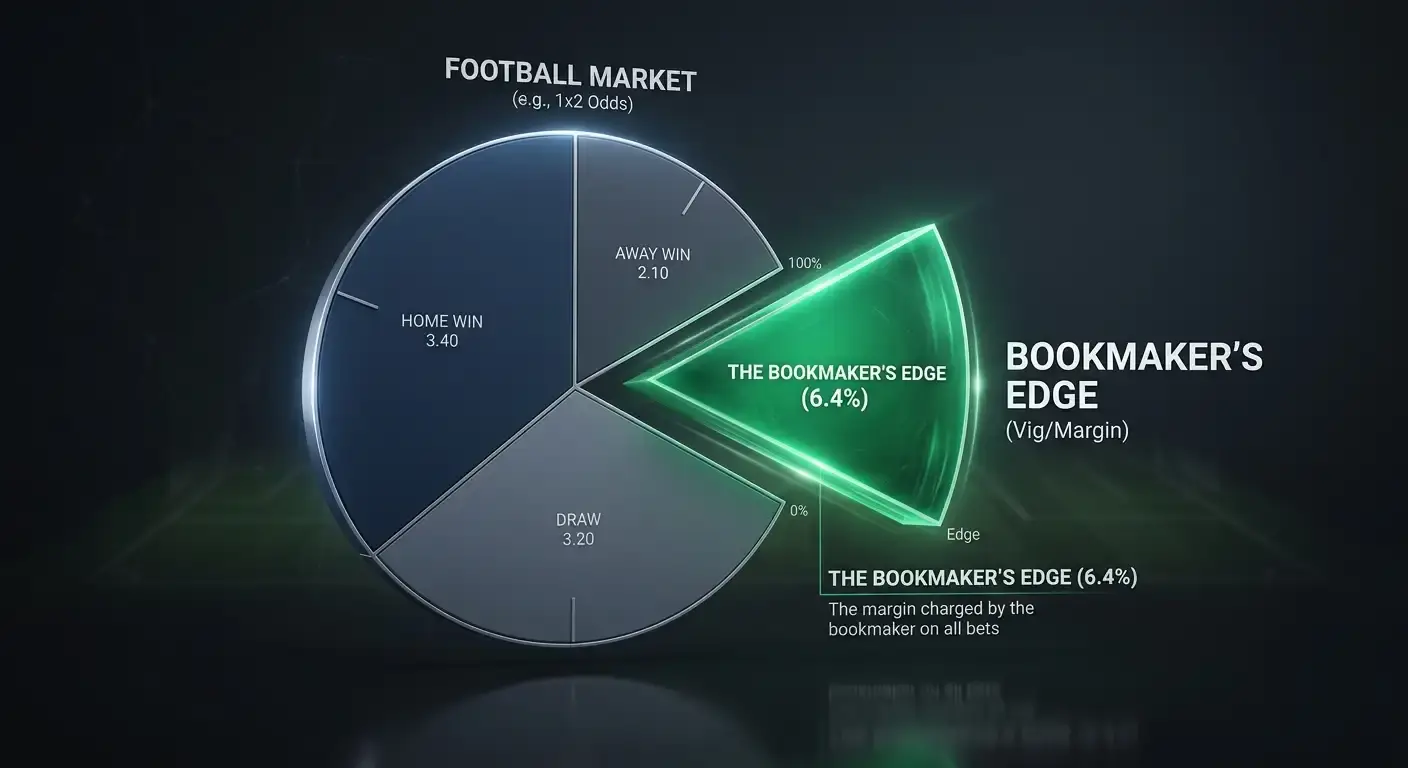
Calculating the overround on a market
The calculation is genuinely straightforward, and walking through it once makes the whole concept concrete. Take any market and convert each outcome’s decimal odds into its implied probability by dividing one by the odds. A price of 2.0 implies a 50 percent probability, because one divided by two is 0.5. A price of 4.0 implies 25 percent, and so on. Each outcome’s odds tell you the probability the bookmaker is effectively assigning to it.
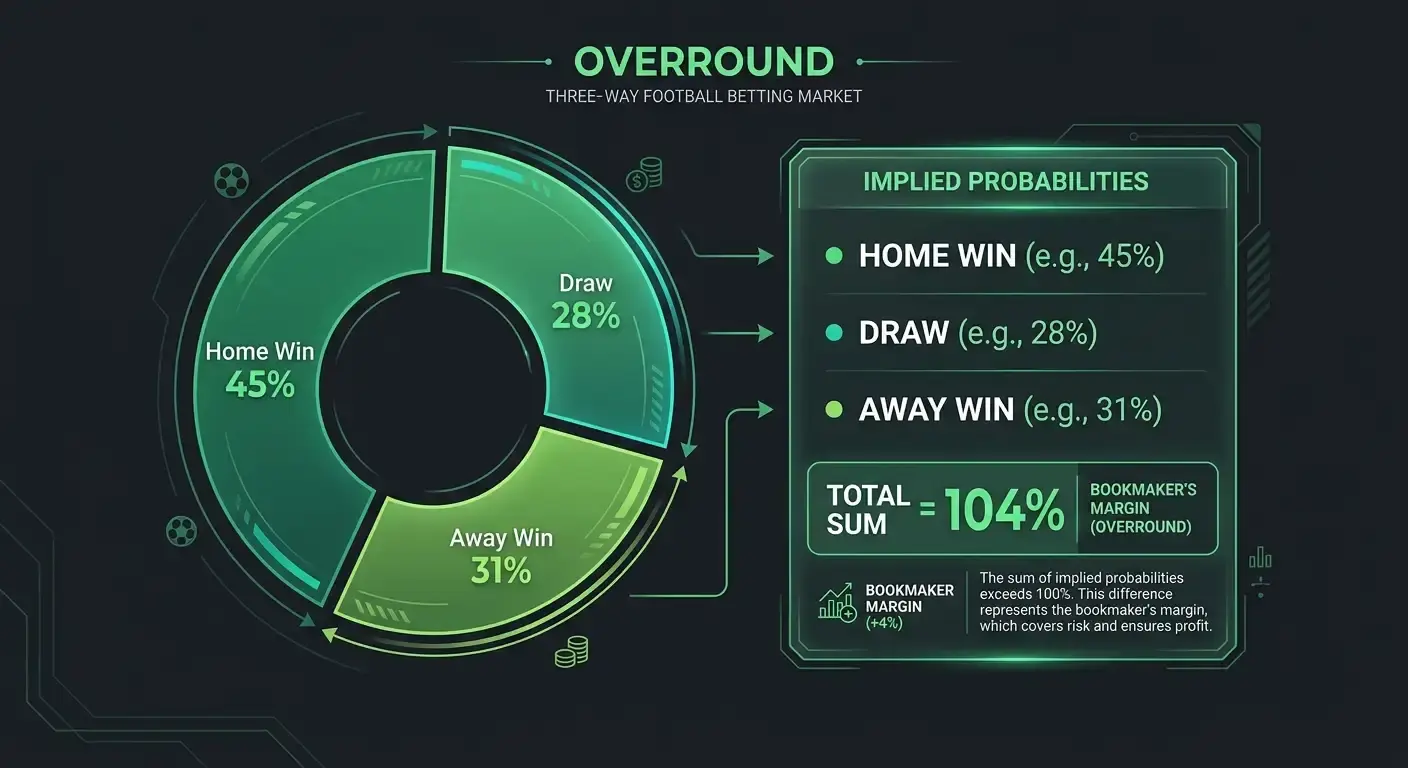
Now add those implied probabilities together across every possible outcome of the market. In a three-way football match result market, you sum the implied probabilities of the home win, the draw and the away win. If the odds were perfectly fair with no margin, that total would come to exactly 100 percent. Instead, you will find it comes to something like 105, 107 or even 110 percent, depending on the market and the operator. The amount by which the total exceeds 100 percent is the overround.
That excess is the bookmaker’s theoretical edge on the market. An overround of 105 percent means the operator has built in a five percent margin, and over a large number of bets across that market, that margin is what the house keeps. The overround is not a fee you see itemised anywhere; it is woven invisibly into the prices, which is exactly why so few bettors ever realise they are paying it on every single bet they place.
How margins vary across markets
Not all markets carry the same overround, and knowing where the margins are fattest is one of the most practical applications of this whole concept. The heavily traded core markets, the match result on a major league fixture, tend to carry the tightest margins, because intense competition between operators and the sheer weight of money force the prices to stay sharp. These are the markets where the overround might sit relatively low, and where your money goes furthest.
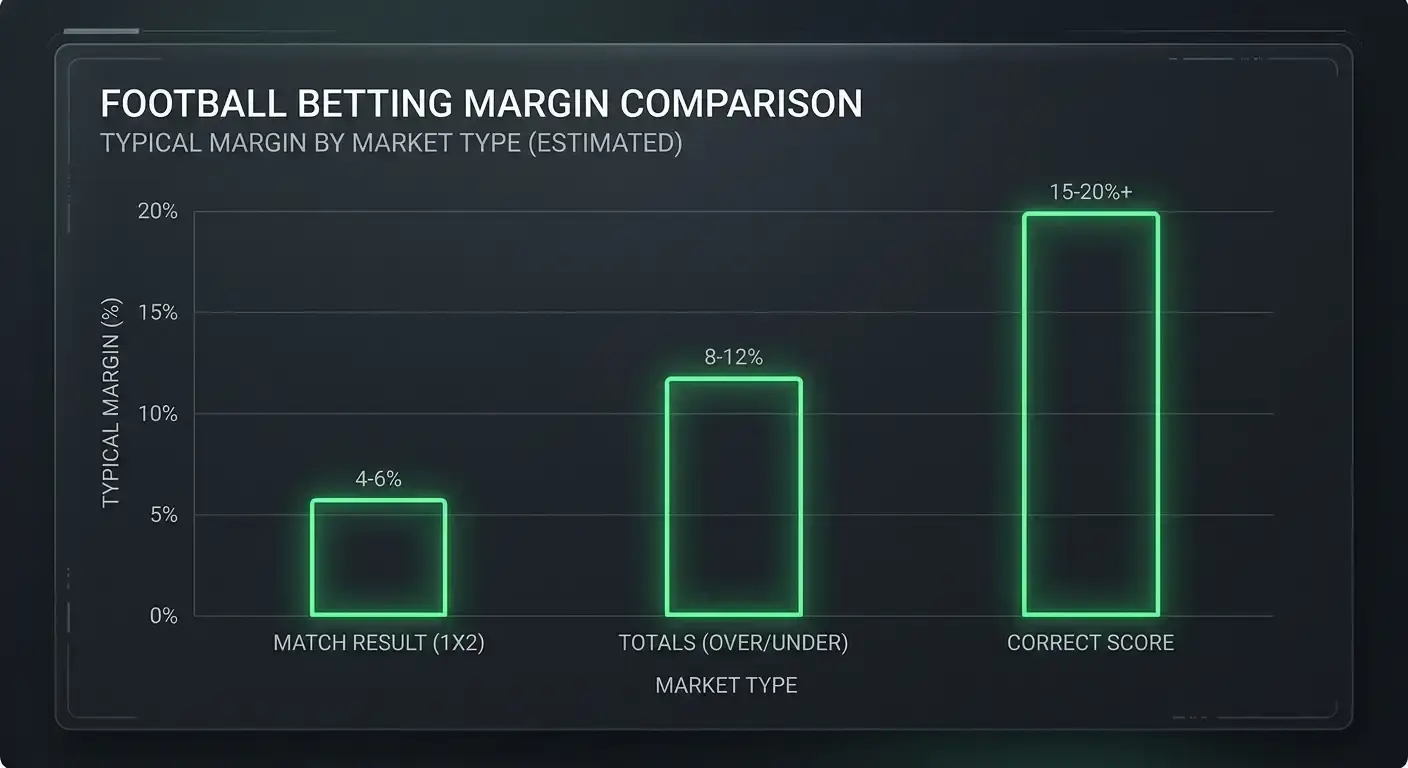
The exotic and novelty markets are where the margins balloon. Correct score, first goalscorer, the various props and specials, and above all accumulators and bet builders carry far higher overrounds, because they are harder to model, less heavily traded, and dressed up with long odds that disguise how much edge the operator has built in. The bookmaker hold rate has been climbing across the industry, rising from 6.7 percent in 2018 to 10.15 percent in 2025, and that increase is concentrated precisely in these high-margin novelty markets that pull punters in with the promise of a big return.
The market is also changing in ways that affect where margins sit, and the regulatory backdrop matters. Andrew Rhodes, then chief executive of the Gambling Commission, warned that “what I thought was a five-year-away problem, perhaps a year or two ago, I think is now an 18-months-to-two-years challenge”, a comment on how rapidly the betting landscape is shifting, and that pace of change reshapes which products operators push and how aggressively they price them. The practical lesson for a bettor is constant: seek out the low-margin markets and treat the high-margin ones with the caution their fat overrounds deserve.
Comparing operators to keep more of your money
The overround gives you a precise tool for comparing operators, and using it consistently is one of the simplest ways to improve your long-term returns. Because different bookmakers build different margins into the same market, the overround on a given fixture varies from one operator to the next, and the bettor who calculates it can identify which operator offers the best value on the bet they want to place.

The principle is to bet where the overround is lowest, because a lower margin means more of the fair value is being passed back to you. Two operators pricing the same match result market might carry overrounds of 104 and 108 percent, and on that fixture the first operator is simply offering you better odds across the board, leaving more in your pocket over time. This is the analytical foundation of line shopping, comparing prices across operators before you bet, which is a habit every serious bettor develops. The US regulated market alone generated 16.96 billion dollars in revenue in 2025 from a handle of nearly 167 billion, a reminder of just how much money flows through these margins and how much the difference between a tight and a fat overround compounds across an industry of that size.
The discipline is to never accept the first price you see. Calculating or at least comparing the overround across the operators available to you, and consistently betting where the margin is tightest, is the unglamorous habit that quietly improves your bottom line on every bet. The difference on any single bet is small, but compounded across hundreds or thousands of bets, betting into tighter margins is one of the most reliable edges available to anyone willing to do the arithmetic.
Why the margin decides your fate as a bettor
The overround is not an academic curiosity, it is the fundamental reason betting is hard, and internalising that reshapes how you approach the entire activity. The margin means that to profit, you do not merely need to predict outcomes better than chance; you need to predict them well enough to overcome the built-in edge on every bet. A bettor who picks winners exactly as well as the true probabilities suggest still loses over time, because the overround quietly taxes every wager.
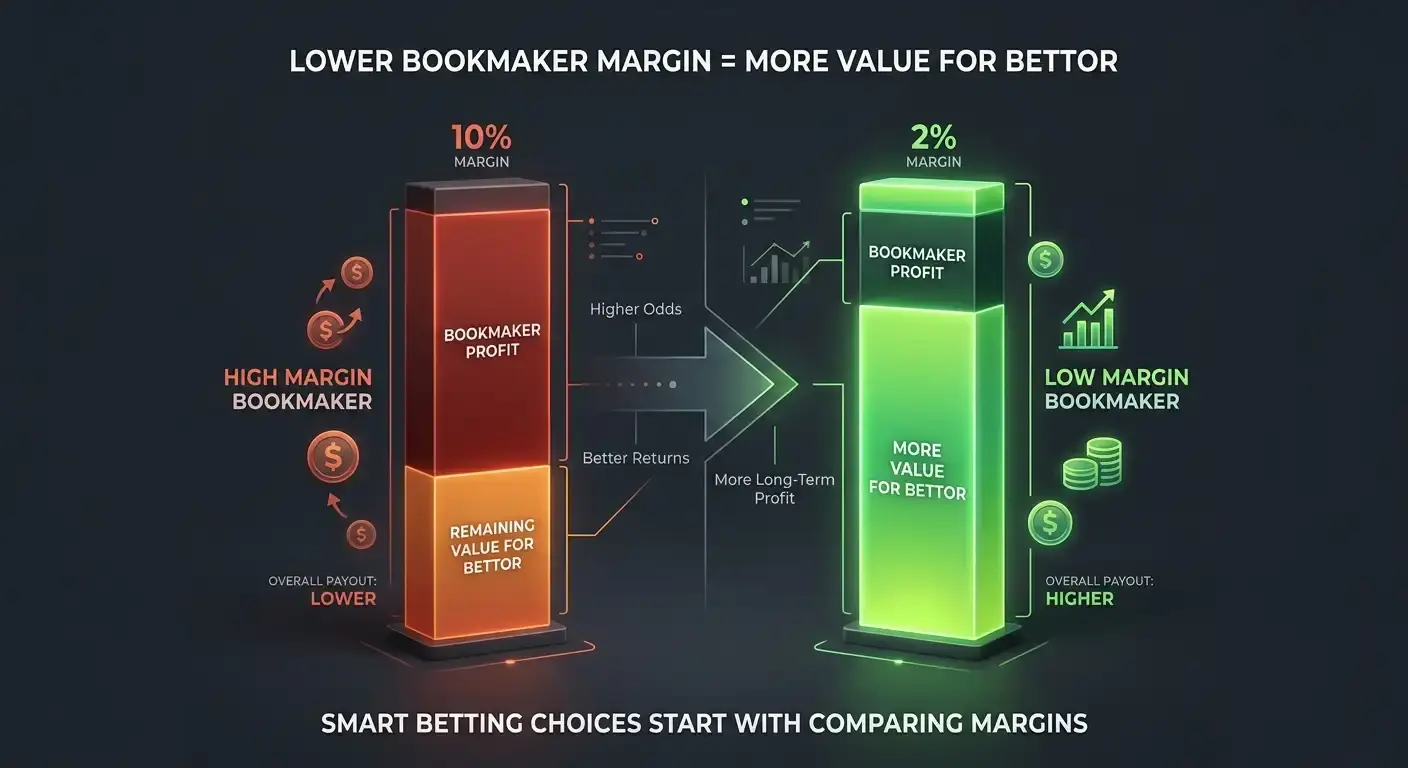
This is why the concepts of value and margin are inseparable. Finding value means finding bets where the price exceeds the true probability by enough to overcome the overround, and you cannot judge that without understanding the margin you are fighting. Every edge a bettor identifies has to clear the hurdle of the built-in margin before it becomes genuine profit, which is why the low-margin markets are so much more beatable than the high-margin novelties that the marketing pushes hardest.
The overround sits at the very foundation of how odds work, because the margin is what separates the prices you see from the true probabilities they distort. Understanding implied probability, fair odds and the margin built on top of them is the bedrock of reading any price intelligently, and it is the natural next layer of knowledge for any bettor serious about understanding the numbers. My guide to fractional, decimal and implied probability covers exactly how to read the odds that the overround is built upon, completing the picture of what a price is really telling you.
