


The closest thing to a free lunch I have found
I am instinctively suspicious of anything that promises risk-free profit in betting, because there almost never is any. Matched betting is the rare exception, and I say that as someone who spent a long time trying to find the catch. It is not gambling, it is not prediction, and it does not require you to be good at football. It is a method for extracting the value of bookmaker promotions with the outcome of the match removed from the equation entirely.
The principle is to place a bet and simultaneously bet against yourself, so that whatever happens on the pitch, your position is covered. Done correctly, the only variable left is the bonus the bookmaker has handed you, which you keep as profit. With 24.4 million active betting and gaming accounts in the UK and operators competing fiercely for new customers with sign-up offers, there is a steady supply of these promotions to convert, and matched betting is simply the disciplined process of converting them.
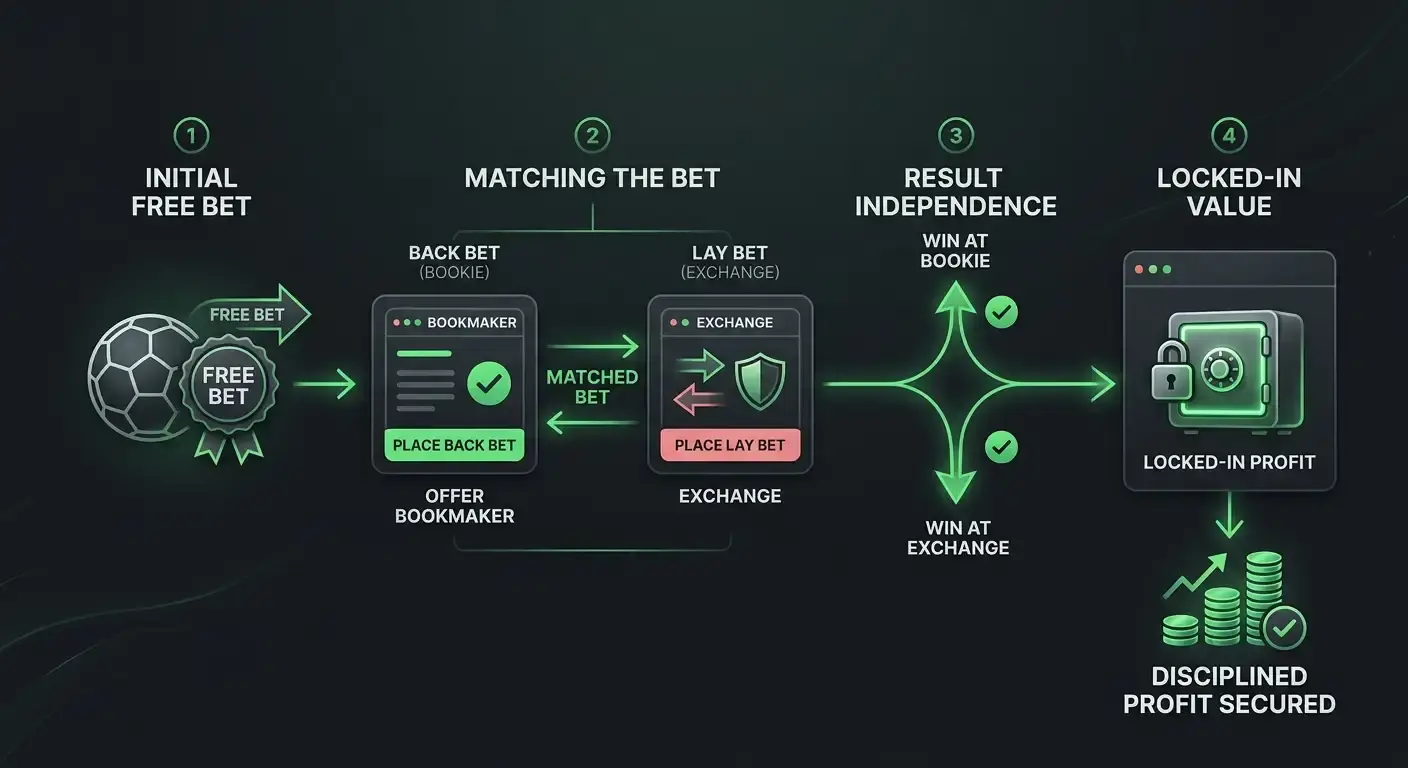
The back and lay mechanic at its core
Matched betting rests on one idea: backing an outcome at a bookmaker while laying the same outcome on an exchange, so the two bets cancel each other out. You back a team to win at the bookmaker, then lay that same team on an exchange, taking the opposite side. If the team wins, your bookmaker bet pays out but your exchange lay loses, and the two roughly offset. If the team fails to win, your bookmaker bet loses but your exchange lay wins, and again they offset. The match result becomes irrelevant because you are on both sides of it.
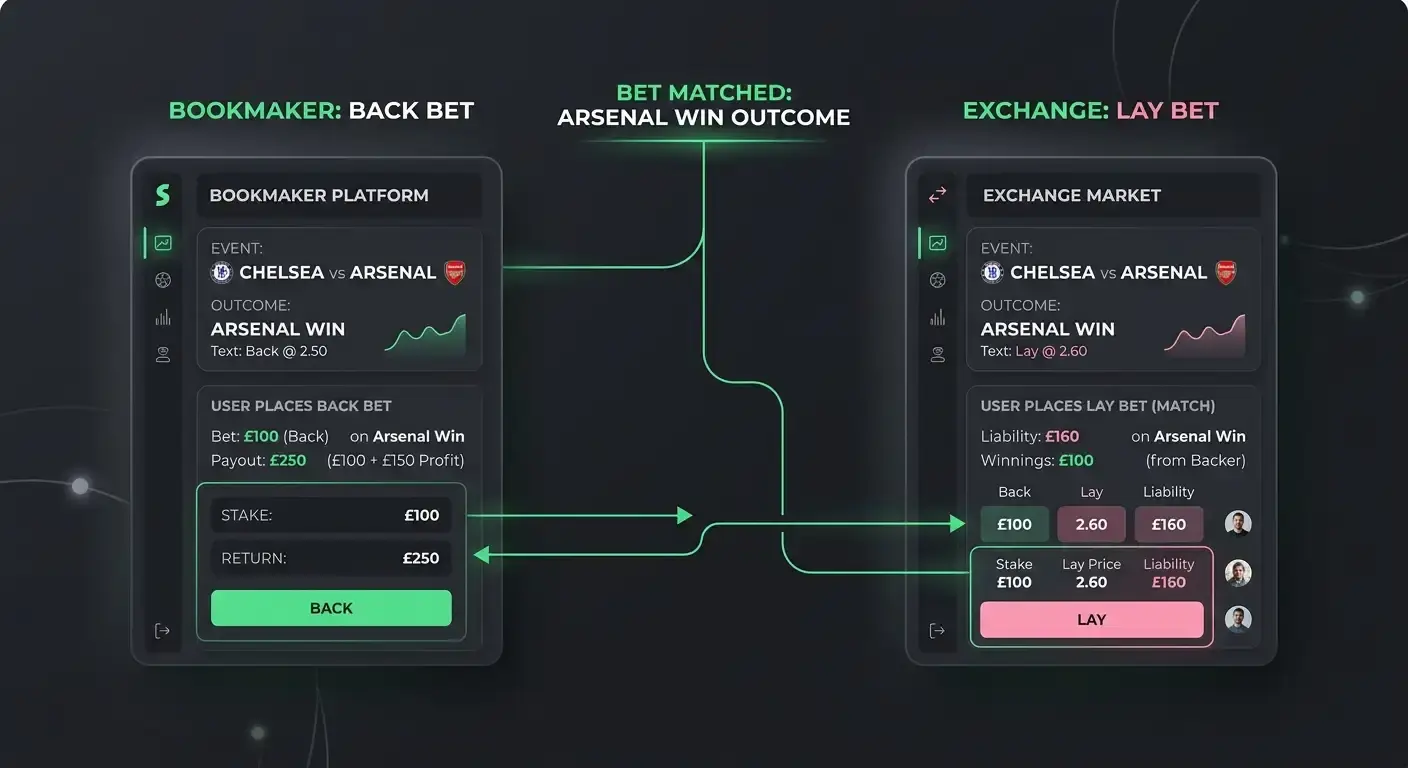
On its own, this would simply lose you a tiny amount each time, because the lay odds on the exchange are always slightly higher than the back odds at the bookmaker, and that small gap, plus the exchange commission, is your cost. That cost is called the qualifying loss, and it is the price of admission. The magic only happens when a bonus is layered on top, because the bonus value vastly exceeds the qualifying loss, leaving you in profit regardless of the football.
Understanding the lay side is essential, because it is the engine that neutralises your risk. Laying carries its own liability that you must fund and calculate, and getting that arithmetic wrong is the most common beginner error in the whole method. The mechanic only works because the exchange lets you take the bookmaker’s role, which is why a solid grasp of the exchange model underpins everything, and my comparison of commission, odds and control explains the platform that makes laying possible.
Qualifying bets and converting free bets
The typical promotion runs like this: deposit and place a qualifying bet of a certain size, and receive a free bet in return. Matched betting attacks this in two stages, and the second is where the money is. First, you place the qualifying bet, backing at the bookmaker and laying on the exchange, accepting the small qualifying loss as your cost of unlocking the free bet. You have now spent a few pence or a few pounds to receive a free bet worth far more.

Second, you convert the free bet itself. Because a free bet stake is not returned with your winnings, the maths of laying it differs slightly, and you lay it at carefully chosen odds to extract the maximum guaranteed value. A well-executed free bet conversion typically returns around three-quarters or more of the free bet’s face value as locked-in profit, whatever the result. So a twenty-pound free bet might net you fifteen pounds of pure profit, cleared and risk-free, once the qualifying loss is deducted.
The discipline is in the selection of fixtures and odds. You want back and lay prices that sit as close together as possible to minimise the qualifying loss, and for free bet conversion you want higher odds to maximise the extracted value. This is not about predicting football at all; it is about finding the tightest possible odds match and executing the two bets quickly before the prices move. I treat it like clerical work rather than betting, because that is exactly what it is.
The risks and the reality of gubbing
Matched betting is low-risk, not no-risk, and the honest practitioner knows where the dangers lie. The first is human error: laying the wrong amount, backing and laying at mismatched stakes, or missing the lay entirely and leaving yourself exposed to the actual result. These mistakes turn a risk-free method into a genuine gamble, and they happen most when people rush or work tired. The maths is unforgiving of a slip.
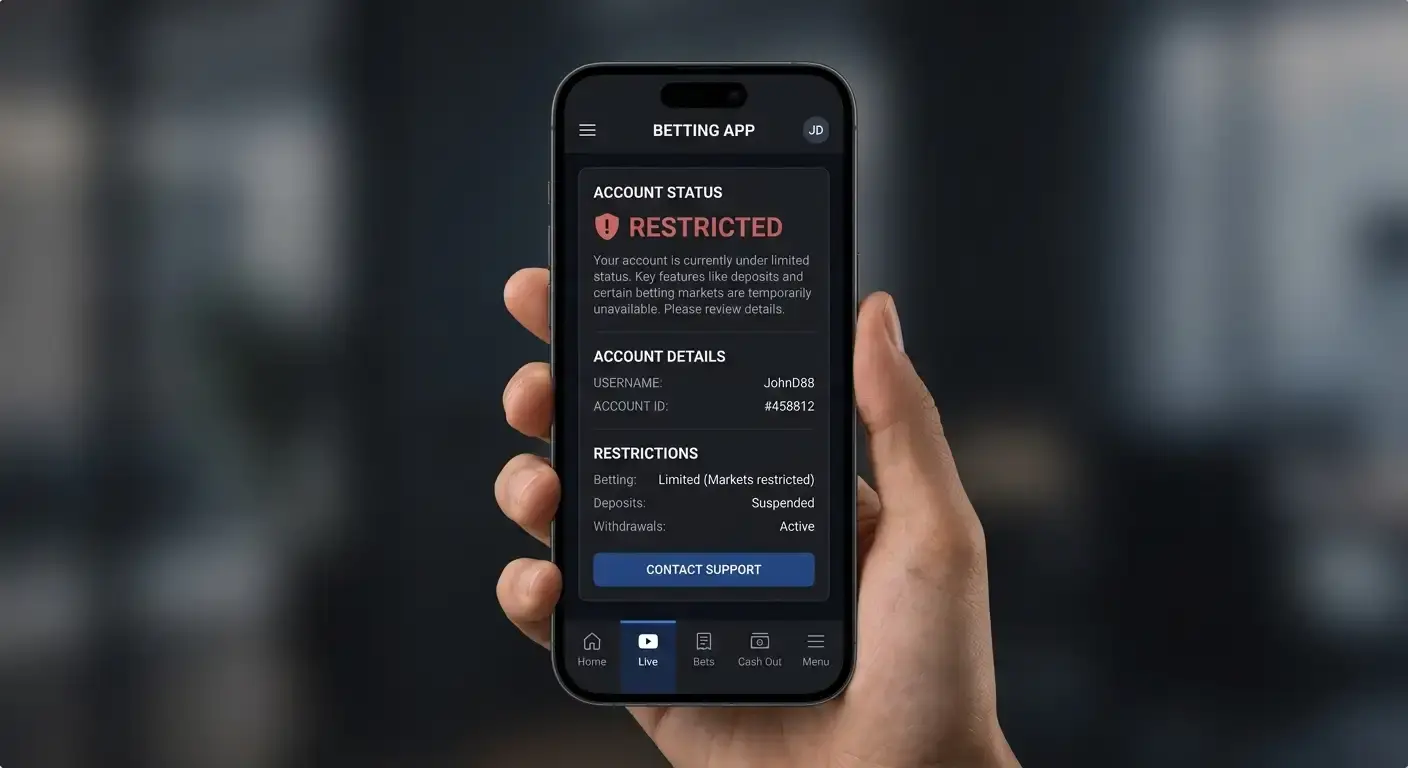
The larger structural risk is gubbing, the bookmaker term for restricting or banning a customer it suspects of only chasing promotions. Bookmakers track who profits from offers, and a customer who only ever bets to extract bonuses will eventually find their promotions withdrawn, their stakes limited, or their account closed. Gubbing does not cost you money directly, but it dries up the supply of offers you can convert, which is the entire basis of the activity. The industry is also in flux in ways that affect this. Andrew Rhodes, then chief executive of the Gambling Commission, observed that “what I thought was a five-year-away problem, perhaps a year or two ago, I think is now an 18-months-to-two-years challenge”, a remark about how fast the regulatory and competitive landscape is shifting, and that shifting landscape changes which offers exist and how aggressively operators police them.
There are softer risks too. Tying up funds across multiple bookmaker and exchange accounts, the time cost of executing offers carefully, and the temptation, which I have watched ensnare people, to drift from disciplined matched betting into actual gambling once the betting accounts are open and funded. The boundary between extracting value and chasing losses is thinner than it looks, and crossing it is how a profitable hobby becomes an expensive one.
Weighing whether it is worth your time
Matched betting is entirely legal in the UK, profitable when done carefully, and genuinely low-risk if you execute precisely, so the real question is whether it is worth the effort for you. The returns are modest and finite: you can clear a useful sum from sign-up offers across the available bookmakers, and reload offers and ongoing promotions keep a smaller stream flowing after that, but it is not a path to wealth and it scales poorly because gubbing eventually limits how long any one account stays useful.

It suits a particular temperament. If you are methodical, comfortable with the back and lay arithmetic, patient enough to execute offers carefully and disciplined enough never to drift into real gambling, matched betting is a legitimate way to extract value the bookmakers have voluntarily put on the table. If you are impatient, error-prone, or you suspect the open betting accounts would tempt you into a punt, it is not for you, and the honest advice is to leave it alone.
My own view is that matched betting is a respectable, mechanical hobby for the right person and a trap for the wrong one. The value is real, the risk is genuinely low when executed properly, but the discipline required is higher than the breezy guides suggest, and the gubbing ceiling means it is a finite opportunity rather than an income. Treat it as the careful, unglamorous clerical task it actually is, and it pays. Treat it as easy money, and the gap between the marketing and the reality will find you out.
