


The day I realised I was betting against the wrong opponent
For my first few years I only ever bet with traditional bookmakers, and I assumed that was simply what betting was. Then a sharper friend showed me an exchange, and the penny dropped: at a bookmaker I was betting against the house, which sets the odds in its own favour, while on an exchange I was betting against other punters, with the platform taking only a small cut. That structural difference changes everything about your odds, your options and your long-term prospects.
The UK has 24.4 million active betting and gaming accounts, and the vast majority of those punters never venture beyond the familiar bookmaker model. That is a shame, because understanding how the two models earn their money is the fastest way to grasp why exchanges often offer better value and what you give up in return. This is not about which brand to use; it is about two fundamentally different ways of getting a bet matched.
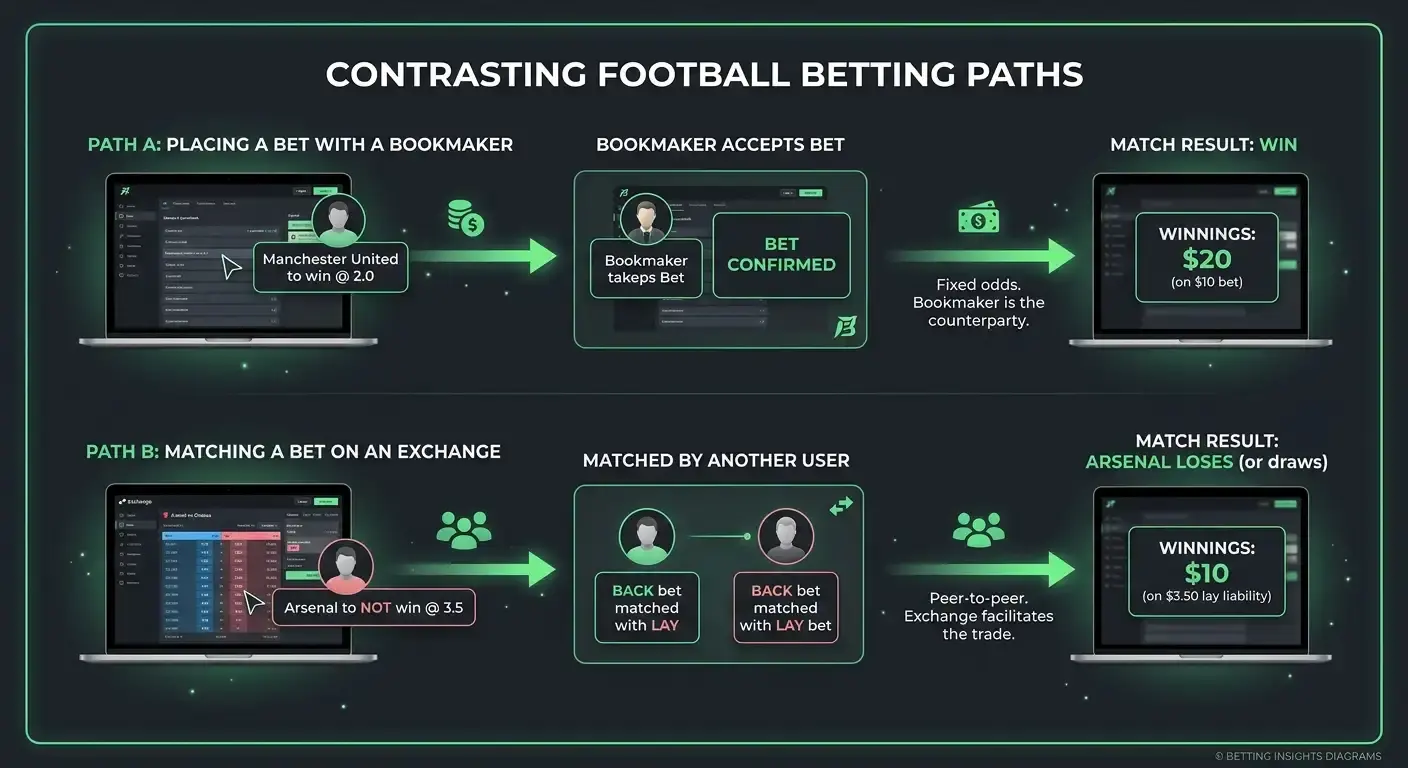
How each model makes its money
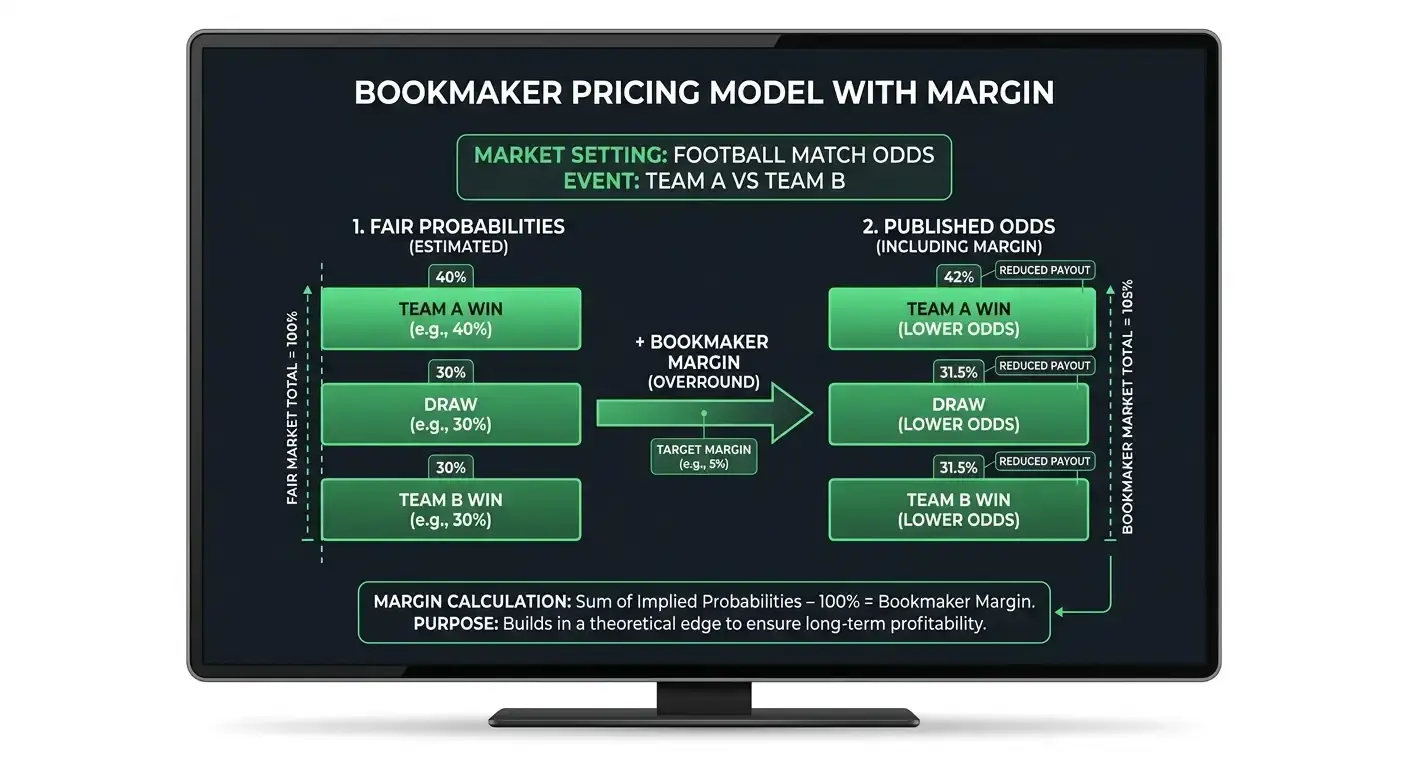
A traditional bookmaker is your counterparty. When you back a team, the bookmaker takes the other side of that bet and profits if you lose, which means it has a direct incentive to set odds that favour itself. It does this through the margin, the overround built into every market, and that margin has been climbing across the industry, with the average hold rate rising from 6.7 percent in 2018 to 10.15 percent in 2025. Every price you see at a bookmaker is shaded in the house’s direction, and that shading is how it wins over time.
An exchange earns its money in a completely different way. It does not take the other side of your bet; instead it matches you against another customer who holds the opposite view, acting as a marketplace rather than a counterparty. One punter wants to back a team, another is willing to lay it, the exchange pairs them and takes a small commission, typically a percentage of net winnings, from the punter who comes out ahead. The platform is indifferent to who wins because it profits from the matching, not the outcome.
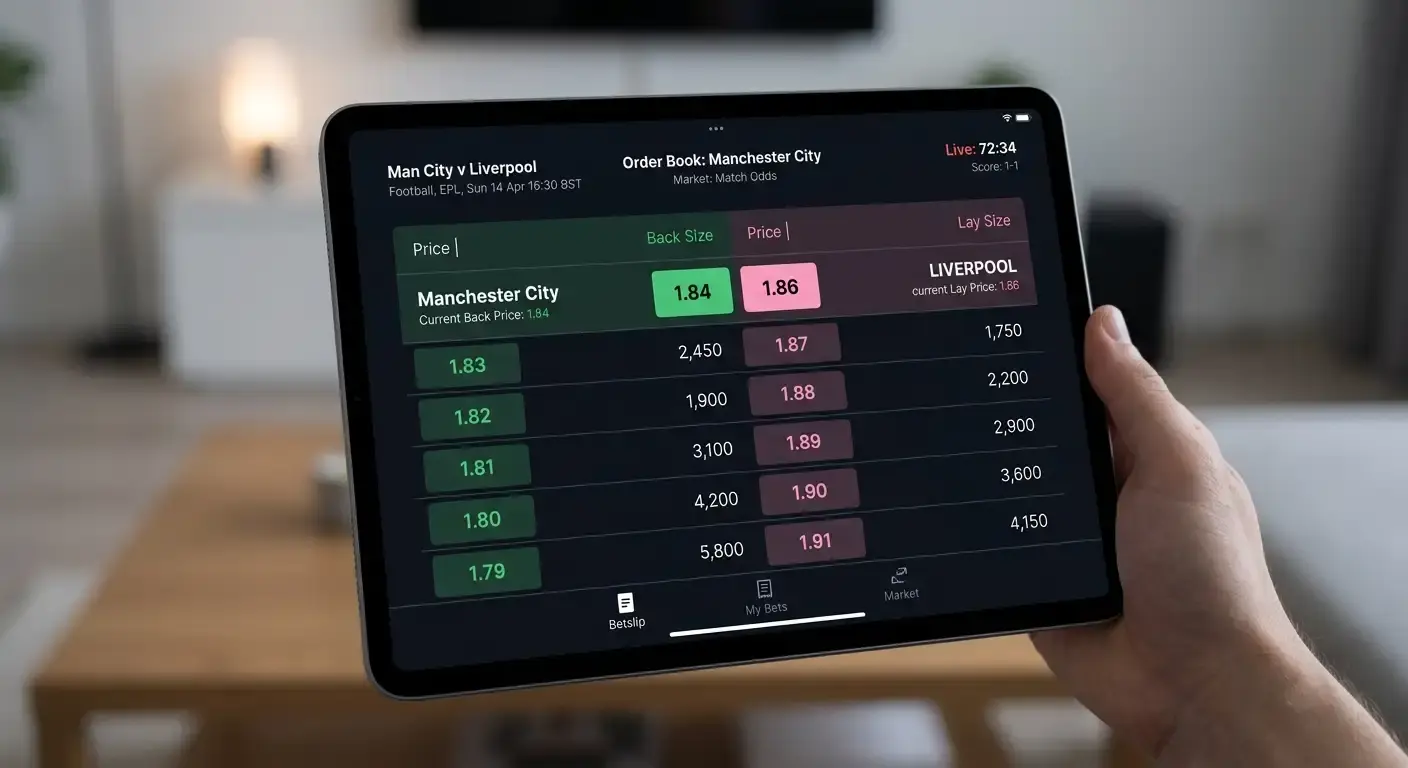
That distinction is the heart of everything. Because the exchange has no stake in your result, the odds are set by supply and demand between bettors rather than by a house protecting its margin, and the prices tend to be sharper and more honest as a result. You are no longer fighting an operator engineered to beat you; you are competing against other punters in an open market, with the platform taking a modest toll for hosting the fight.
The maths of commission against margin
The comparison that matters is what each model actually costs you, and it is closer than the headline numbers suggest. At a bookmaker, the margin is invisible and unavoidable, embedded in every price whether you win or lose. A three-way football market might carry an overround that quietly skims several percent off fair odds, and you pay that on every single bet you place, win or lose, because it is baked into the price before you even click.
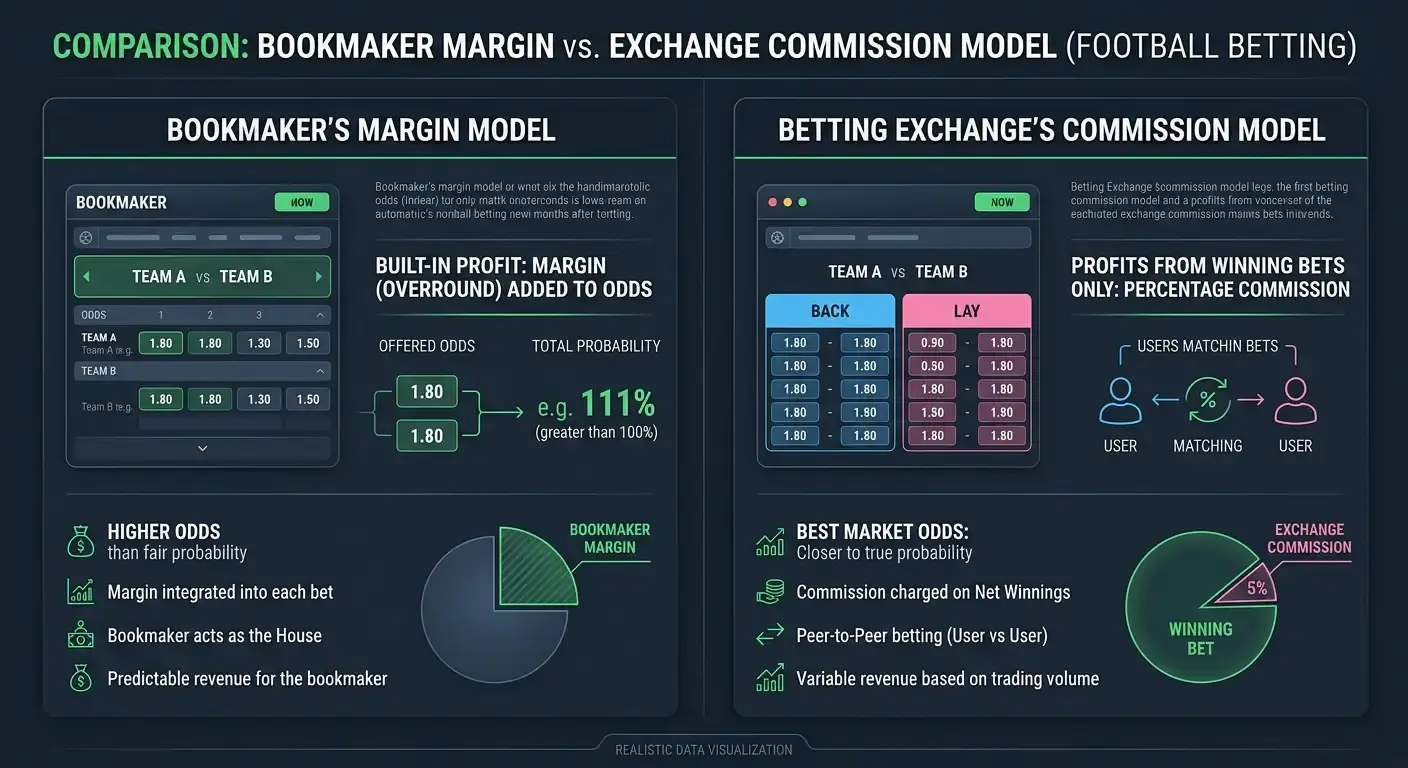
An exchange charges commission only on your net winnings, and only when you win. A five percent commission on a winning bet sounds like a lot until you realise you pay nothing on losing bets and the underlying odds were fairer to begin with. The effective cost of betting on an exchange, once you account for the better prices and the win-only commission, is frequently lower than the buried margin you pay at a bookmaker, especially on the heavily traded markets where exchange liquidity is deep.
I run the comparison roughly like this in my head: take the exchange price, subtract the commission you would pay on the winnings, and compare the net to the bookmaker’s price on the same selection. On popular football markets the exchange usually comes out ahead even after commission, sometimes substantially. The exception is the very short-priced favourite, where the commission on small winnings and the thinner edge can tilt the balance back towards a bookmaker offering a generous standalone price, so it pays to check rather than assume.
Liquidity, limits and the trade-offs
Exchanges are not a free lunch, and the catch is liquidity. Because you need another punter willing to take the opposite side of your bet, you can only get matched if there is money available at the price you want. On a Premier League match the liquidity is enormous and you can get large stakes matched instantly, but on an obscure lower-league fixture or a niche market, the exchange can be a ghost town where your bet sits unmatched or only fills partially.
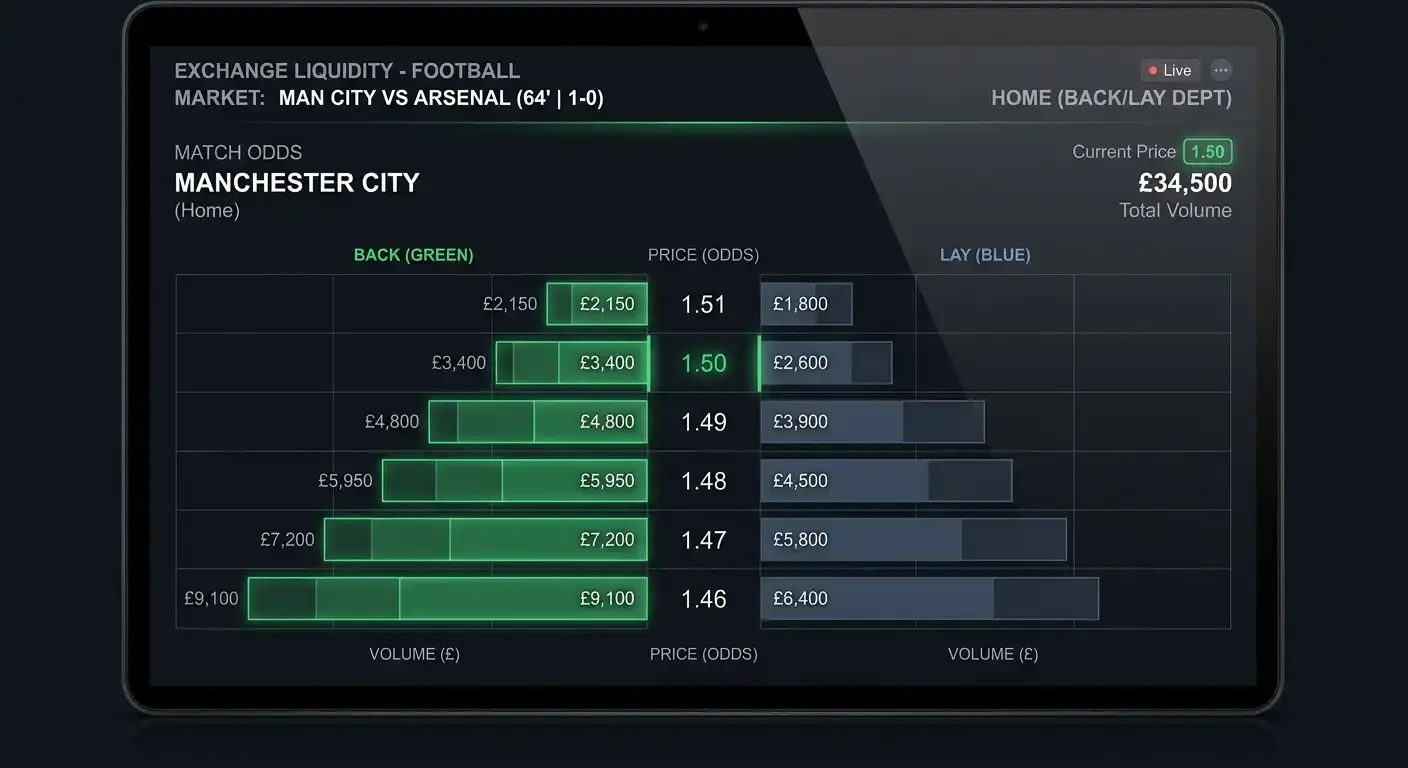
This is the mirror image of the bookmaker’s great weakness. A bookmaker will happily take your bet on almost anything, instantly, with no need for a counterparty, which is a genuine convenience the exchange cannot match on thin markets. But the bookmaker’s other habit is darker: successful customers get their stakes restricted or their accounts limited, sometimes to pennies, the moment they start winning. Exchanges, by contrast, generally welcome winning bettors because they make money from commission regardless of who profits, so a sharp punter who would be throttled at a bookmaker can keep betting meaningful stakes on an exchange indefinitely.
For a serious bettor that single difference often settles the argument. The freedom to keep betting at scale without being limited for the crime of winning is worth more over a career than any individual price difference. The exchange also unlocks the ability to lay outcomes, to bet on something not happening, which opens up trading strategies impossible at a traditional bookmaker.
Choosing the model that fits how you bet
The honest answer to which is better is that it depends entirely on who you are. If you are a recreational bettor placing modest, occasional stakes on big matches, the convenience, the promotions and the instant matching of a bookmaker may genuinely suit you better, and the margin you pay is a reasonable price for the simplicity. There is no shame in that, and the exchange’s order-book interface can be genuinely intimidating to a casual punter.
If you are betting seriously, hunting value, staking larger amounts, or you have ambitions of long-term profit, the exchange is the better home. The fairer odds, the win-only commission, the welcome rather than the restriction of successful customers, and the ability to lay as well as back all compound into a meaningful structural advantage. The learning curve is real but short, and the freedom on the other side is worth it.
The most powerful capability the exchange unlocks is laying, taking the bookmaker’s role and betting against an outcome, which is impossible in the traditional model and opens an entire dimension of strategy. It carries its own risks and its own arithmetic, particularly around the liability you take on, and it deserves proper study before you try it. My breakdown of backing an outcome not to happen covers exactly how that works and the liability you need to understand first.
