

The first time I became the bookmaker
I still remember the slightly vertiginous feeling of placing my first lay bet, because for the first time I was not backing something to happen, I was betting on it not to. I had effectively become the bookmaker, taking someone else’s stake and hoping their selection lost. It is a genuinely different mental model, and once it clicked, it opened up half the strategies I now use regularly.
Lay betting only exists on betting exchanges, where the 24.4 million active accounts in the UK include a growing number of punters who have discovered that you can play either side of a bet. Instead of backing a team to win, you lay it, which means you win if that team does anything other than win, a draw or a defeat, and you lose only if it wins. You are accepting the role traditional bookmakers have always held, and that flips the entire risk calculation on its head.

Backing and laying are mirror images
The cleanest way to understand laying is to set it directly against backing, because they are perfect opposites. When you back a selection, you stake an amount to win a profit, you lose your stake if the bet fails, and your downside is capped at what you put in. This is the only kind of betting most people ever do, and its risk is simple: the stake is the most you can lose.
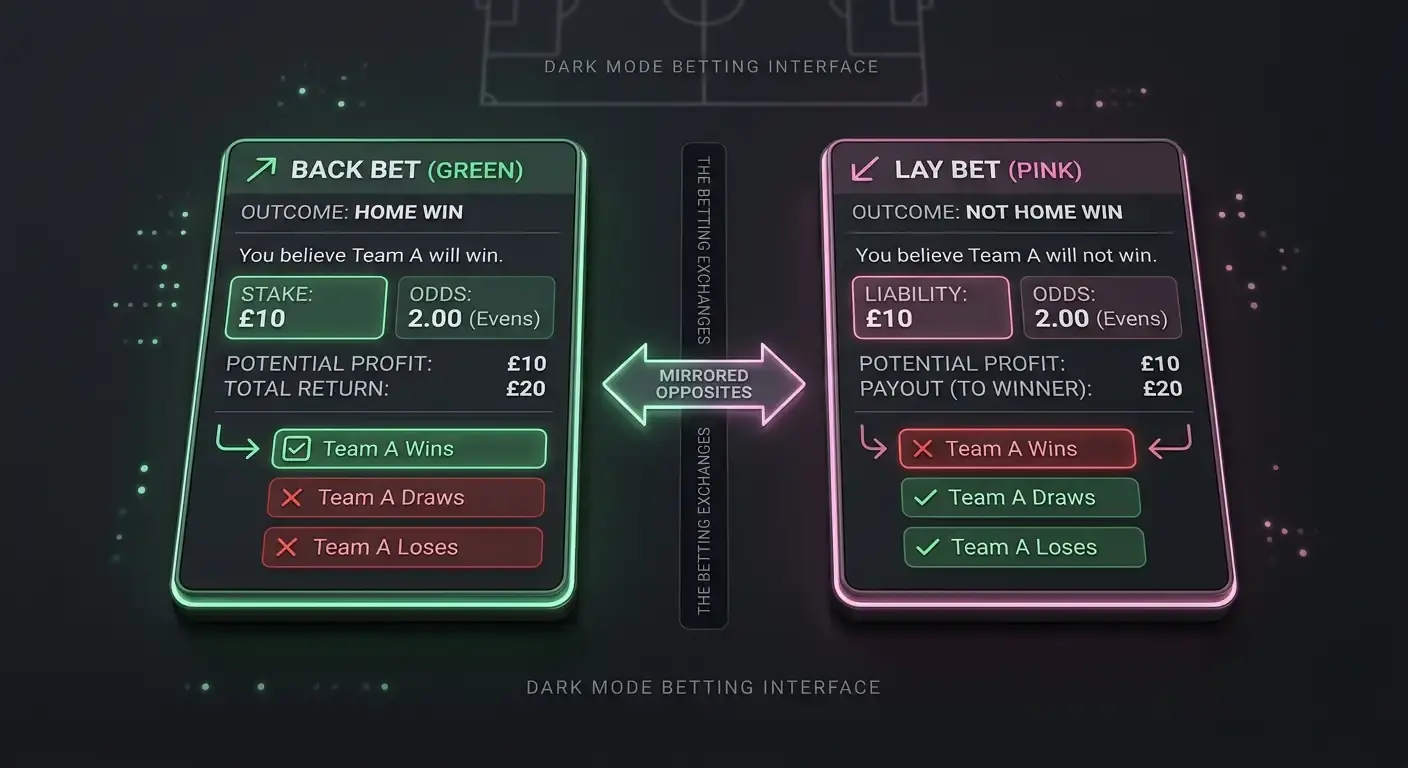
When you lay a selection, everything inverts. You are offering odds to another punter, so if their selection loses you keep their stake as your profit, but if their selection wins you must pay out their winnings. Your profit is capped at the backer’s stake you accepted, while your potential loss is the amount you would have to pay them, which can be considerably larger. Laying a long-odds outcome means accepting a small profit against a large potential payout, the exact economics a bookmaker lives with every day.
So laying a team at short odds is relatively safe, because if it wins you only owe a modest payout, but laying a long shot is dangerous, because the rare win costs you dearly. This is the reverse of backing, where long shots are the cheap thrills and favourites are the safe-but-stingy plays. The whole skill of laying is internalising that your risk lives in the payout you might owe, not in any stake you put down.
Calculating your liability before you commit
The number that matters in lay betting is your liability, and failing to understand it is how beginners get hurt. Liability is the amount you stand to lose if the selection you laid actually wins, and the exchange calculates it for you, but you must know how it is built so the figure never surprises you.
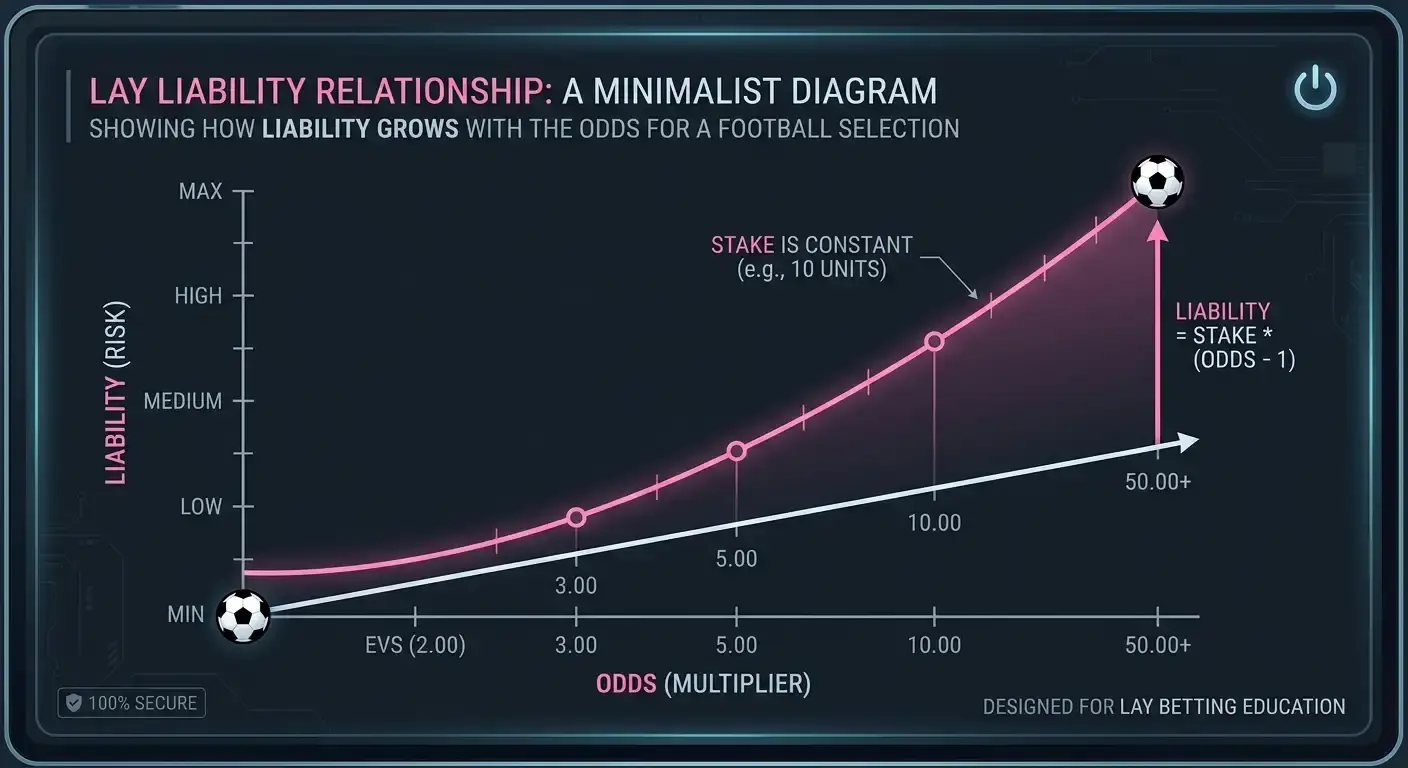
The formula is the backer’s stake multiplied by the lay odds minus one. Suppose you lay a team at odds of 4.0 and accept a backer’s stake of twenty pounds. Your profit if the team fails to win is that twenty pounds. Your liability if the team wins is twenty multiplied by 4.0 minus one, which is twenty times three, or sixty pounds. You are risking sixty to win twenty, which only makes sense if you are confident the team will not win, and that asymmetry is the defining feature of laying long prices.
Now contrast laying a short price. Lay a strong favourite at 1.5 with the same twenty-pound backer stake, and your liability is twenty multiplied by 0.5, just ten pounds, to win twenty. Here you are risking less than you stand to gain, because you are betting a favourite will slip up and the payout you would owe is small. The exchange always shows your liability before you confirm, but I never place a lay without having already worked out in my head what a winning result would cost me. The bookmaker’s margin has been climbing across the industry, with the average hold rate rising from 6.7 percent in 2018 to 10.15 percent in 2025, and one quiet advantage of laying is that you are setting the odds rather than paying that margin, but only if your liability arithmetic is sound.
Laying the draw and other tactics
The most popular lay tactic in football is laying the draw, and it shows the strategy at its most elegant. You lay the draw before kick-off, meaning you profit if either team wins and lose only if the match finishes level. The appeal is that as soon as a goal goes in, the draw becomes less likely, the lay price on the draw shortens, and you can often close the position out for a profit by backing the draw back at the new, shorter price, locking in a return regardless of how the rest of the match goes.
This is trading rather than straight betting, and it is where the exchange becomes a marketplace you can move in and out of rather than a single bet you place and forget. Laying the draw works best in matches where you expect goals and a likely winner, because an early goal is what triggers the favourable price movement. If the game stays goalless, your liability looms larger as the clock ticks down, which is the risk you accept for the chance to trade out early.
Other lay tactics follow the same logic. Laying a short-priced favourite you believe is overvalued lets you profit from an upset at a controlled liability. Laying a team in the correct score or first goalscorer markets can hedge positions you hold elsewhere. The common thread is that laying gives you tools to express negative opinions and to manage existing bets, neither of which is possible at a traditional bookmaker.
The risks that make laying unforgiving
Laying punishes carelessness more severely than backing, and the reason is the liability asymmetry. When you back a bet, the worst case is losing your stake, a known and limited amount. When you lay, the worst case is paying out the full liability, which on a long-odds selection dwarfs your potential profit, so a single bad lay can wipe out many good ones. The maths is unforgiving towards anyone who lays long prices casually.

The second danger is liquidity and price movement. To trade out of a lay position for a profit, you need a counterparty willing to take the other side at the price you want, and on thin markets that may not exist when you need it. A lay-the-draw position in an illiquid lower-league match can leave you unable to close out, forcing you to ride the full liability to the final whistle whether you like it or not.
The deepest risk is psychological. Laying feels powerful because you are the one offering the odds, and that sense of being the house can tempt you into laying outcomes you have not properly assessed, accepting liabilities you cannot comfortably cover. I treat every lay with more caution than a back of the same size, precisely because the downside is larger and less intuitive. Laying lives entirely within the exchange ecosystem, so understanding how that marketplace works is the foundation for using it well; my comparison of commission, odds and control covers the model that makes laying possible in the first place.
