

The wrong question almost everyone asks
Whenever someone asks me which betting site they should join, they almost always frame it the same way: which one has the best sign-up bonus? It is the wrong question, and answering it the way they want has cost more people more money than any bad bet I have ever seen. The first question is not which site pays the biggest welcome offer. It is which site is properly licensed, financially safe, and built to protect you when something goes wrong.
The scale of the UK market makes this matter more than people realise. There are 24.4 million active customer accounts across remote casino, betting and bingo operators in Britain, with around one billion pounds sitting in customer balances at any given time. That is a vast, regulated marketplace, and within it the protections you take for granted, the ring-fencing of your funds, the fairness of the odds, the tools to control your own betting, exist only because the operator holds a licence and follows the rules attached to it. Pick an unlicensed site and none of that applies.
That risk is not hypothetical, and it is growing. The amount staked with illegal operators in Britain is forecast to almost double from seventeen billion pounds to more than thirty-three billion by 2028, which would mean close to one pound in every five staked online flowing through a black market with no consumer protection whatsoever. The slick unlicensed site offering odds that look too good and a bonus that looks too generous is increasingly common, and the bettors who wander onto it discover too late that there is no one to complain to when their winnings vanish.
This article reframes the whole decision around safety first. I will show you what a UK Gambling Commission licence actually guarantees, how to evaluate a site beyond the marketing, what to look for in odds and markets and payments, which safer-gambling tools should be present and working, and crucially how to spot an illegal operator before it spots you. The bonus comes last, if it comes at all, because a bonus on an unsafe site is bait.
What a UKGC licence actually means
A UK Gambling Commission licence is not a logo. It is a binding set of obligations that an operator must meet to legally take bets from British customers, and understanding what those obligations are is the difference between betting on a regulated platform and gambling on a stranger’s goodwill. The Commission has the power to fine, suspend, and revoke, and it uses all three, which is why a genuine licence is worth something.
The protections fall into a few categories that matter to you directly. First, your money. Licensed operators must hold customer funds separately from their operating capital and disclose the level of protection in place, so that if the company fails your balance is not simply absorbed into the wreckage. Second, fairness. Licensed operators must offer games and odds that meet defined standards and cannot simply void winning bets they dislike, because the licence binds them to published terms enforceable by the regulator. Third, identity and age. Licensed sites must run know-your-customer checks, verifying who you are and that you are over eighteen, which is tedious at sign-up and exactly the friction that keeps the market clean.
The financial weight of this regulated system is enormous and tells you how seriously it is taken. Betting and gaming generated 714 million pounds in tax receipts in the 2024 to 2025 financial year, and in the first five months of the following year receipts ran at 1,786 million pounds, up nine per cent year on year. That tax flows because operators are licensed, regulated, and accountable, and an operator paying that duty has a powerful incentive to stay compliant. The unlicensed site pays nothing, answers to no one, and offers you the corresponding level of protection, which is none.
The point I want to land here is that the licence is the foundation everything else sits on. The odds, the markets, the app, the bonus, all of it is worthless if the operator behind it is not bound to honour your account and your winnings. Andrew Rhodes, who led the Commission through a period of significant reform, said it had been “a privilege to lead the Gambling Commission through such an important period of change,” change aimed squarely at strengthening exactly these consumer protections. When you choose a licensed site, you are choosing to bet inside that framework of protection. When you choose an unlicensed one, you are choosing to bet outside it, and the football is the same either way but the safety net is not.

Evaluating a site beyond the marketing
Once you have confirmed a site is licensed, and I will show you how to do that shortly, the real evaluation begins, and it has nothing to do with the welcome offer flashing across the homepage. A good betting site is judged on the things you will rely on every week for years, not the one-off bonus you collect in your first month and never see again.
Start with the things you can test before depositing a penny. How does the site handle verification? A reputable operator asks for identity documents up front and processes them quickly, because the licence requires it, and a site that lets you deposit and bet without ever verifying you should worry you rather than please you. How transparent are the terms? The genuinely good operators make their rules, their void policies, and their bonus conditions easy to find and read, while the dubious ones bury the catches. How responsive is customer service? Send a question before you join and see how long the answer takes and whether it actually answers, because the day you have a dispute over a settled bet is the day that responsiveness matters most.
Then assess the things that affect your betting day to day. The breadth and depth of football markets, which I will come to next. The quality and stability of the app, since most of your betting will happen on a phone and a crashing app at a crucial moment is worse than a slightly worse price. The speed and reliability of withdrawals, which is where many sites quietly let customers down. And the presence and usability of the safer-gambling tools, which separate operators who treat protection as a compliance box from those who build it in properly.
What I want you to internalise is a hierarchy. Licence first, because nothing else matters without it. Then the operational quality, the verification, the terms, the service, the withdrawals, because these are what you live with. Then the betting product, the markets and the app and the odds. And only then, dead last, the welcome bonus, which should be a tiebreaker between two genuinely good sites rather than the headline reason to choose one. Get that hierarchy the right way round and you will choose well. Get it upside down, chasing the bonus and ignoring the foundation, and you will eventually find out why the bonus was the bait.

Odds quality and market depth
Here is something the bonus-chasers never think about, and it costs them far more over time than any welcome offer is worth: the quality of a site’s odds and the depth of its football markets affect every single bet you place, forever, while the bonus affects only the first one. Football is the largest segment of regulated remote betting in Britain, generating 1.3 billion pounds in gross gambling yield in a single year, more than horse racing, and that scale means the better sites compete hard on football odds and markets in a way that directly benefits you.
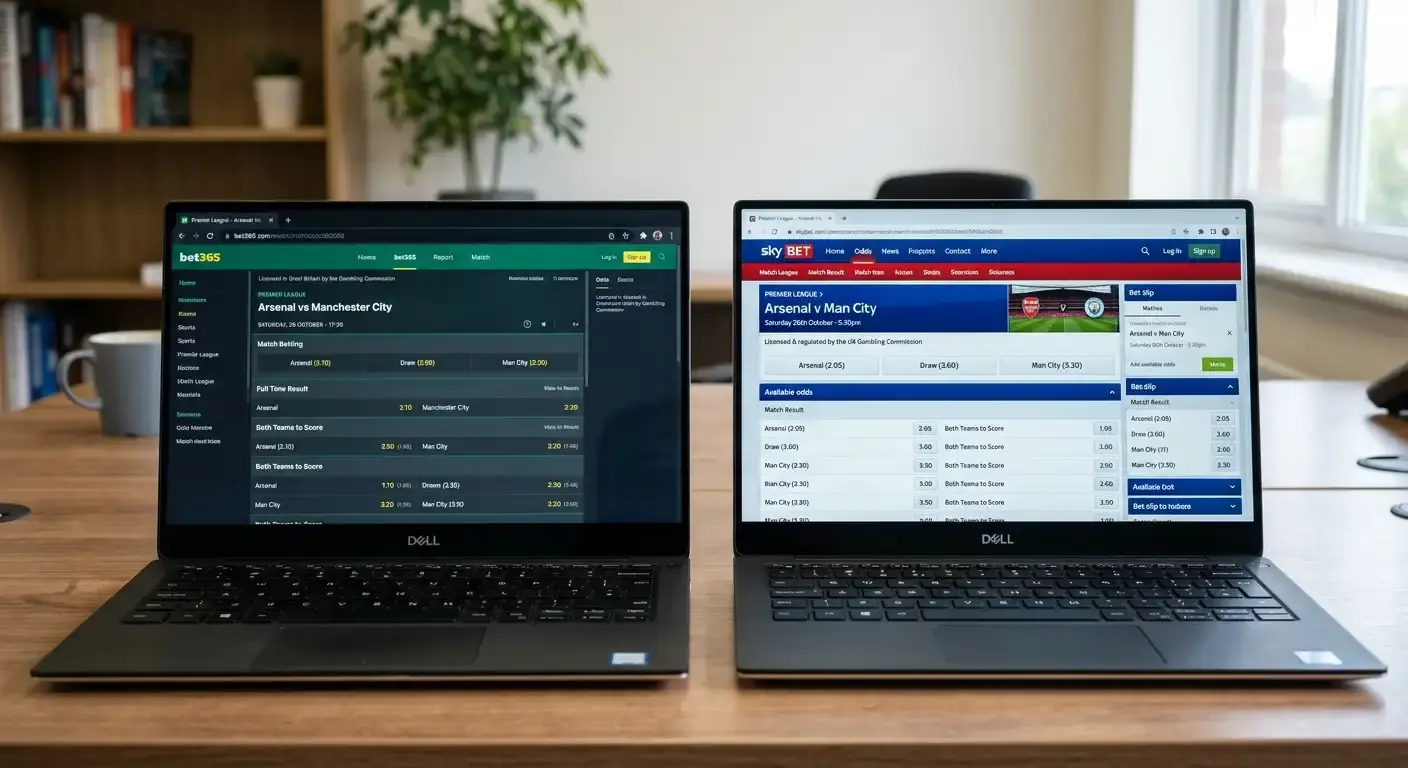
Odds quality is the first thing I check on any site I am considering, and it is simple to test. Pull up the same Premier League match on a few licensed operators and compare the prices on a standard market like the match result. The differences look tiny, a couple of decimal points, but over hundreds of bets a year, consistently taking the better price is one of the most reliable edges available to a recreational bettor, far more dependable than any selection skill. A site whose odds are consistently a fraction worse than its rivals is taking a slightly larger margin from you on every bet, and that adds up to real money across a season.
Market depth is the other half, and it matters more the more sophisticated your betting becomes. A basic site offers match result, over and under goals, and both teams to score. A deep site offers all of that plus Asian handicaps, corners and cards markets, player props, bet builders, comprehensive in-play coverage, and ante-post outrights on competitions months away. If you only ever bet the match result, depth is irrelevant to you. But as you develop, the ability to find the specific market where you have an edge, rather than being forced into the headline market where the margin is thinnest precisely because everyone bets it, becomes valuable, and a site with shallow markets quietly limits what you can do.
One thing I will not do, and that you should be suspicious of any guide that does, is rank operators or hand you a list of the best sites. The right site for you depends on which leagues you bet, which markets you use, how you deposit, and what protections you need, and any guide presenting a definitive top-five is usually being paid to. Learn to evaluate odds and markets yourself, test a few licensed sites against the criteria that matter to your betting, and you will pick better than any league table could pick for you.
Payments and withdrawals
The moment that reveals a betting site’s true character is not the deposit, which every site makes effortless, but the withdrawal, and I have learned to judge operators almost entirely on how they handle getting your own money back to you. A site that takes your deposit in seconds but finds reasons to delay your withdrawal for days is telling you something important about how it views you.
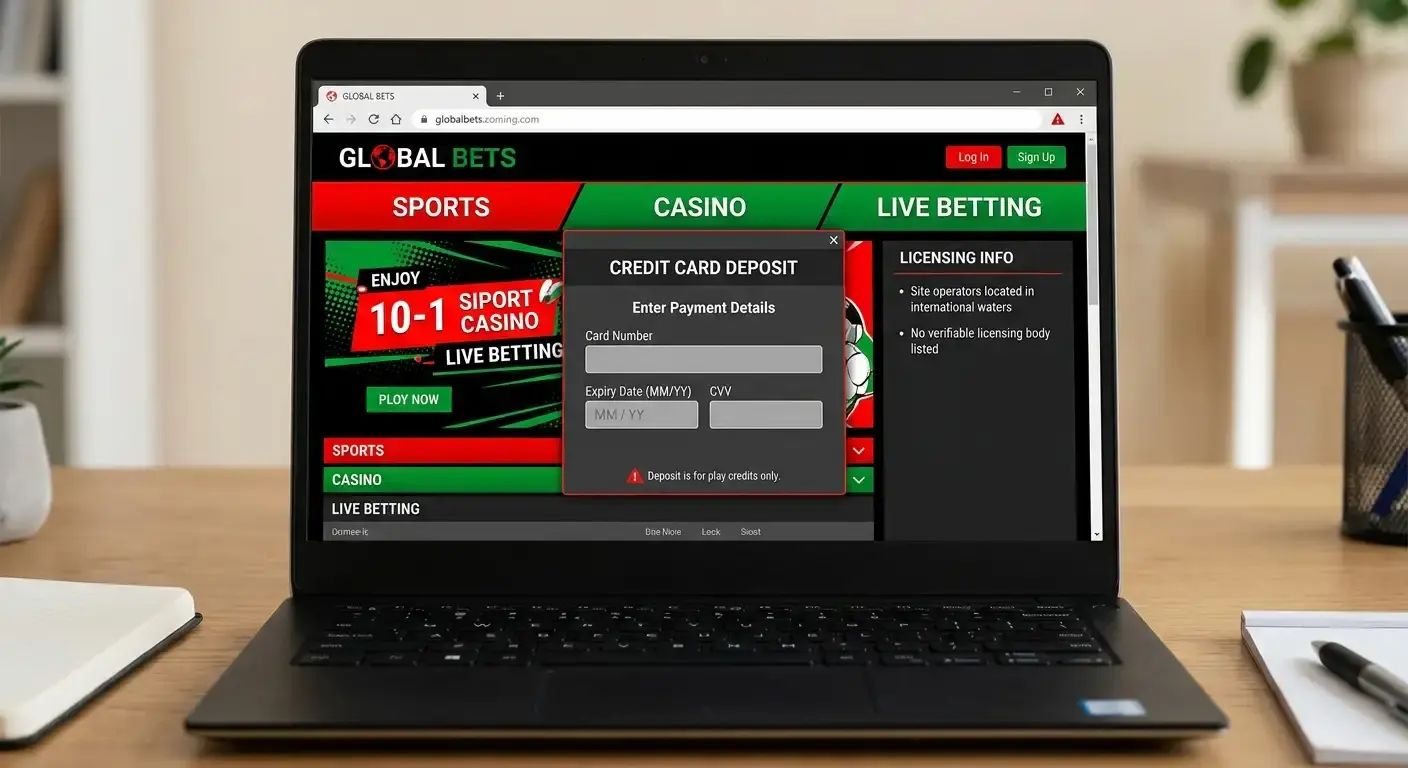
UK payment rules have tightened in ways that protect you, and you should understand them rather than be surprised by them. Credit cards have been banned for gambling in Britain for several years, so any site offering to take a credit card deposit is, by that fact alone, operating outside the rules and should be avoided instantly. Legitimate licensed sites accept debit cards, bank transfers, and a range of e-wallets, and they apply the verification checks that occasionally make a withdrawal slower but exist to keep the market clean and your account secure.
The practical advice on withdrawals is to test small and early. Before you trust a site with serious money, deposit a modest amount, place a bet or two, and withdraw your balance, paying attention to how long it takes and whether the process is smooth or obstructive. A good operator returns funds to your original payment method within a reasonable, clearly stated window. A bad one introduces verification demands at the withdrawal stage that it conveniently skipped at deposit, imposes withdrawal limits that drip-feed your own money back to you, or simply takes far longer than it promised. The withdrawal experience is the single most honest signal a site gives you, and the time to discover a problem is on a small test, not on the balance that actually matters.
Safer gambling features that should be built in
The features that protect you from yourself are, to me, the clearest indicator of whether an operator is genuinely well run, and on a UK-licensed site they are not optional extras, they are required and should be easy to find and use. An operator that buries its safer-gambling tools, or makes them awkward to set, is signalling that it would rather you did not use them, which tells you everything.
The core toolkit should be present on every licensed site. Deposit limits, which let you cap how much you can pay in over a day, week, or month, and which take effect immediately when tightened. Reality checks, pop-up reminders of how long you have been playing and how much you have staked. Time-outs, short cooling-off periods you can self-impose. And self-exclusion, the more serious option of locking yourself out of an account for an extended period. These tools exist because the regulator requires them, and the better operators integrate them smoothly rather than hiding them in a sub-menu you will never find.
The regulatory direction here is towards stronger protection, not weaker, and the rules have been tightening across the board. Online slot stakes are now capped at five pounds per spin for adults aged twenty-five and over, and two pounds per spin for those aged eighteen to twenty-four, with a further increase in Remote Gaming Duty arriving in 2026. While slot limits are not football betting directly, they signal a regulator actively reshaping the whole market towards harder consumer protections, and a well-run operator builds its tools to anticipate that direction rather than resist it.
Beyond the in-account tools sits GamStop, the national self-exclusion scheme, and any UK-licensed operator must be registered with it. GamStop lets you exclude yourself from all participating UK gambling sites at once, rather than site by site, which is a genuinely powerful protection and one of the strongest reasons to bet only with licensed operators who are part of the scheme. The full landscape of self-exclusion, deposit limits, and where to find support deserves more space than I can give it here, so I have written a dedicated guide to the responsible gambling tools available in the UK that walks through each one in detail. For the purpose of choosing a site, the rule is simple: if the safer-gambling tools are not obvious, working, and GamStop-linked, the site is not one I would trust with my money.

Spotting an illegal operator before it spots you
The illegal betting site is no longer a crude scam that announces itself. The modern unlicensed operator looks polished, offers generous odds, runs slick apps, and advertises through channels that make it feel legitimate, which is exactly what makes the growing black market so dangerous. With the amount staked illegally in Britain forecast to climb from seventeen billion pounds towards thirty-three billion by 2028, the odds of stumbling onto one are rising, and knowing the warning signs is essential self-defence.
Grainne Hurst, who leads the Betting and Gaming Council, has warned plainly that the analysis points to “almost one in every five pounds staked online” soon flowing through the illegal market, a black-market share that would have been unthinkable a few years ago. The operators behind it are not bound by any of the protections we have discussed. They do not ring-fence your funds, do not honour disputes, do not run meaningful age checks, and can disappear with your balance whenever it suits them, because there is no regulator standing behind your account.
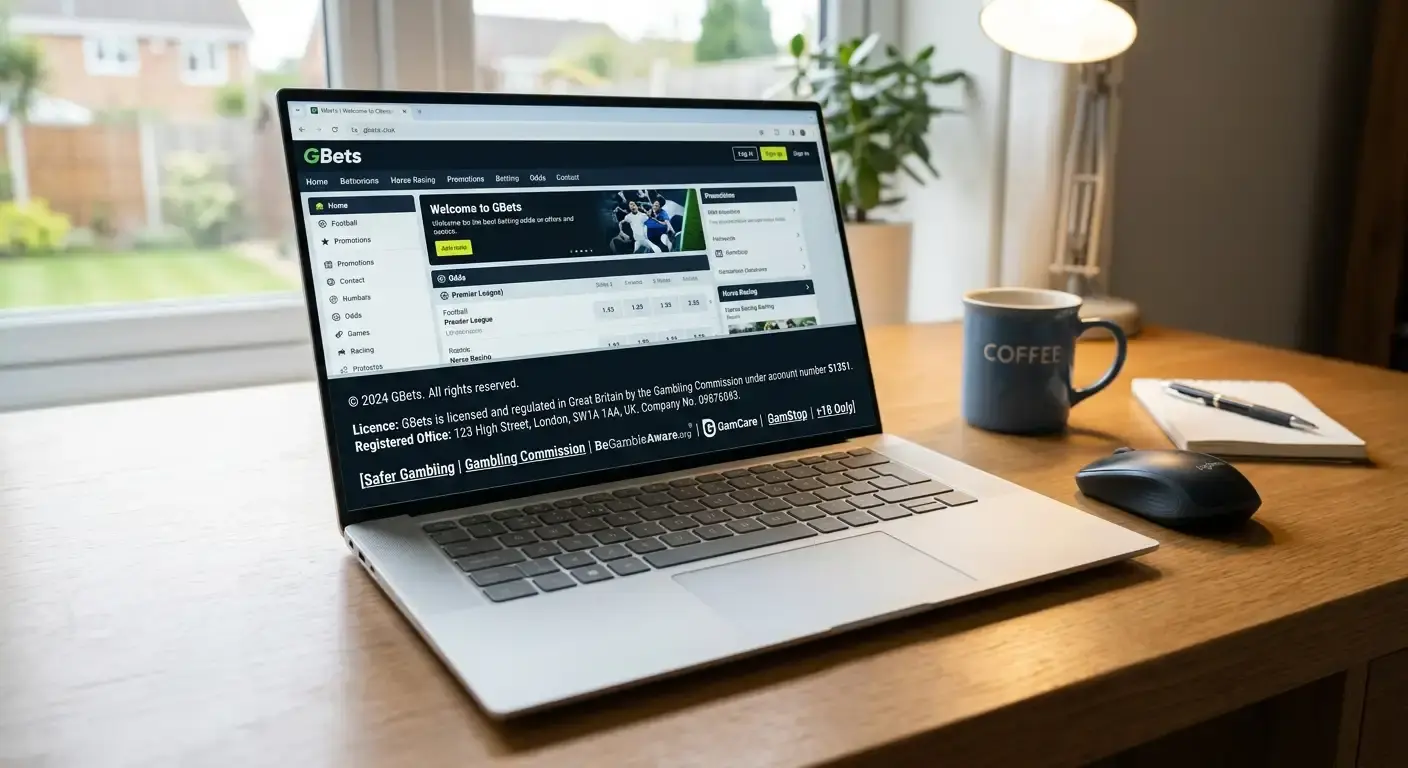
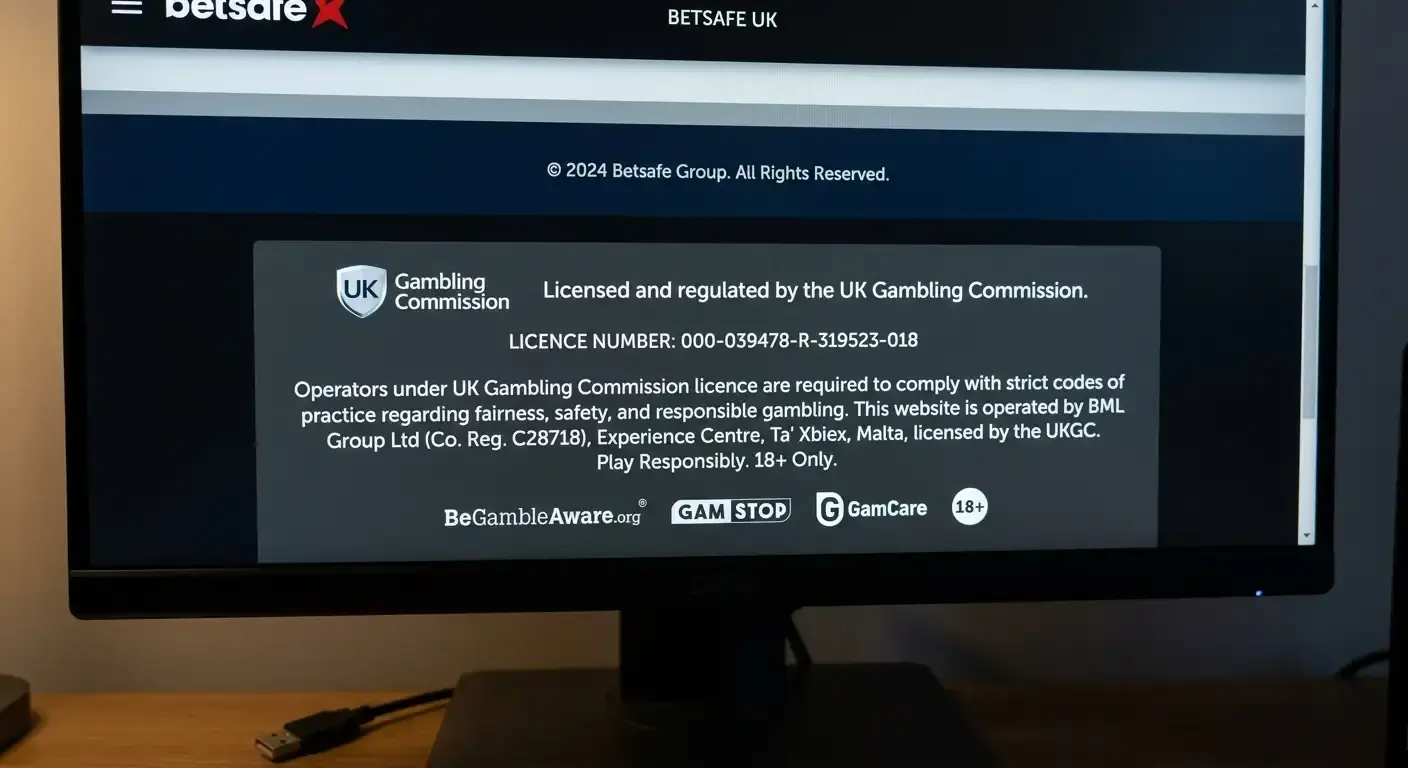
The single most reliable check takes thirty seconds and should be the first thing you do with any site. Every UK-licensed operator must display its Gambling Commission licence details, usually in the website footer, and the Commission maintains a public register you can search to confirm those details are real and current. If a site does not display licence information, displays details that do not check out, or claims to be licensed by some overseas authority you have never heard of while taking bets from British customers, it is not legally operating in the UK and you should not deposit a penny. The detailed mechanics of running that verification are worth knowing precisely, which is why I cover them step by step in the FAQ below.
The other warning signs cluster around things that are too easy. A site that lets you deposit and bet substantial sums without ever verifying your identity is not being generous, it is ignoring rules that licensed operators cannot ignore. Odds that are dramatically better than every licensed rival are not a bargain, they are bait, because no legitimate operator can sustainably price far below the market. Pressure to deposit via credit card or cryptocurrency, payment methods that licensed UK sites restrict, is a red flag. And a bonus that seems far too generous usually is, because the unlicensed operator is buying your deposit with money it never intends to let you withdraw. The legal, licensed market is large, competitive, and well regulated. There is no good reason to step outside it, and every reason not to.
Choosing well and betting safe
If you take the hierarchy from this article and nothing else, you will already choose better than most. Licence first, always, confirmed against the public register, never assumed from a logo. Then the operational quality that you will live with week after week, the verification, the terms, the service, and above all the withdrawals, because how a site returns your money is the truest thing it will ever tell you about itself. Then the football product, the odds you can test against rivals and the market depth that grows in value as your betting matures. And the bonus dead last, a tiebreaker and never a reason.
The British market gives you a large, competitive, genuinely well-regulated set of operators to choose from, wrapped in protections that exist only because those operators are licensed and accountable. The growing illegal market gives you none of that, however convincing its app and however generous its odds. Bet inside the regulated framework, use the safer-gambling tools that licensed sites are required to provide, run the thirty-second licence check before you trust anyone with your money, and you have done the most important thing in football betting before you have placed a single bet, which is to make sure the people holding your money are the people the law can hold to account.
